








Yesterday, in our editorial team, we talked for hours about light. Not in the technical sense, not at first. Not in lumens, kelvins, angles, optics, fixtures, or façades. Not in the vocabulary we know so well and use so often. We talked about light as if we had suddenly forgotten what it was. Or perhaps, more honestly, as if the world had forced us to remember.
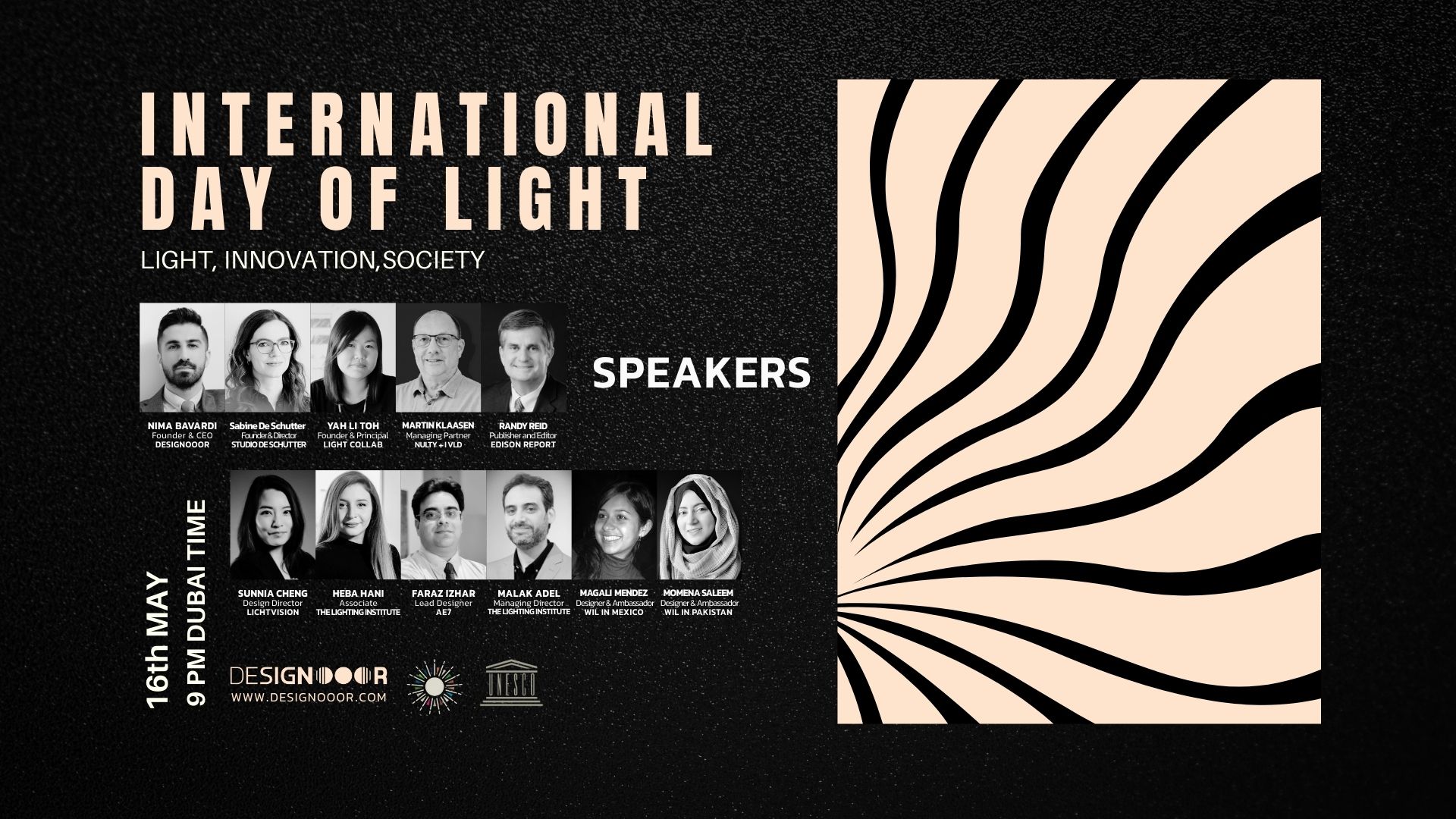
International Day of Light arrived yesterday, as it does every year, carrying with it a simple and beautiful invitation: to celebrate light and the role it plays in science, culture, art, architecture, design, technology, and human life. For a media platform dedicated to lighting, design, and the creative minds who shape the visual experience of the world, it should have been the most natural thing to publish a message of celebration. A bright note. A beautiful image. A confident headline.
Happy International Day of Light. 
And yet, somehow, the sentence felt heavier than expected.
There are moments when even the most luminous words hesitate at the edge of the page. Moments when a celebration, if written too quickly, risks sounding unaware of the world into which it is being sent. Yesterday was one of those moments.
We sat with the idea longer than we had planned. We asked ourselves what it means to congratulate the world on light while so much of that same world feels covered by shadow. How does one speak of brightness in a time when darkness is not poetic but painfully real? How does one write about illumination when so many people are living through grief, fear, displacement, uncertainty, cruelty, and silence? How does one say “happy” without sounding careless?
So today, one day late, we say it differently.
Happy International “Yesterday” of Light.

This delay is not an apology. It is not the result of forgetfulness. It is not a missed deadline disguised as philosophy. It is, instead, a small editorial pause. A moment of resistance against the speed with which the world now expects us to react, post, celebrate, and move on.
Because light deserves more than a scheduled greeting.
Light asks for attention. It asks for presence. It asks us to stop and look.
Yesterday, we could have published a polished text exactly on time. We could have written about innovation, sustainability, new technologies, urban atmospheres, museums, bridges, landscapes, and homes. We could have spoken about how lighting design transforms space, how it guides movement, shapes emotion, reveals materials, protects memory, and gives architecture its second life after sunset. All of that is true. All of those matters.
But something else kept returning to the conversation: the emotional responsibility of light.
In a world increasingly exhausted by ugliness, light is not merely a tool of visibility. It is not only a medium for aesthetics or function. It is one of humanity’s oldest metaphors for hope, and perhaps one of the few metaphors that has never lost its power.
We say “a light at the end of the tunnel” because we need to believe that darkness is not permanent. We light candles for the dead because memory refuses to disappear. We keep a lamp on for someone who has not yet come home. We gather around fire, screens, windows, stars, and streets because light has always been a signal: someone is here, something is alive, the world is not finished. No image of hope is as immediate as light.
Before language, there was light. Before architecture, there was sunrise. Before design, there was the instinct to move toward warmth, safety, and visibility. Every child understands the comfort of a small night lamp. Every traveler understands the relief of seeing the lights of a city from far away. Every person who has waited through a difficult night understands what morning can do to the human spirit.
This is why lighting designers should be proud of what they do. Deeply proud. Not with vanity, but with awareness. Their work is not only to make places visible. It is to make life feel possible inside them.
Lighting designers design atmosphere, yes. They design perception, rhythm, contrast, focus, and drama. They reveal the quiet intelligence of architecture and the emotional character of materials. They help us understand where we are and how we should feel there. But beyond all of that, whether consciously or not, they design hope.
They decide where the eye rests. They decide what is softened and what is revealed. They decide whether a public square feels threatening or welcoming, whether a hospital corridor feels cold or humane, whether a school feels institutional or alive, whether a home feels merely furnished or truly inhabited. A single light can change the moral temperature of a space.
This may sound romantic, but lighting has always been romantic because human beings have always attached emotion to it. We do not remember spaces only by their plans or dimensions. We remember the afternoon light on a wall. The golden reflection on a table. The streetlamp under which someone waited. The glow of a room seen from outside. The way a city shimmered after rain. The shadow that made a corner mysterious rather than empty.
Light is where memory becomes visible. And sometimes, light is where love begins.
Think back to being young, perhaps very young, and loving someone before you had the courage to say it. There was no strategy, no language, no confidence. Only a heart full of impossible weather. You might pass by their street for no reason. You might slow down near their building. You might look up at a window and hope for one simple thing: that the light in their room would be on.
That was enough.
The illuminated window did not declare love. It did not promise anything. It did not even mean that the person was thinking of you. But it meant presence. It meant they were there, somewhere behind the curtain, existing in the same night. And for a young heart, that small rectangle of light could become an entire universe. This is what light does. It turns absence into possibility. A dark window says nothing. A lit window whispers: maybe.
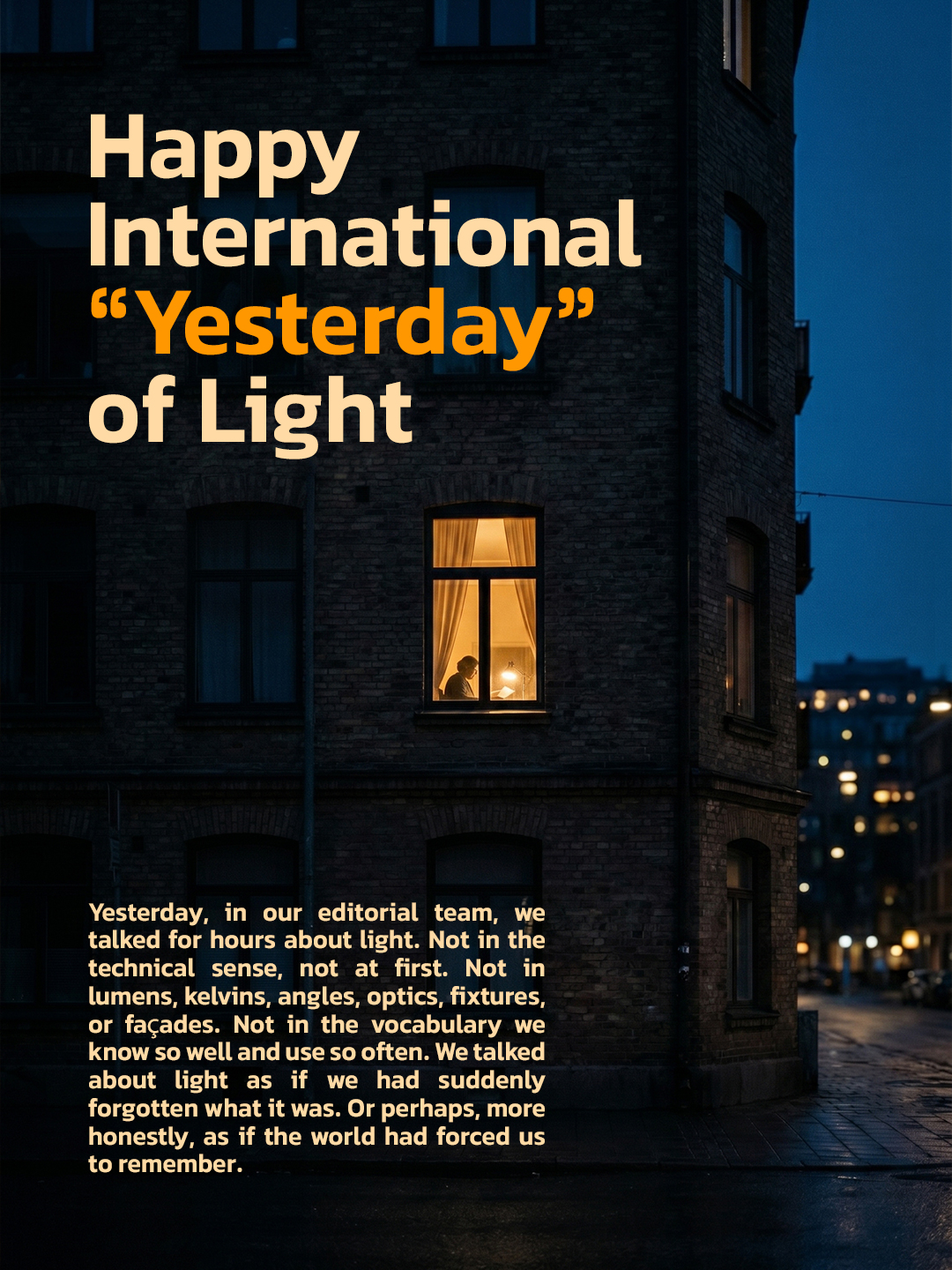
Maybe they are awake. Maybe they are reading. Maybe they are listening to music. Maybe they are near the desk, near the bed, near the life you imagine but cannot enter. Maybe tomorrow you will speak. Maybe one day you will be brave.
In that sense, every light carries a story beyond its source. Every illuminated window in a city is a small biography. Every lamp belongs not only to a space, but to a human condition: someone working late, someone cooking dinner, someone recovering, someone waiting, someone grieving, someone laughing, someone trying again.
Lighting design, at its best, understands this. It understands that spaces are never empty of feeling. It understands that people do not move through architecture as neutral bodies, but as fragile, remembering, desiring beings. The task is not simply to illuminate surfaces, but to care for the invisible emotional life that unfolds among them. That care matters now more than ever.
We are living in a time when darkness often arrives not as night but as news. It enters our phones in the morning. It sits with us at lunch. It follows us into the evening. War, violence, injustice, ecological anxiety, loneliness, social exhaustion, political cruelty, and the constant noise of a wounded planet have made despair feel strangely ordinary. The world has become very good at distributing darkness. This is why any sincere celebration of light must also acknowledge darkness. Not as a decorative contrast, but as a condition many people are struggling to survive.
To speak of light honestly, we must first admit that the world is not bright for everyone.
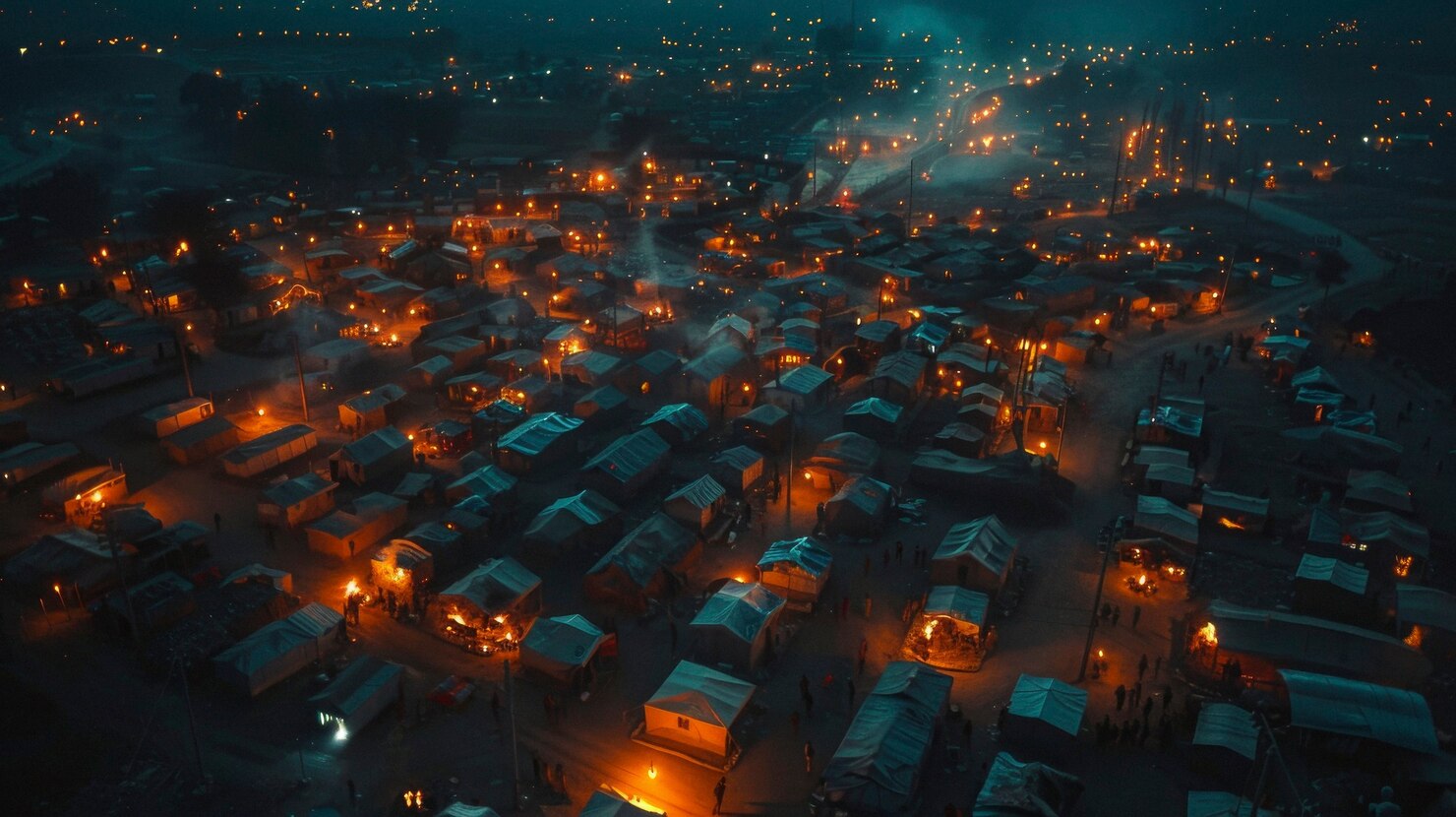
There are cities where lights go out because infrastructure has collapsed. There are homes where a single bulb is a luxury. There are children studying under weak light, families crossing borders in the dark, patients waiting under fluorescent ceilings, workers returning late through unsafe streets, elderly people sitting beside windows, watching the day disappear.
There are also quieter darknesses: depression, grief, isolation, disappointment, the private heaviness people carry while appearing perfectly functional. Not all darkness is visible. Not all darkness makes headlines.
Against these realities, light cannot be reduced to decoration. It becomes ethical.
This does not mean every lighting project must save the world. Design should not pretend to carry more moral weight than it can bear. But it does mean that those who work with light are participating in one of the most intimate elements of human experience. They influence how people feel in the places where life happens. They create conditions for safety, dignity, beauty, wonder, and calm. That is not small.
A well lit path can make someone less afraid. A gentle interior can help someone breathe. A carefully illuminated public place can invite people to gather instead of withdraw. A memorial light can give form to collective grief. A warm window can make a street feel inhabited. A city’s nightscape can either erase the stars completely or remind us that darkness, too, deserves respect. Light is powerful not because it conquers darkness, but because it gives darkness meaning. Without shadow, light becomes flat. Without night, morning loses its miracle. The goal is not a world without darkness. Such a world would be unbearable. The goal is a world where darkness is not abandonment. A world where, even in difficult times, there are signals of care, intelligence, and tenderness. This is the future we want to believe in.
Perhaps that is why publishing this text one day late feels strangely appropriate. Yesterday was the official day. Today is the day after. The day after is where life usually begins again. The day after the celebration, the day after the loss, the day after the mistake, the day after the silence, the day after the long discussion in the editorial room.
The day after asks a different question: what remains?
What remains after the hashtags fade? What remains after the official greeting has passed? What remains when light is no longer an event on the calendar, but a responsibility in the world? For us, what remains is a renewed belief in the people who work with light.
The designers, architects, artists, engineers, researchers, manufacturers, educators, photographers, curators, writers, and dreamers who understand that light is never only physical. It is cultural. It is emotional. It is symbolic. It is political. It is deeply human. To all of them, we say: your work matters.

When you design light, you are not simply adding brightness to a room. You are shaping how someone enters, waits, heals, remembers, learns, loves, mourns, or feels at home. You are helping the world become readable again. You are giving form to care. You are making hope spatial.
And hope, today, is not a soft word. It is not naïve. It is not decorative. Hope is a discipline. Hope is work. Hope is the decision to keep making beauty in a world that often insults it. Hope is the courage to create atmospheres of dignity when so much around us feels careless. Hope is the stubborn belief that even a small light can change the experience of a long night.
So yes, we are late.
But perhaps light has always had a complicated relationship with time. The stars we see are already old. Sunrise is always returning from yesterday. A candle lit in memory belongs to the past and the future at once. The light in a beloved window may be remembered for a lifetime, long after the room has changed, the street has changed, the person has changed.
Light does not obey the calendar as strictly as we do. It travels. It lingers. It arrives after darkness. Sometimes, it arrives late. And sometimes, late is exactly when it is needed most.
Happy International “Yesterday” of Light to those who design it, study it, protect it, celebrate it, and search for it. May we continue to make light not only for buildings, cities, exhibitions, and images, but for one another.
May every lamp we turn on be a quiet refusal of despair.
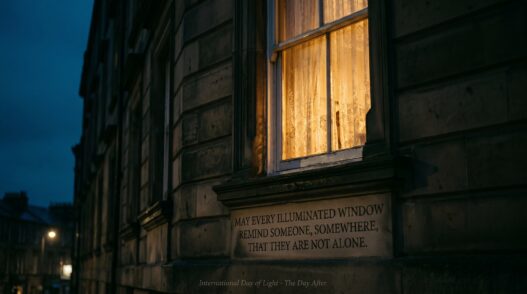
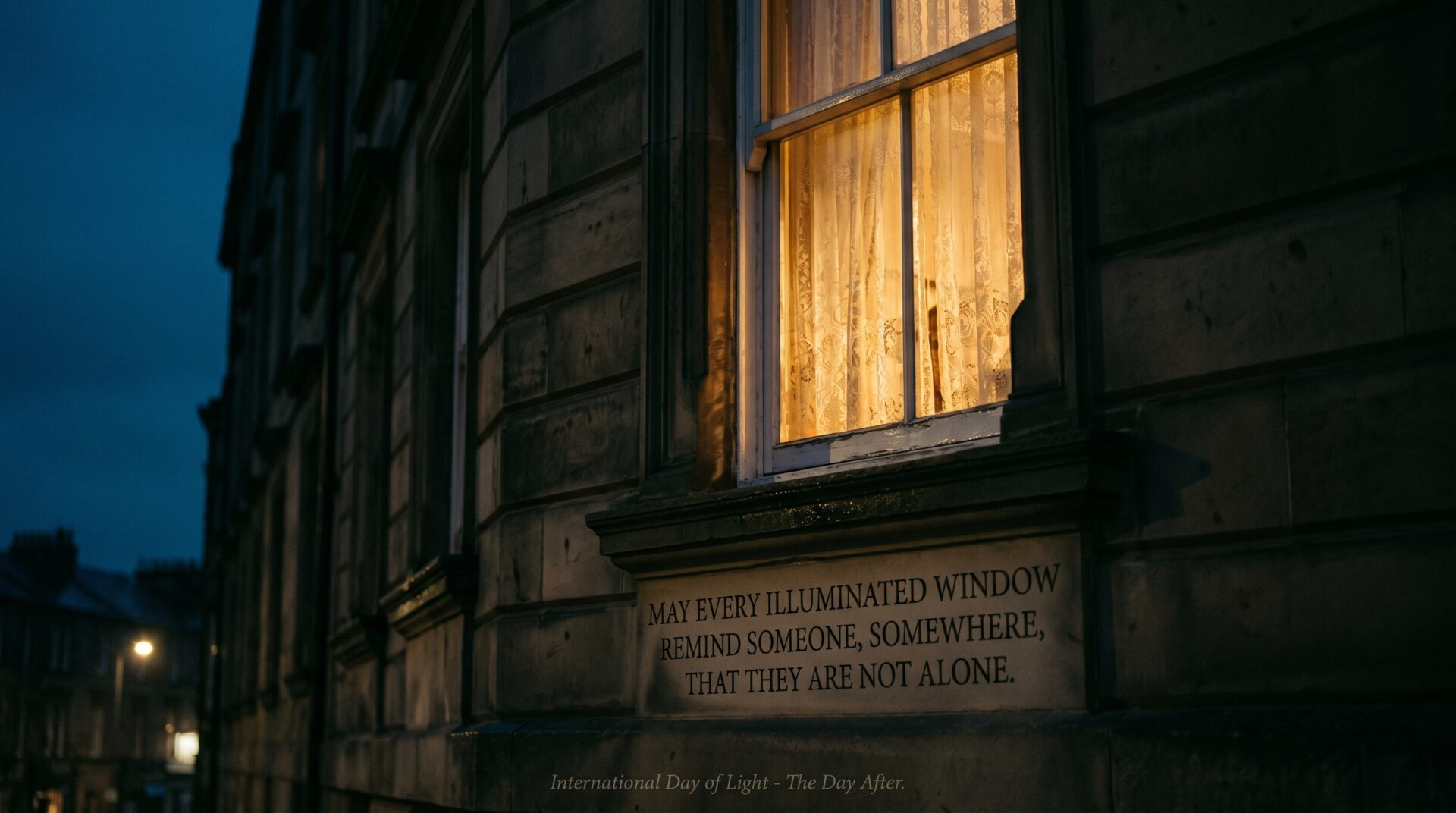
May every illuminated window remind someone, somewhere, that they are not alone.
And may the light we missed yesterday become the hope we choose tomorrow.