





Gravity Tuning the Glow
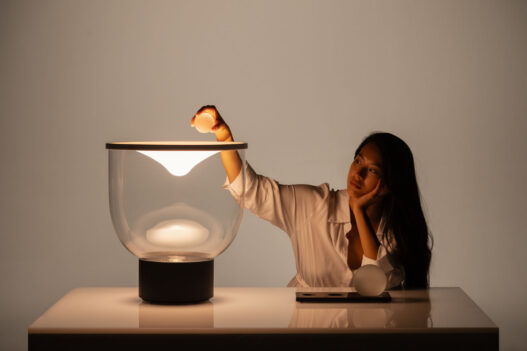
Before it is lit, Grammoluce reads as a restrained object: a transparent volume held above a dark, compact base, more container than lamp. The borosilicate glass body does not declare function immediately. It waits. This hesitation is not accidental. The designer seems to postpone illumination as a visual event, allowing the object to exist first as matter, proportion, and balance. Only after this quiet introduction does light enter the scene, and when it does, it arrives indirectly, mediated by weight, deformation, and touch.
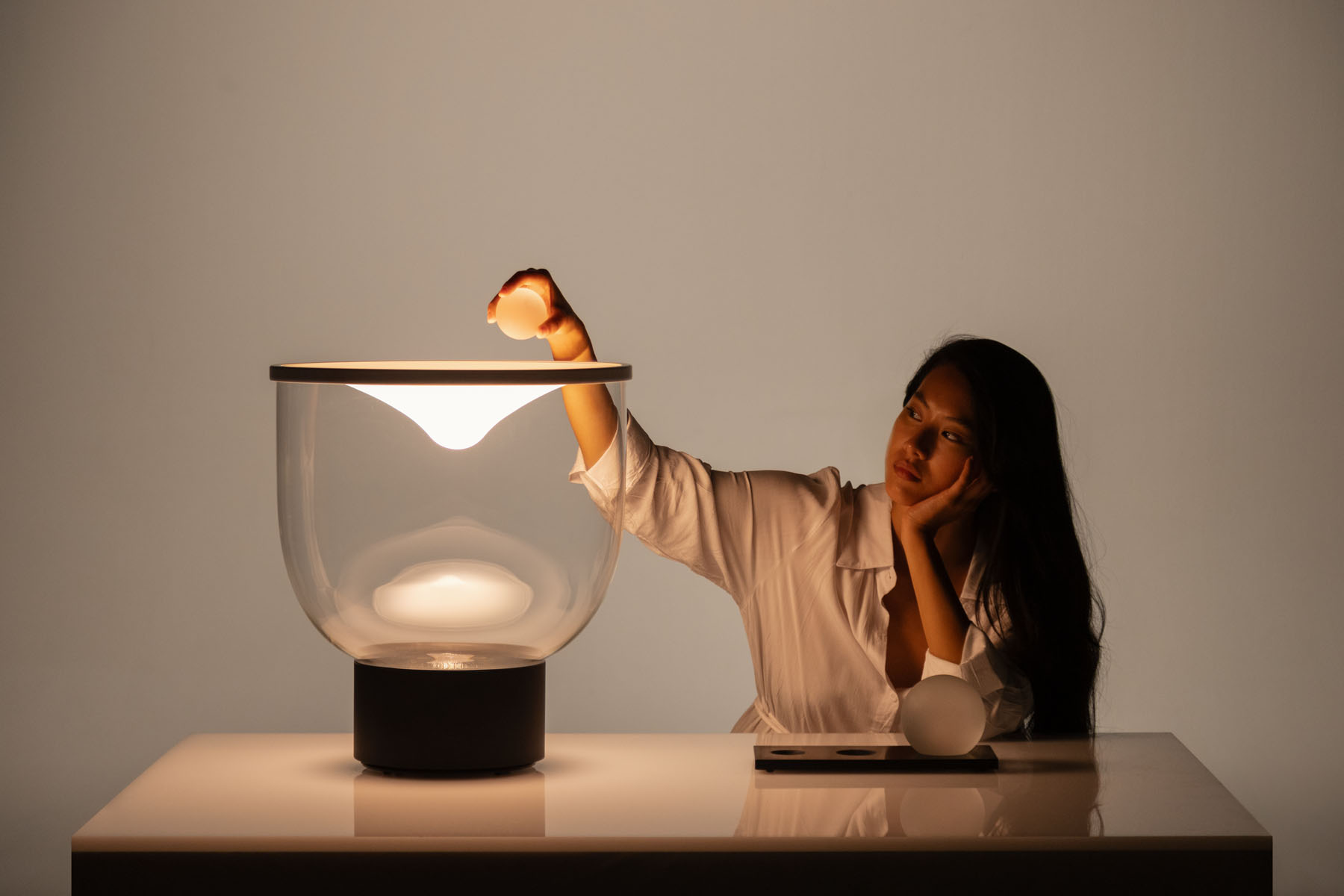
The core lighting decision here is not about output or spectacle. It is about displacement. Light is pushed out of its usual domain of switches, sensors, or abstract interfaces and relocated into the physical logic of gravity. The three glass spheres are not decorative accessories; they are functional agents. Their differing diameters and masses become the primary controls of the system. Illumination responds not to intent alone, but to force. This choice anchors light to the body. A hand placing a sphere is not issuing a command; it is introducing weight into a calibrated equilibrium.
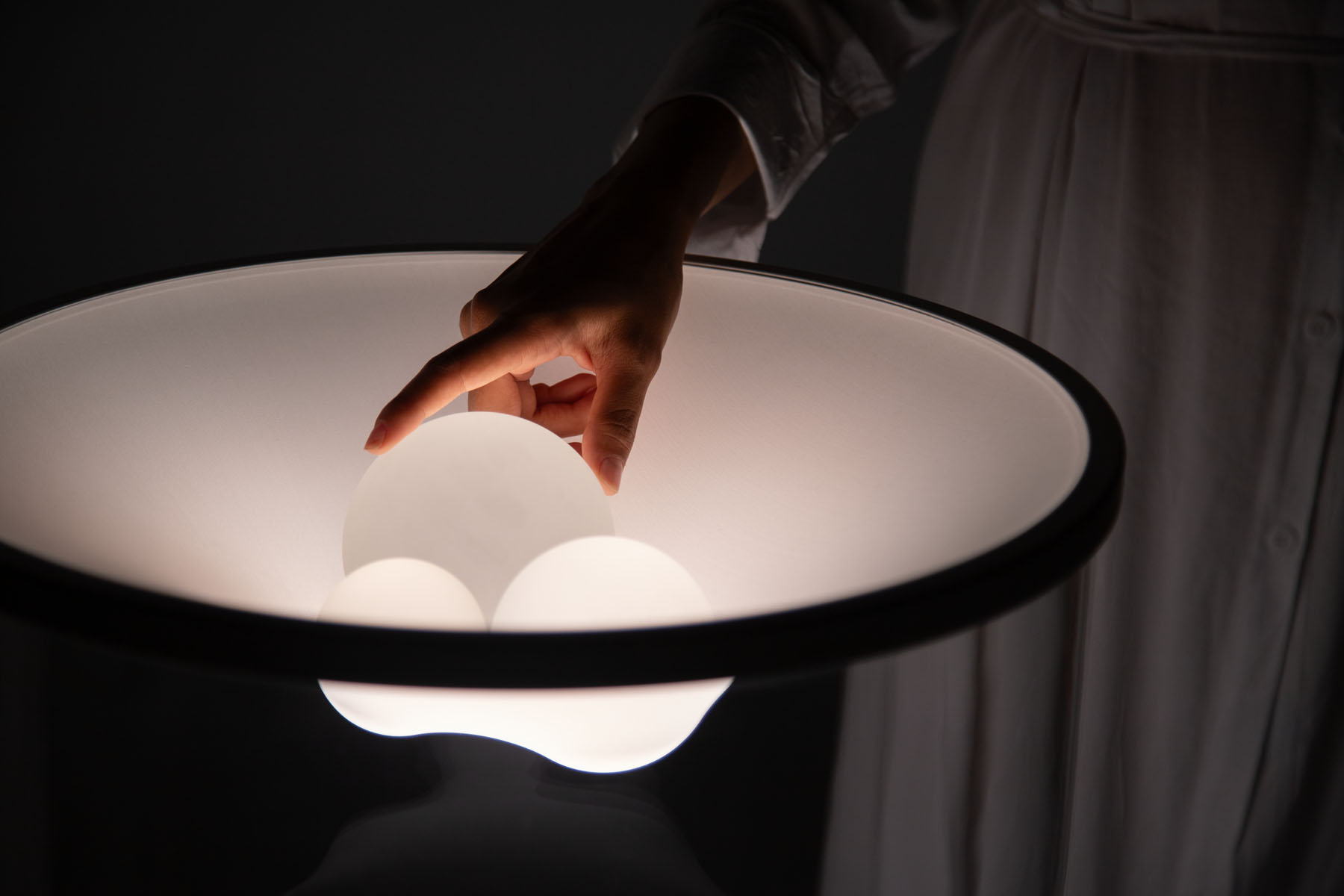

The Lycra membrane stretched across the circular rim becomes the most critical lighting surface in the project. It operates simultaneously as diffuser, interface, and visual register. As weight is applied, the fabric yields. Its deformation alters the distance between light source and surface, changes thickness, and subtly reshapes the luminous field. The result is a light that never settles into a fixed graphic. Shadows soften, highlights migrate, gradients form and dissolve. Nothing here aims for optical perfection. The light feels negotiated rather than engineered, shaped through interaction rather than preset scenes.
From a lighting design perspective, the decision to let intensity and color temperature correlate with physical mass is unusually disciplined. Lighter spheres generate lower output and warmer tones. Heavier spheres push the system toward higher intensity and cooler light. This mapping is legible without explanation. The user reads it intuitively through action. There is no need for symbols or instructions. The system teaches itself through use. That restraint suggests confidence in the intelligence of the interaction.
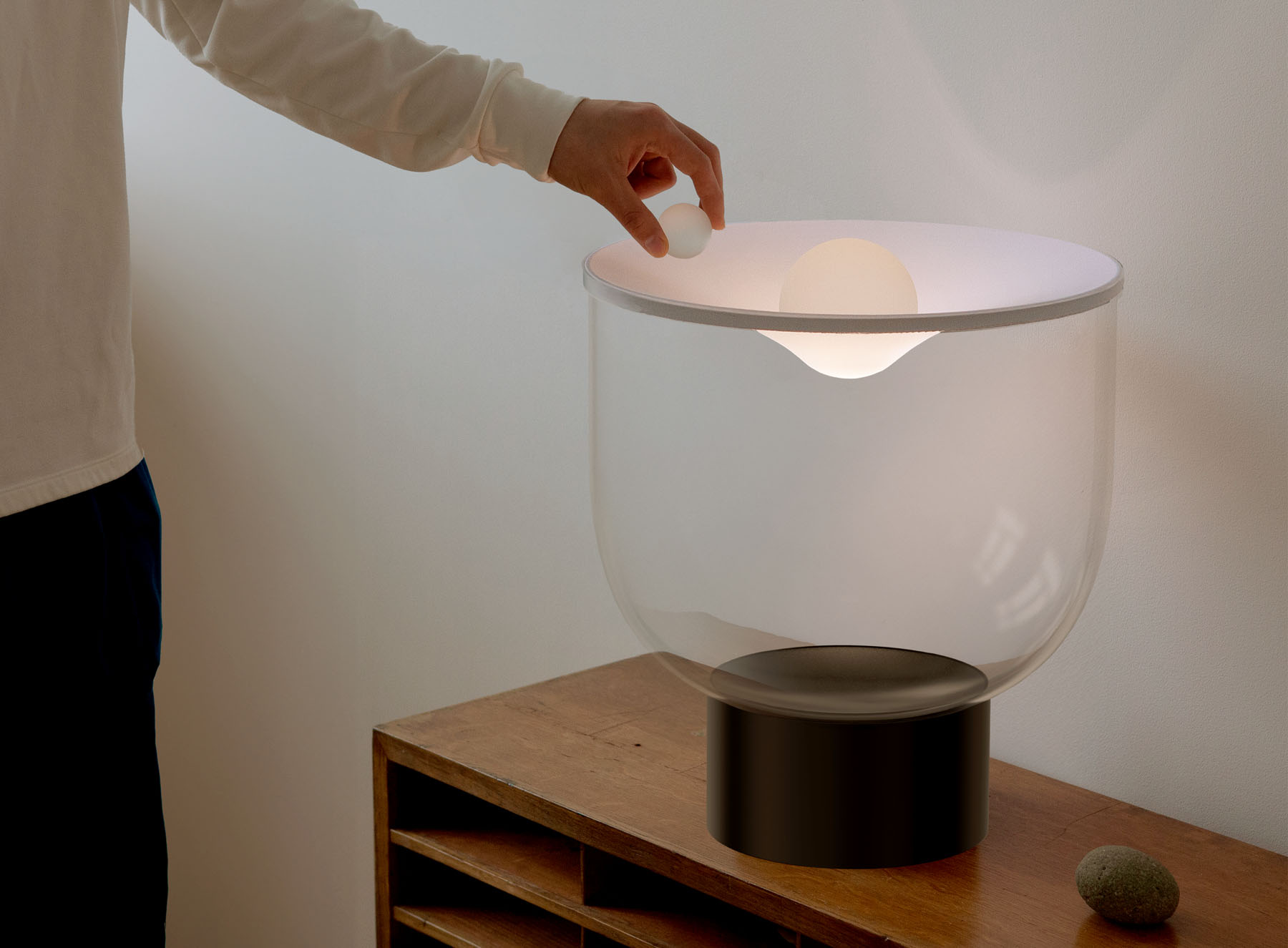
The glass spheres deserve attention beyond their role as controls. Their satin finish prevents glare and avoids the visual dominance that polished glass would introduce. When resting on the membrane, they appear suspended, almost hesitant, partially absorbed by the surface beneath them. They catch light, diffuse it internally, and return it back into the volume. In this sense, they participate in the lighting twice: once as weight, once as secondary diffusers. The lamp does not hide its mechanisms, yet it does not dramatize them either. Everything remains visible, calm, and legible.
The overall luminous quality is notably domestic without becoming decorative. The light spreads evenly across the fabric plane, then reflects gently within the glass enclosure. There is no sharp cutoff, no aggressive beam, no directional assertion. This lamp does not seek to define space through contrast. It occupies space through presence. In a room, it would not dominate sightlines, yet it would resist being ignored. The glow feels contained, almost held, as if light were being stored rather than emitted.
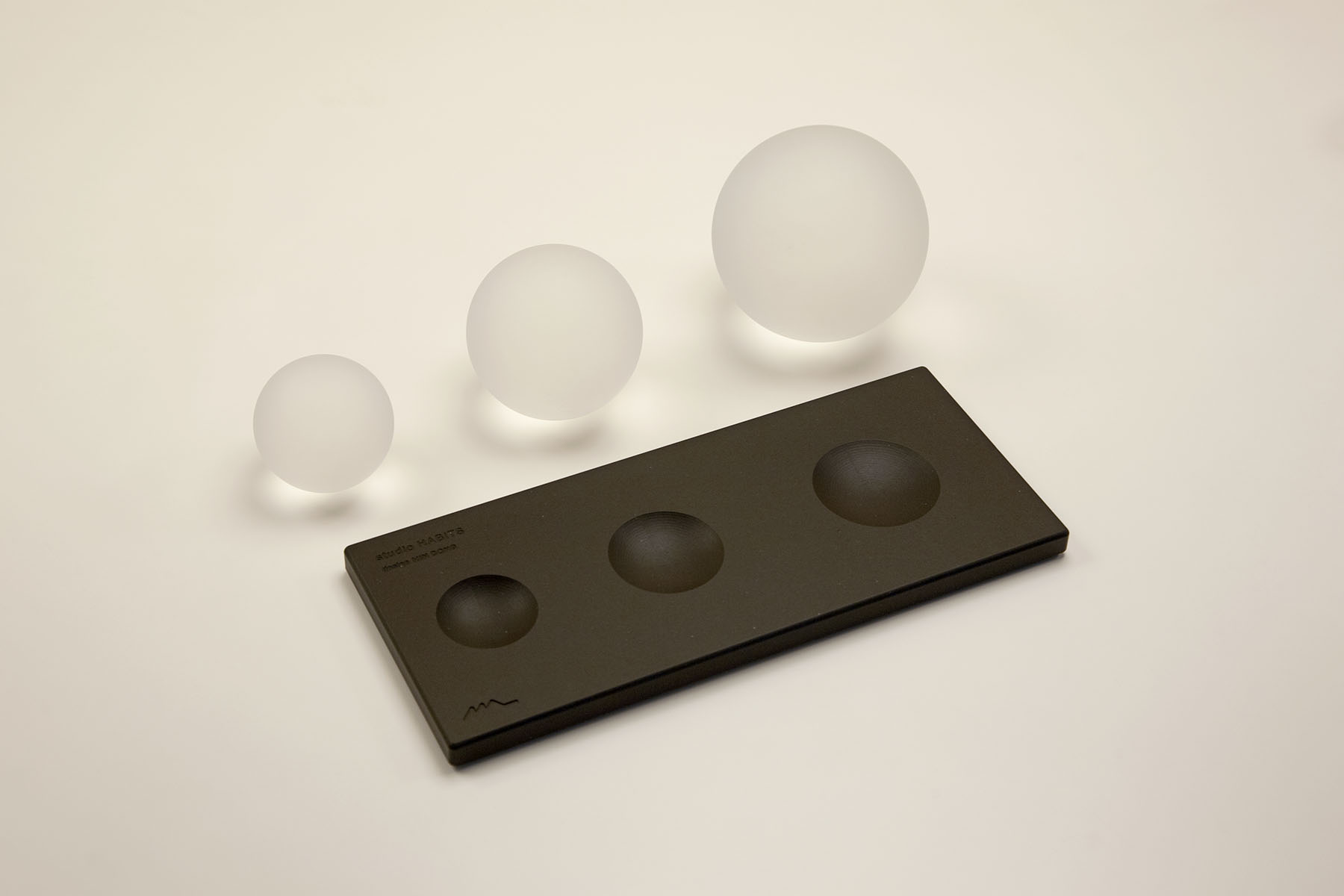
Material choices reinforce this attitude. The PaperStone® base introduces density and tactility at the point of contact with furniture. Its visual weight grounds the composition and counterbalances the transparency above. From a lighting standpoint, this matters. A stable base prevents the object from reading as fragile or ornamental, which would undermine the seriousness of the interaction. The sustainability narrative attached to the material remains secondary in the experience. What registers first is texture, mass, and visual calm.
What is most compelling is how the project redefines the act of switching on a light. There is no binary moment. Illumination emerges gradually, through placement, adjustment, and sometimes hesitation. A sphere can be moved slightly, combined with another, removed altogether. Each action leaves a trace in the shape of the fabric and the tone of the light. The lamp records these gestures briefly, then resets, ready for the next configuration. The lighting state is temporary by nature. Nothing encourages repetition or optimization.

This approach gives the lamp a clear identity within the domestic landscape. It frames light as something responsive and situational, shaped by behavior rather than routine. Before interaction, the object exists in a neutral state, almost dormant. Once engaged, it reveals a layered system where light responds to gravity, elasticity, and human touch. That shift defines the project’s contribution. It does not propose a new aesthetic language through form alone. It proposes a different contract between user and light.
The success of Grammoluce lies in its refusal to over-explain itself. The lighting logic is embedded in the object’s behavior, not in narrative claims. What is seen is what is chosen: weight, placement, pressure, and patience. The lamp rewards attention, not mastery. In doing so, it reintroduces a sense of deliberateness into everyday lighting, turning a habitual action into a moment of observation. The light does not perform. It responds.