






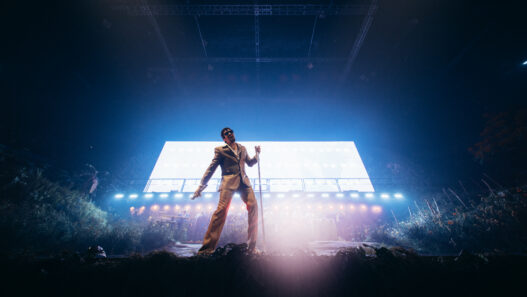
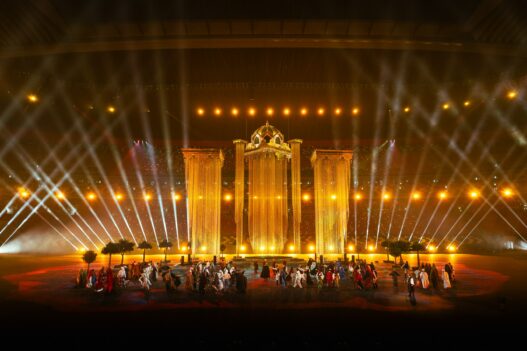
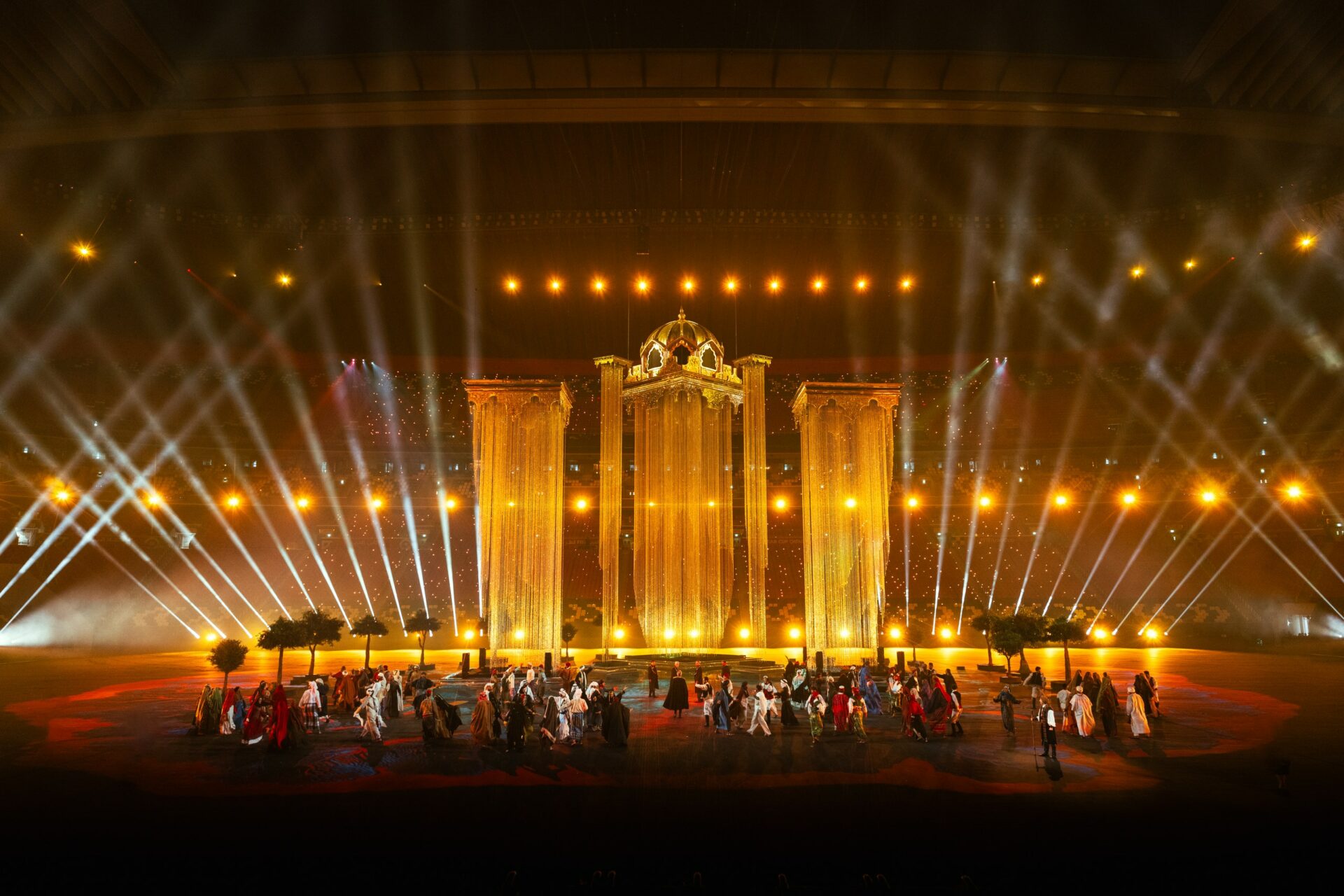
Light enters this ceremony cautiously. It does not rush to establish authority, and it avoids claiming emotional territory too early. For a considerable stretch of time, illumination functions as a structural companion rather than a narrator. The stadium remains present as an infrastructural fact. The field holds its scale. The central object exists in suspension, visually incomplete, withholding clarity. This withholding is deliberate. Lighting here is not used to announce meaning, but to prepare the conditions under which meaning can later be recognized.
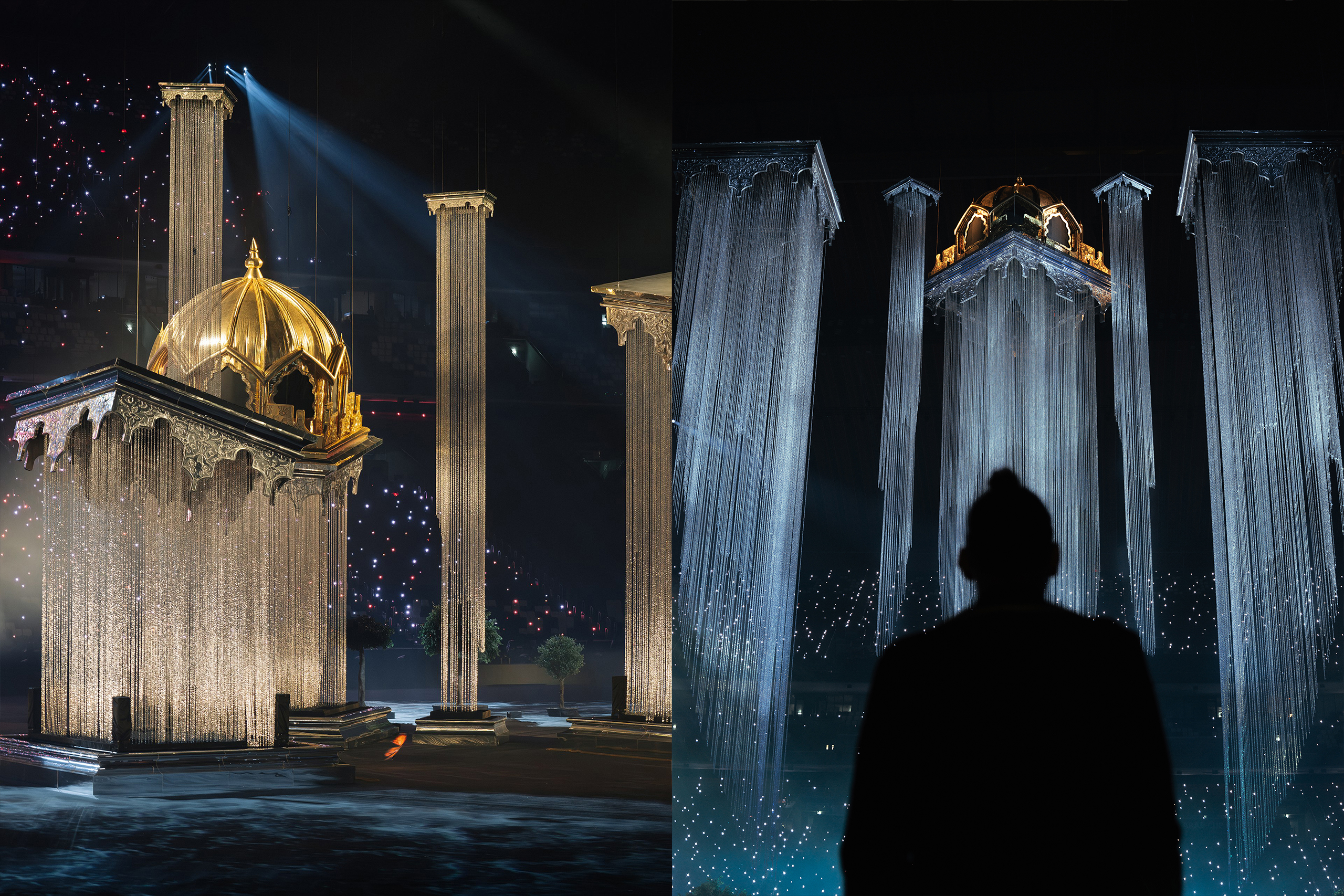
The architectural core of the show, the chain-based monument, dictates almost every lighting decision that follows. Its material properties impose limits that the design respects. Chrome surfaces respond aggressively to excess light, flattening into reflection without depth. The lighting strategy counters this by fragmenting exposure. Highlights are narrow and controlled. Shadows are preserved with intent. The chains read as matter, not as surface. From a distance, they gather into vertical bodies. From closer angles, they dissolve into thousands of individual elements, each briefly catching light before releasing it.
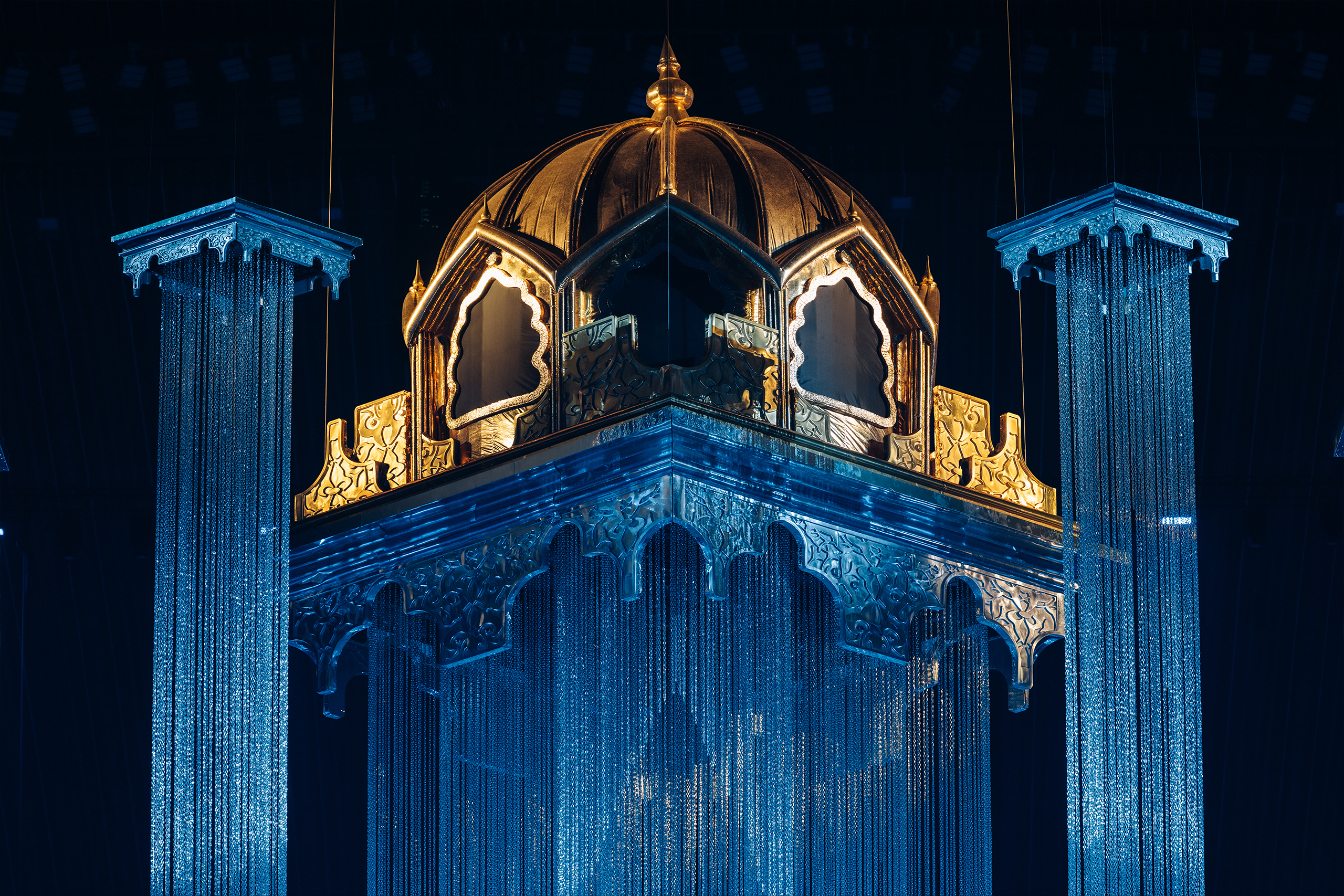

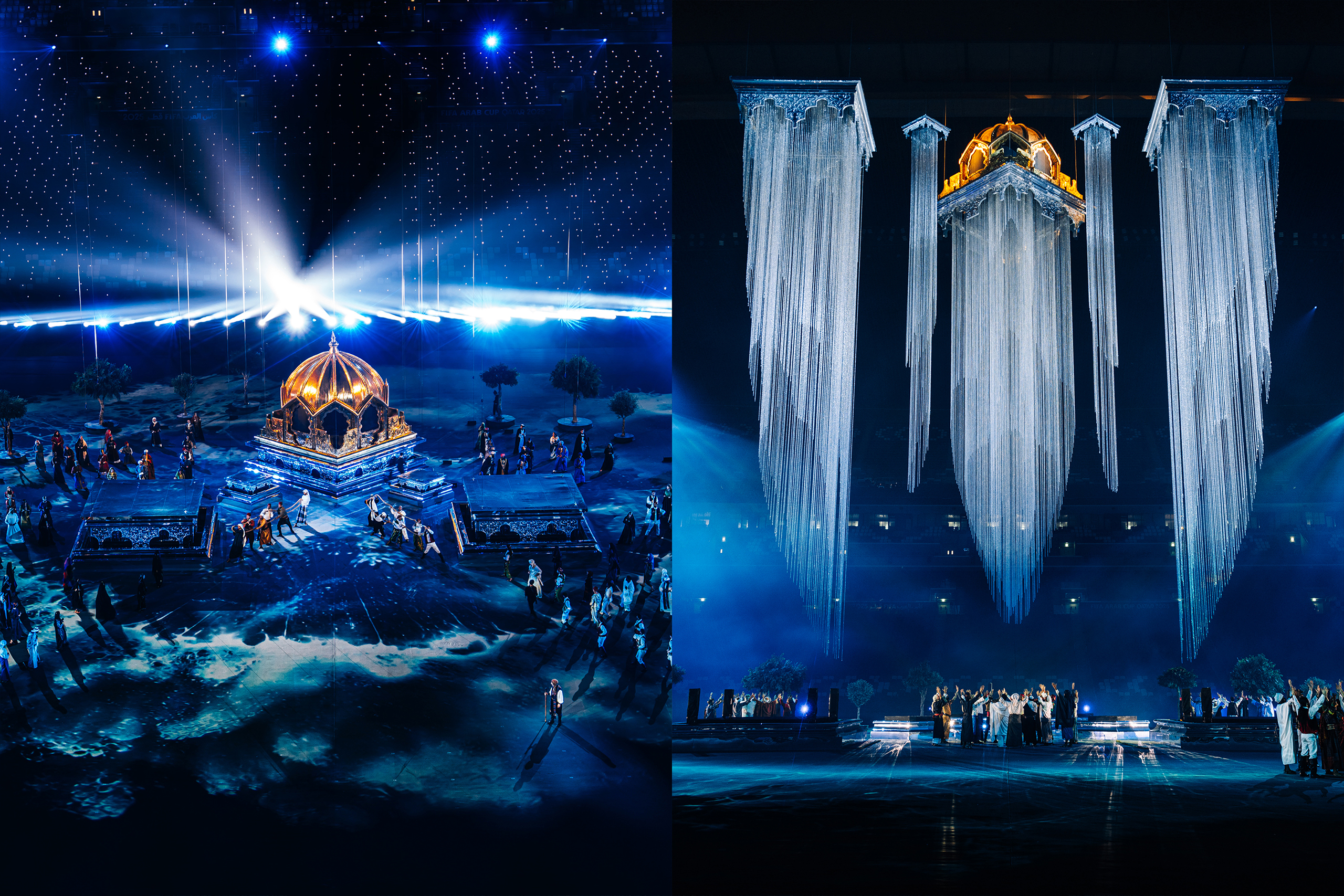
Verticality becomes the dominant visual grammar. Light reinforces this through directional bias. Illumination travels upward with the structure, aligning its movement to the mechanical ascent. This alignment avoids spectacle driven by brightness. Instead, scale is communicated through duration and continuity. The eye follows the rise without interruption. No abrupt shifts redirect attention. The structure is allowed to grow into itself.
Color temperature plays a quiet but decisive role. The warm gold assigned to the monument carries weight. It absorbs darkness rather than erasing it, allowing the object to feel grounded even while suspended. Cooler blue tones descend through the chain curtains beneath, extending the vertical field downward while thinning visual density. This creates a suspended condition that reads as intentional instability. The monument appears supported by an atmosphere shaped by light, not simply by rigging and steel.
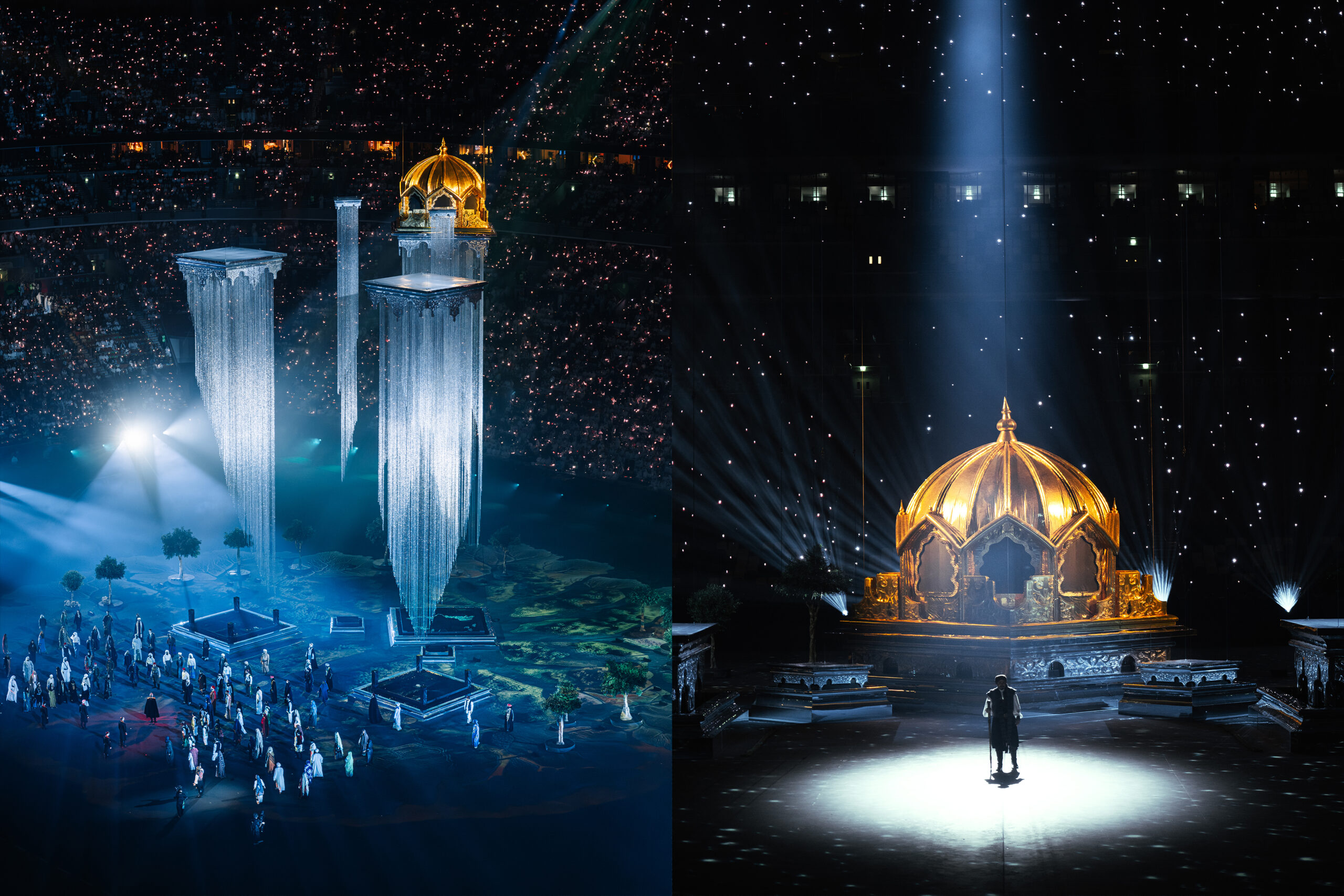
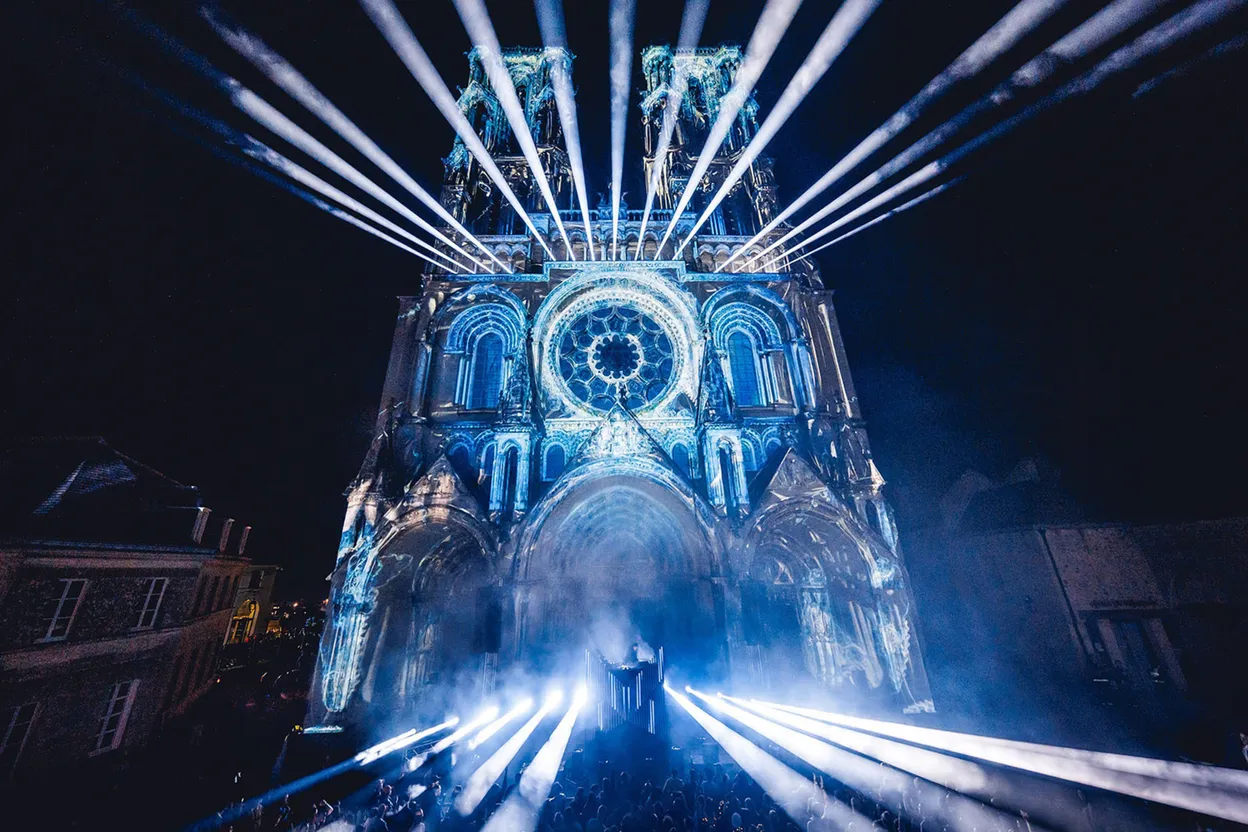
The surrounding lighting system behaves with restraint. Beam movements are expansive, though carefully positioned to frame rather than penetrate the central mass. Their paths define spatial boundaries without intersecting the monument’s volume. This separation preserves legibility. The lighting design shows clear awareness of broadcast demands. Contrast ratios remain consistent across camera angles. Highlights do not break. Shadows retain information. The image holds coherence whether viewed from the upper tiers or through a compressed television feed.
A critical moment occurs when the structure reaches its full height. The lighting does not escalate. It stabilizes. This choice resists the expectation of climax through intensity. Instead, the monument settles into presence. Illumination shifts from revelation to maintenance. The object no longer needs explanation. It occupies space with confidence earned through gradual disclosure.
Audience integration through PixMob technology extends this logic outward. Spectator light forms a distributed field, soft and collective. It amplifies scale without competing for attention. The crowd becomes a visual surface, not an ornament. Participation is registered through density, not individuality.
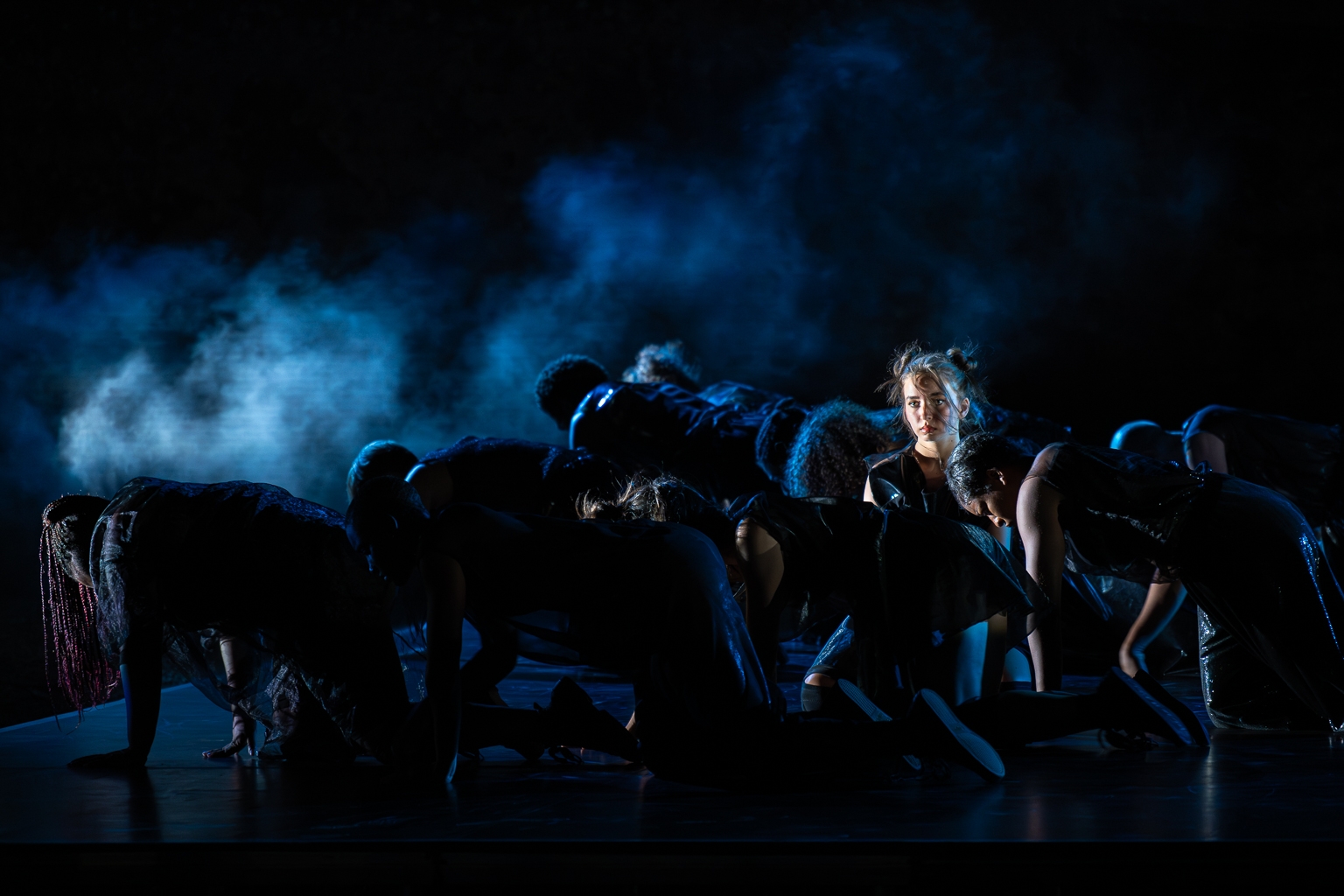
Performers move within a lighting environment that prioritizes clarity over dramatization. Their visibility is assured without hierarchy inversion. Bodies remain readable, never overstated. The lighting establishes zones that guide movement without imposing narrative emphasis. Projection mapping on the field aligns seamlessly with this restraint. The absence of conflicting color temperatures allows the ground plane to function as a coherent extension of the overall visual system.
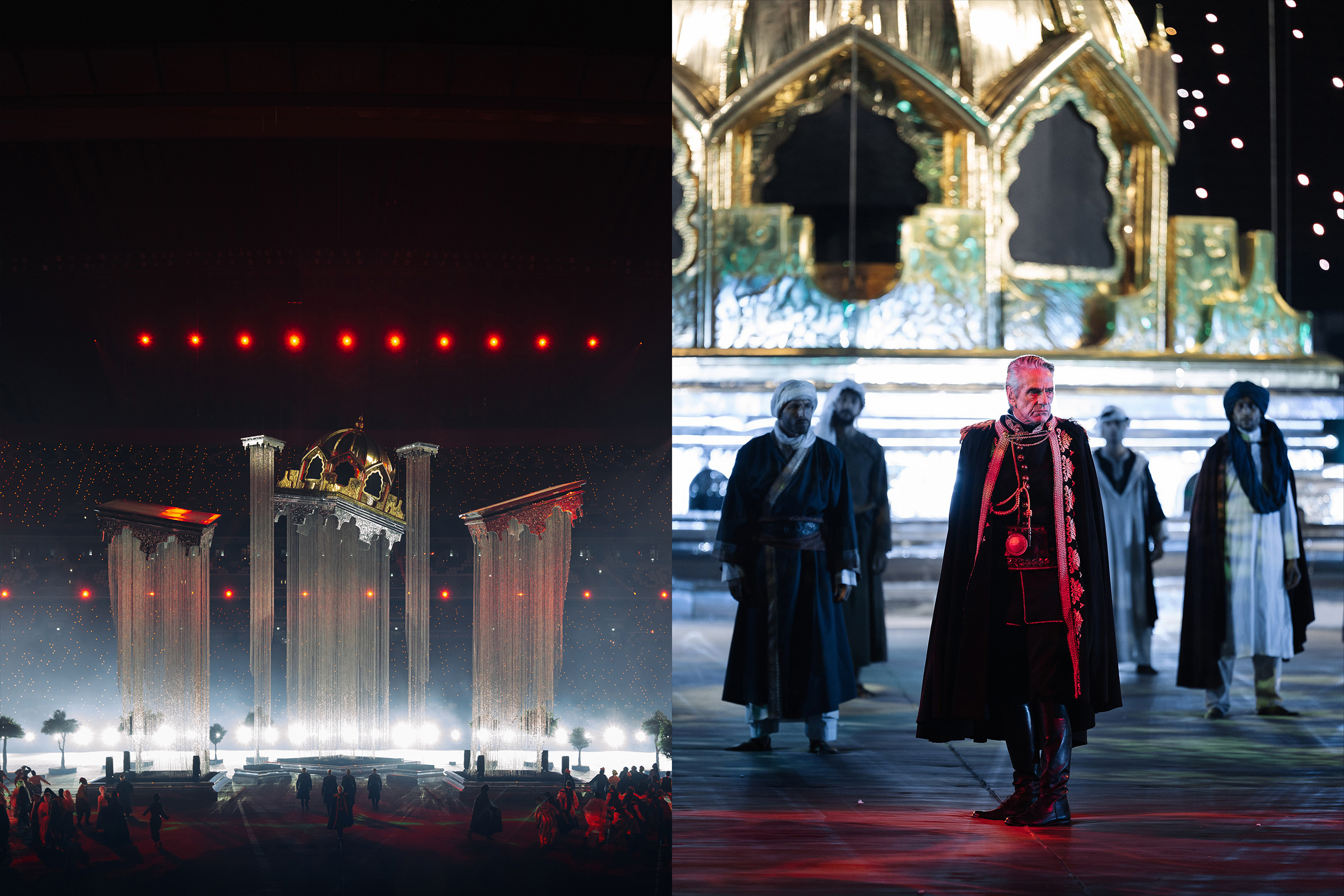
Across the duration of the ceremony, the lighting constructs identity through accumulation. No single cue carries symbolic weight on its own. Meaning emerges through continuity, through the sustained relationship between material, movement, and exposure. Before illumination intervenes, the structure exists as latent form. Through light, it acquires coherence, scale, and gravity.
By the end, the monument no longer feels introduced. It feels inhabited. The lighting withdraws just enough to leave an afterimage that persists without insistence. What remains is not a moment of spectacle, but a memory of control. The stadium returns to darkness having briefly hosted a structure whose presence was defined less by brilliance than by precision.