





What Emerged at Light + Intelligent Building Middle East
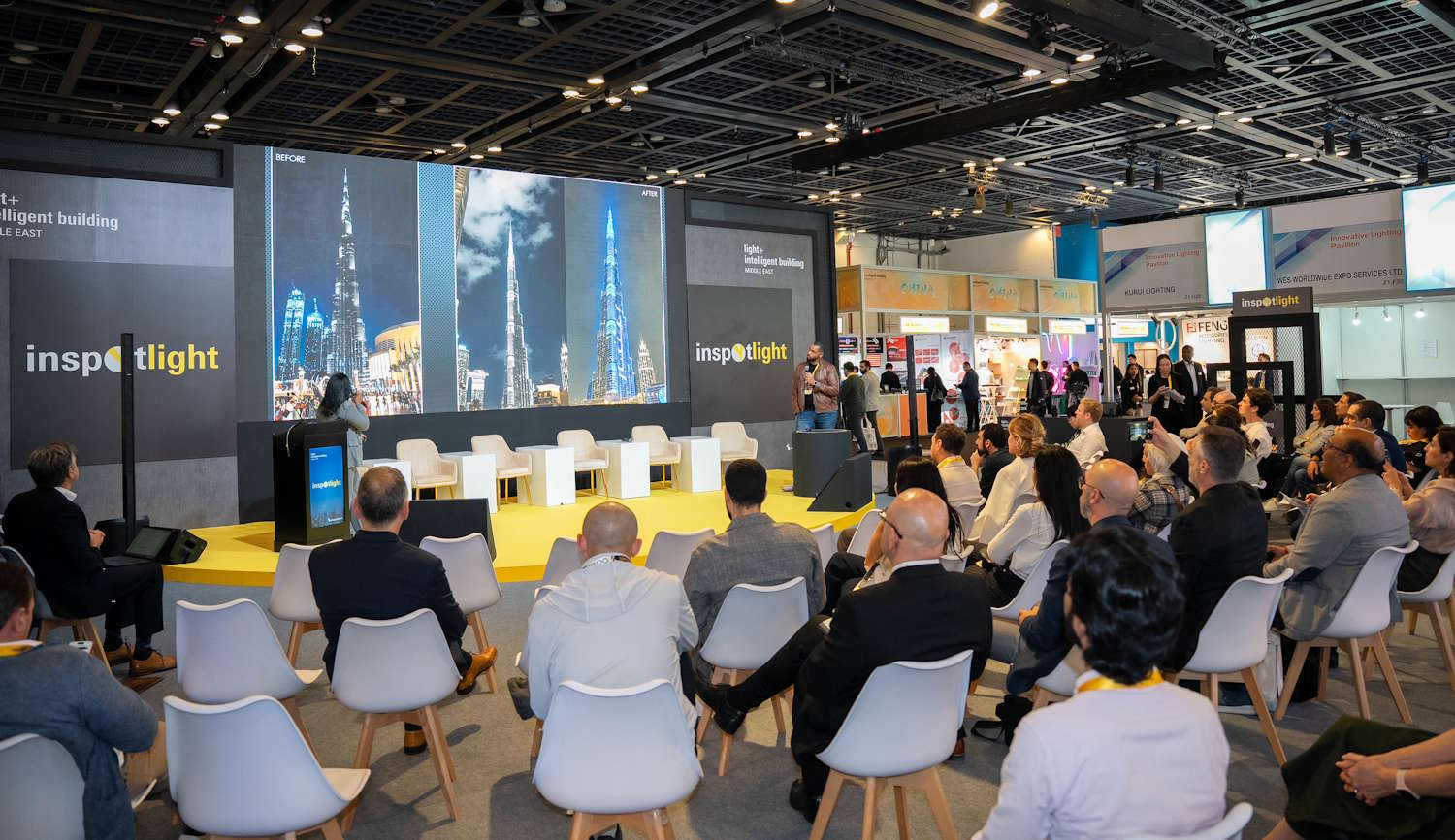
On the morning Light + Intelligent Building Middle East opened in Dubai, the halls of the World Trade Centre filled with a familiar mix of urgency and polish. Executives moved quickly between sessions. Designers lingered near scale models and lighting mockups. Screens looped simulations of buildings that existed mostly as data. The event, now in its twentieth year, has learned how to stage growth without spectacle. The emphasis was not on promises, but on process.
That tone carried into the Smart Building Summit, where the opening session gathered a panel of engineers, sustainability consultants, academics, and urban policy specialists. The title projected behind them read “Beyond Net-Zero: Rethinking Sustainability & Energy Efficiency in the Built Environment.” The discussion stayed close to the ground. Speakers referred to carbon calculations, materials, software timelines, and professional training frameworks. Sustainability appeared not as an aspiration but as a discipline shaped by tools, constraints, and accumulated decisions. 
The session was moderated by Sila Egridere, Urban Development Director at the Mayors of Europe. Her questions followed the logic of implementation rather than vision. What data is trusted. Which simulations are used. How decisions survive procurement and construction. Around her sat Drew Tinsley of WSP Middle East, Nandan Tavkar from Jacobs, Michael Rimmer of Egis, and Dr. Hassan Chaudhry from Heriot-Watt University Dubai. Their backgrounds differed, though their language converged around precision and accountability.
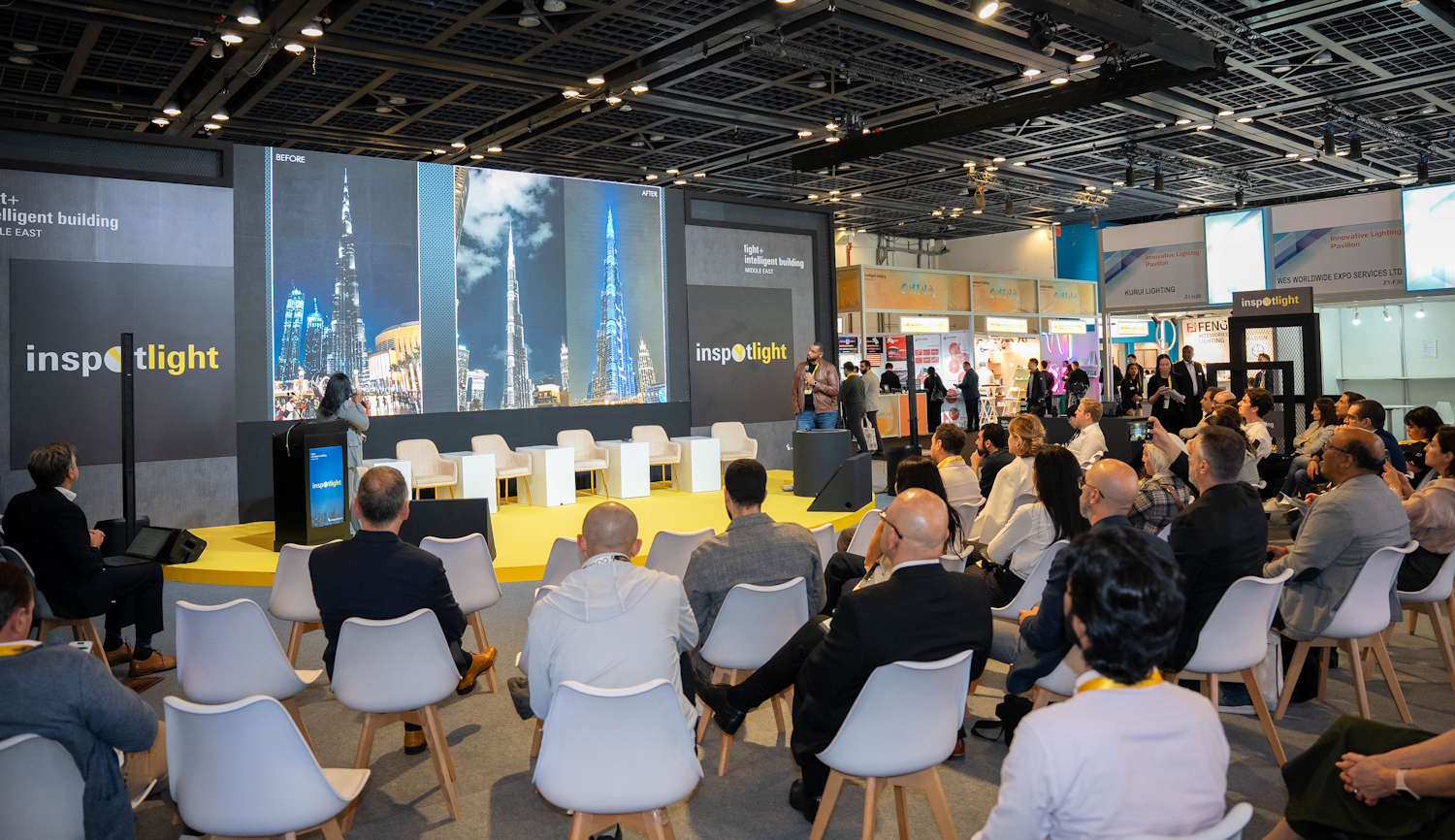
Michael Rimmer described how engineering workflows have changed. Two decades ago, carbon and cost scenarios were limited by time and processing power. Today, teams run hundreds of simulations before a design moves forward. Carbon impact, construction sequencing, and financial exposure are calculated in parallel. The change has altered how responsibility is distributed across a project. Decisions are recorded earlier. Assumptions are harder to hide.
Market data framed the discussion without dominating it. According to Grand View Research, the smart building market in the Middle East and Africa is projected to reach more than forty-six billion dollars by 2033, with annual growth exceeding twenty percent. The figures circulated quietly through the room. They explained the density of interest. They also explained the caution.
Education emerged as a recurring concern. Dr. Chaudhry spoke about the expansion of accredited programs in sustainability, artificial intelligence, digital twins, and facilities management across the UAE. The issue was not availability. It was continuity. Skills acquired five years ago no longer mapped cleanly onto current practice. Professional relevance now required repeated recalibration.
The panel returned several times to the region’s architectural history. Dubai’s Bastakiya district came up as an example of climate-responsive construction developed without contemporary technology. Wind towers, shaded courtyards, and material thickness appeared as design responses rather than aesthetic gestures. The speakers treated these references carefully, as functional precedents that could be integrated into modern systems without nostalgia.
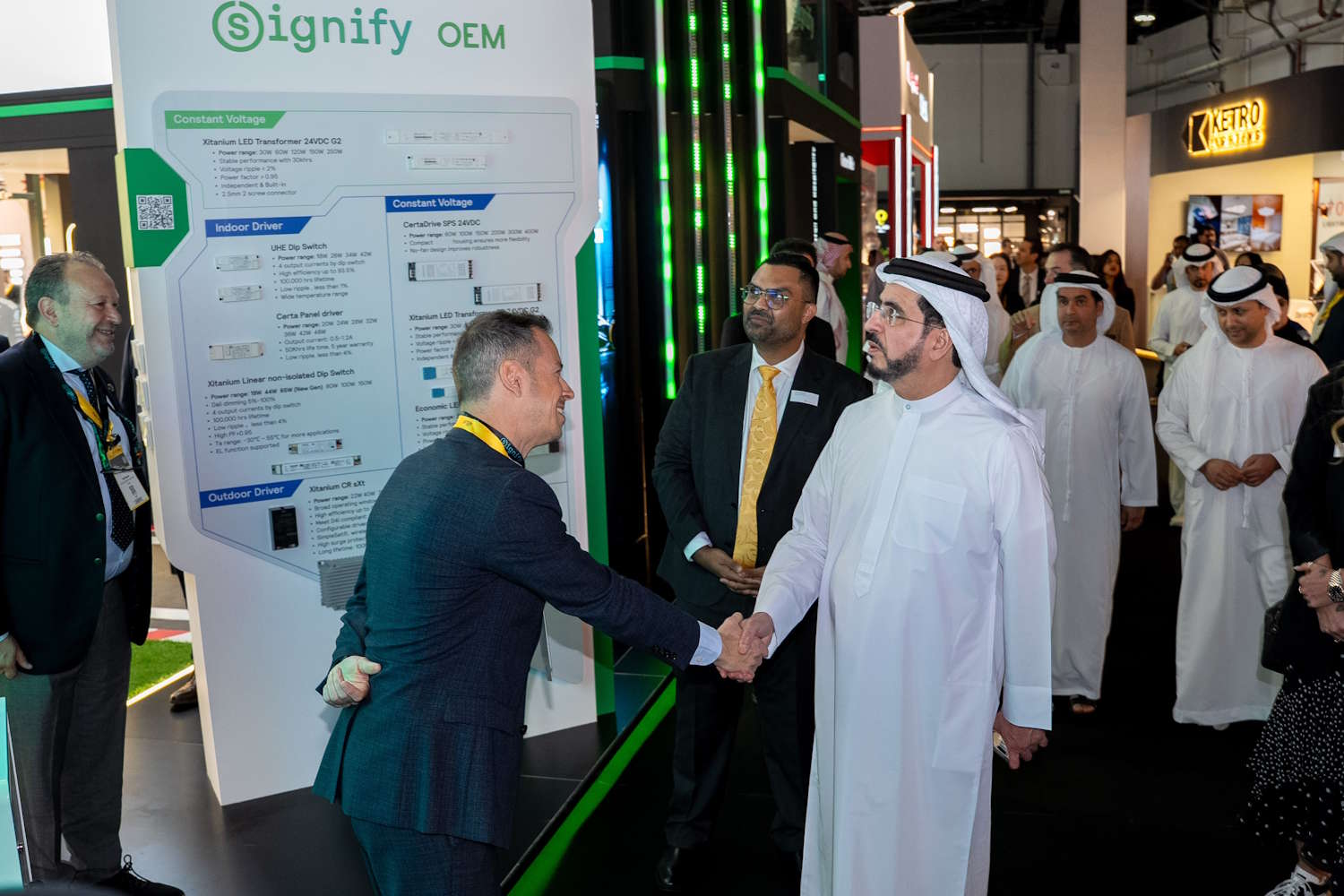
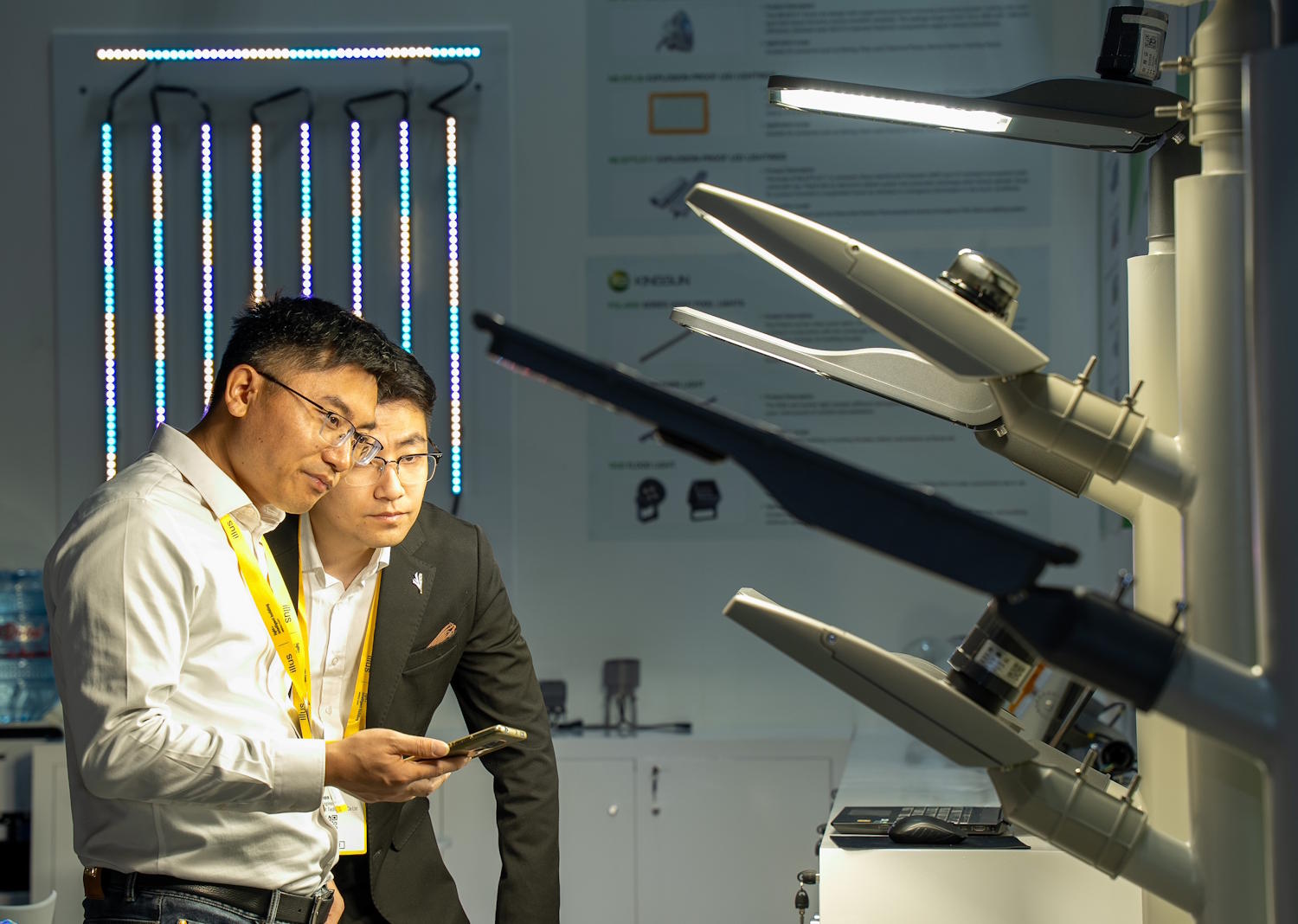
Outside the summit rooms, the exhibition floor moved at a different pace. Lighting manufacturers demonstrated control systems. Automation firms presented dashboards designed to compress years of building performance into single interfaces. The conversations were technical and restrained. Sales language softened into specification talk.
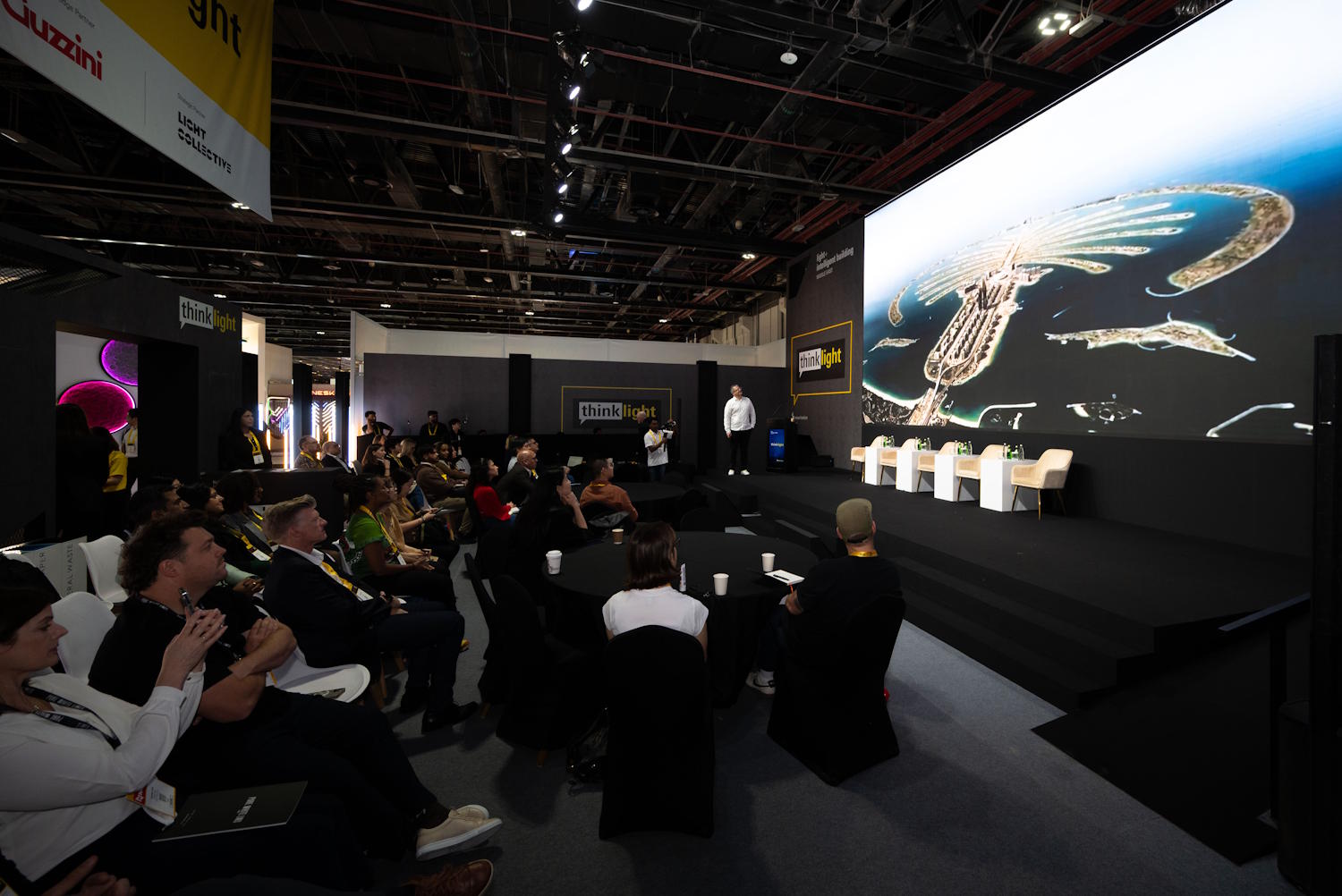
That restraint also shaped the THINKLIGHT conference, where the lighting industry examined its own evolution alongside the region’s construction boom. The opening Design Deep Dive session was delivered by Ziad Fattouh, co-founder of Delta Lighting Design. He spoke from experience rather than theory, tracing two decades of work across the UAE and the wider Middle East.
When Fattouh first arrived in the region, the professional lighting design community was small. A limited number of firms handled most large-scale developments. The market expanded quickly. Competition followed. Today, more than one hundred lighting design practices operate in Dubai alone. The shift changed expectations around authorship, technical depth, and accountability.
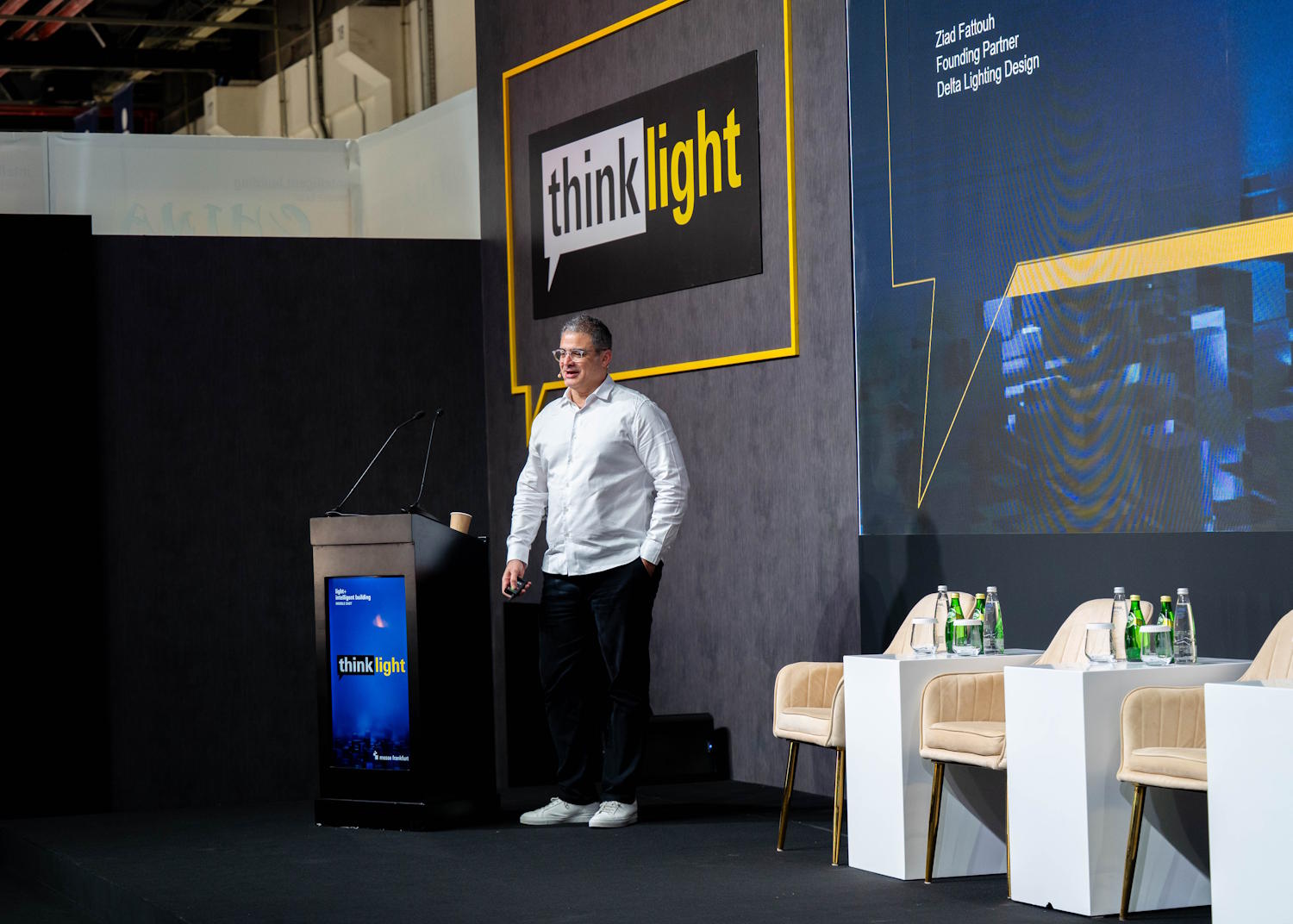
Martin Lupton, co-founder of Light Collective, introduced the session by noting the speed of the region’s transformation. Cities were built faster than their narratives. Lighting designers found themselves shaping public space before shared conventions had settled. The work accumulated quietly across façades, streets, retail environments, and cultural projects.
Fattouh referenced projects delivered for developers such as Nakheel, Emaar, Majid Al Futtaim, and regional initiatives including NEOM and the Red Sea Development Company. He described how lighting moved from decorative layer to strategic infrastructure. Coordination with architecture, engineering, and urban planning increased. Documentation thickened. Responsibility followed.
The numbers surrounding the construction market reinforced the context. The UAE’s construction sector is forecast to grow from approximately one hundred seven billion dollars in 2024 to more than one hundred thirty billion by 2029. Demand for lighting systems that respond to energy regulations, maintenance realities, and user behavior has risen accordingly.
The Design Deep Dive format, introduced for 2026, allowed forty-five minutes for uninterrupted reflection. No panel. No rapid-fire moderation. The structure mirrored a broader shift within the event toward depth over volume. THINKLIGHT ran alongside InSpotLight and the Smart Building Summit, forming a layered program that addressed design, technology, and policy without collapsing them into a single narrative.
Throughout the week, speakers from Dubai Municipality, Madrid City Council, Dubai Holding, the Marmara Municipalities Union, and the King Abdullah Financial District contributed case studies and operational insights. The conversations remained grounded in governance structures, procurement models, and performance metrics. Vision statements were rare. Implementation details dominated.
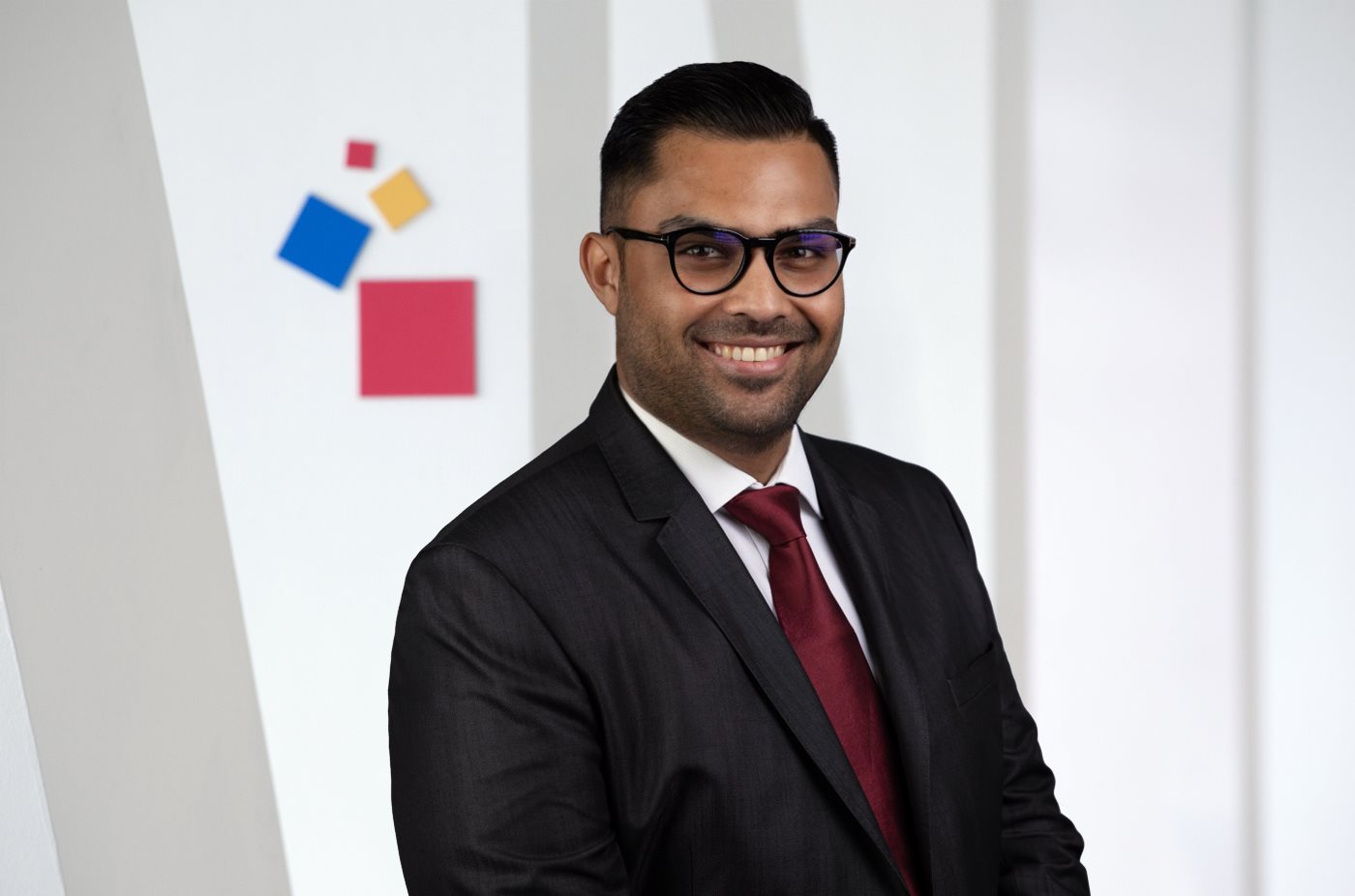
Abdul Muhsin, Show Director for Light + Intelligent Building Middle East, described the event as a platform for alignment. Lighting, automation, and building intelligence no longer operate in isolation. Their value depends on coordination across disciplines and timelines. The exhibition’s role has shifted accordingly.
By the second day, the atmosphere settled into routine. Meetings shortened. Conversations sharpened. The novelty of scale gave way to practical assessment. Which systems integrate cleanly. Which data sets remain reliable after handover. Which skills remain scarce.
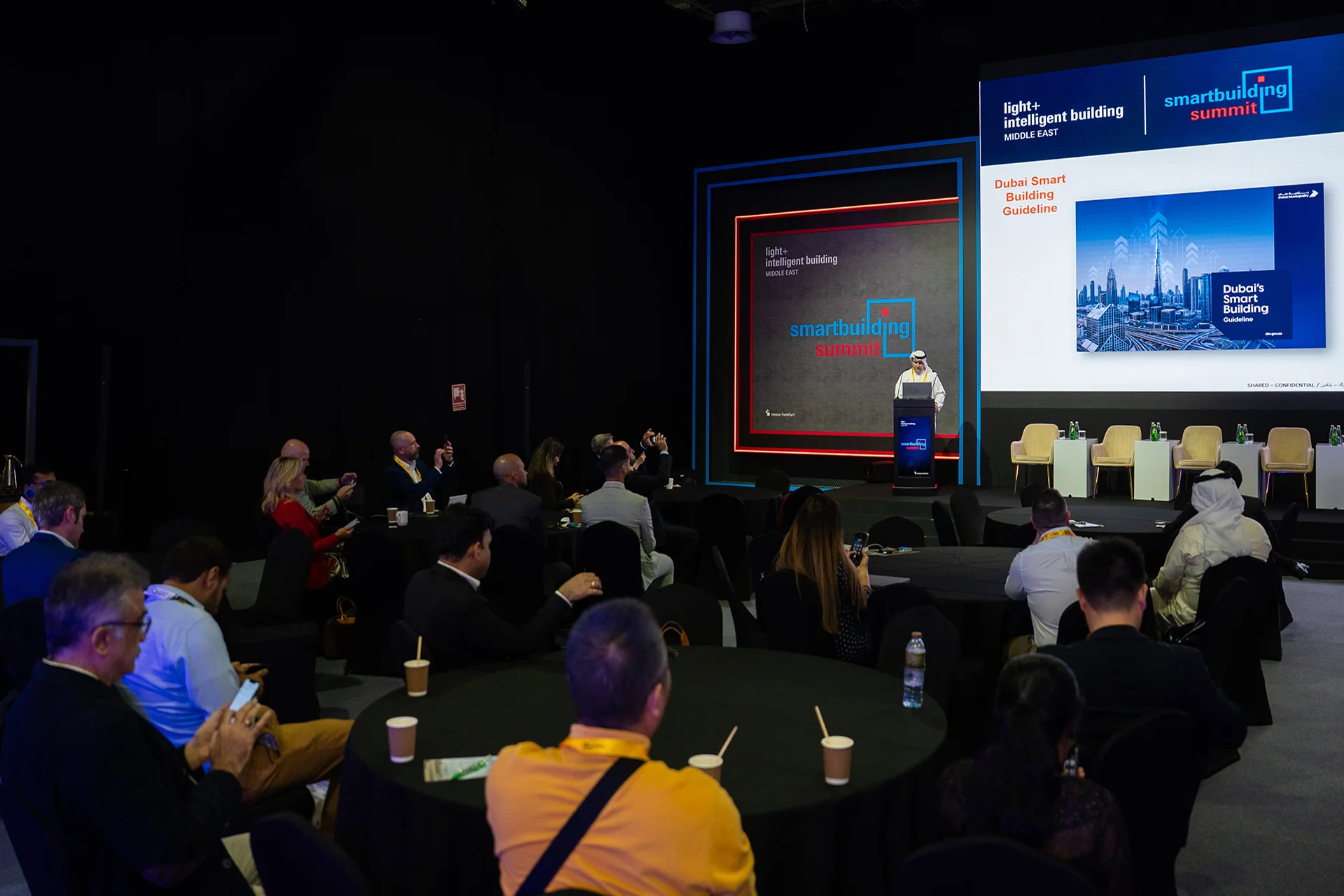
Light + Intelligent Building Middle East continues through January 14, occupying Za’abeel Halls 1-3 and Hall 1 at the Dubai World Trade Centre. More than six hundred brands from thirty countries are represented. Attendance is expected to exceed sixteen thousand professionals. The numbers matter. The quieter exchanges matter more.
What emerged across the summit rooms and conference halls was not a unified vision, but a shared discipline. Sustainability appeared as a sequence of decisions recorded over time. Lighting functioned as infrastructure shaped by regulation, technology, and habit. Smart buildings revealed themselves through spreadsheets, simulations, and training schedules.