







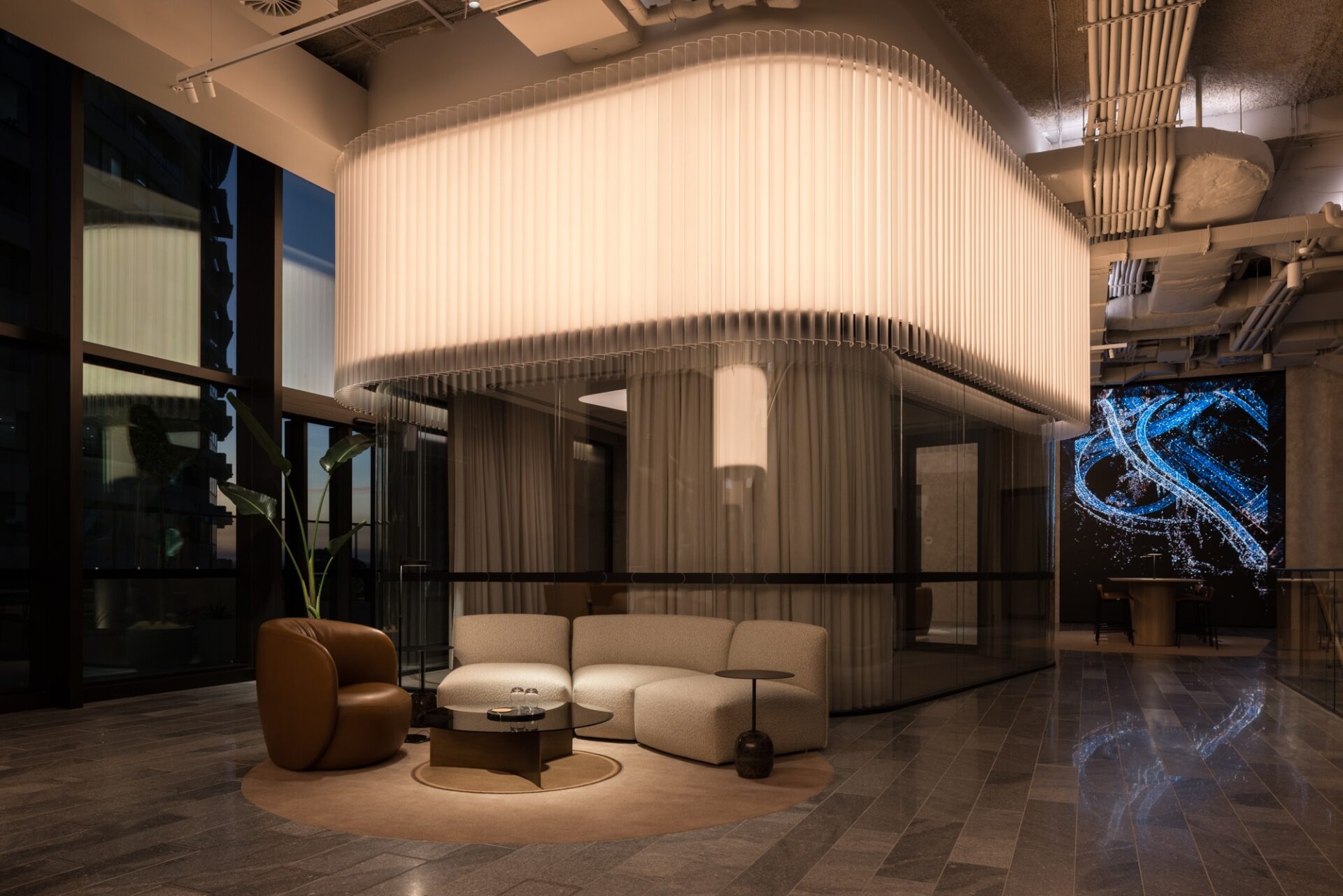
A Sky Trapped Indoors
The elevator doors open onto a corridor that feels withheld from the building’s ordinary logic. The ceiling carries a restless field of blue light, fractured and drifting, as if the surface above had lost its material certainty and turned into a thin membrane holding something fluid in suspension. This gesture does more than decorate the threshold. It alters the psychological contract between visitor and workplace. The corridor stops functioning as a neutral conduit. It becomes an instrument of delay. The slow movement of the projected pattern destabilizes the fixed geometry of the architecture, and in doing so, it extends the perceived depth of the ceiling plane. The space appears taller than its measured dimension, and its darkness gains a sense of intention rather than absence. Without this intervention, the corridor would register as a predictable compression zone. With it, the space acquires a temporal character. Light here performs as an event that unfolds during passage.
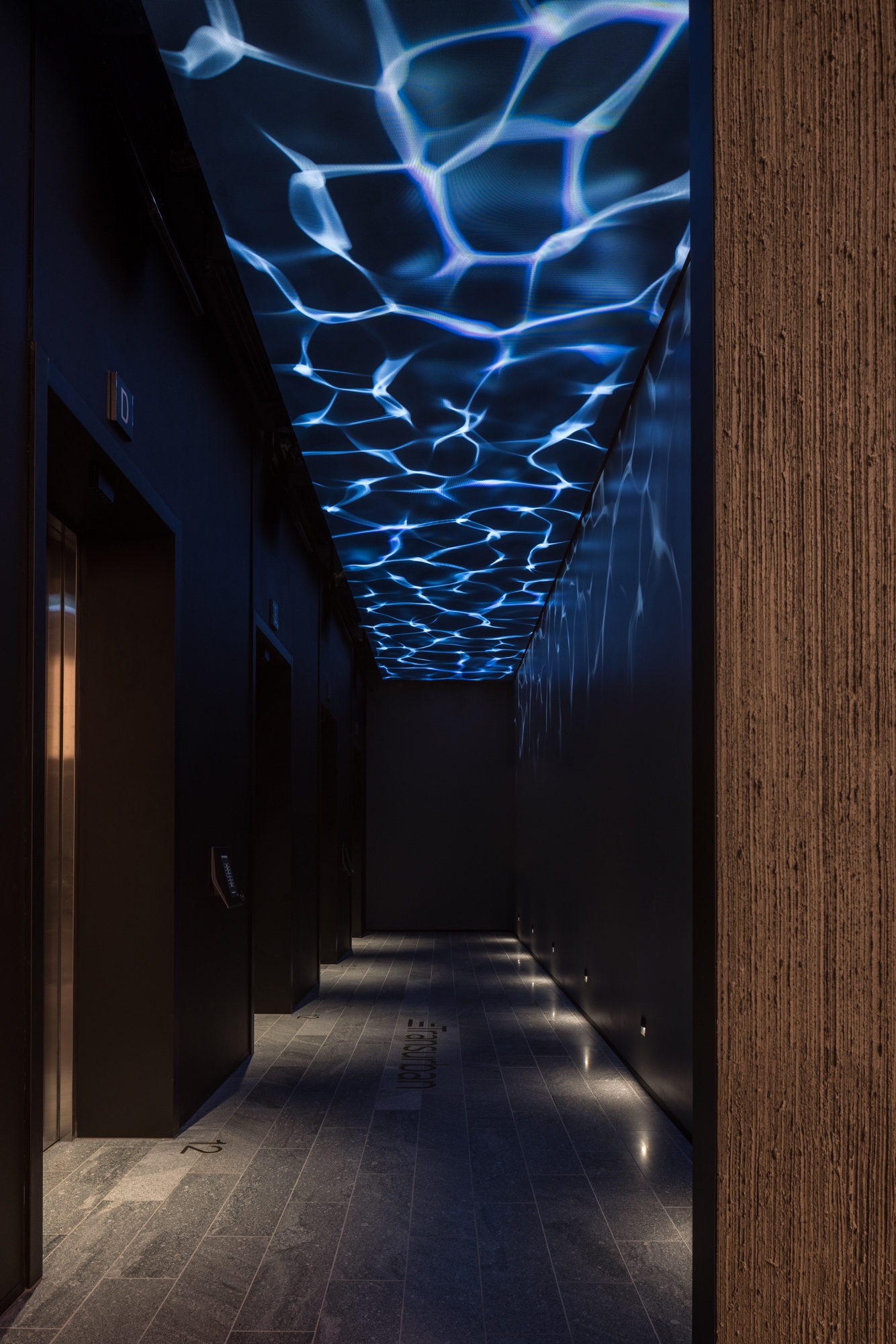
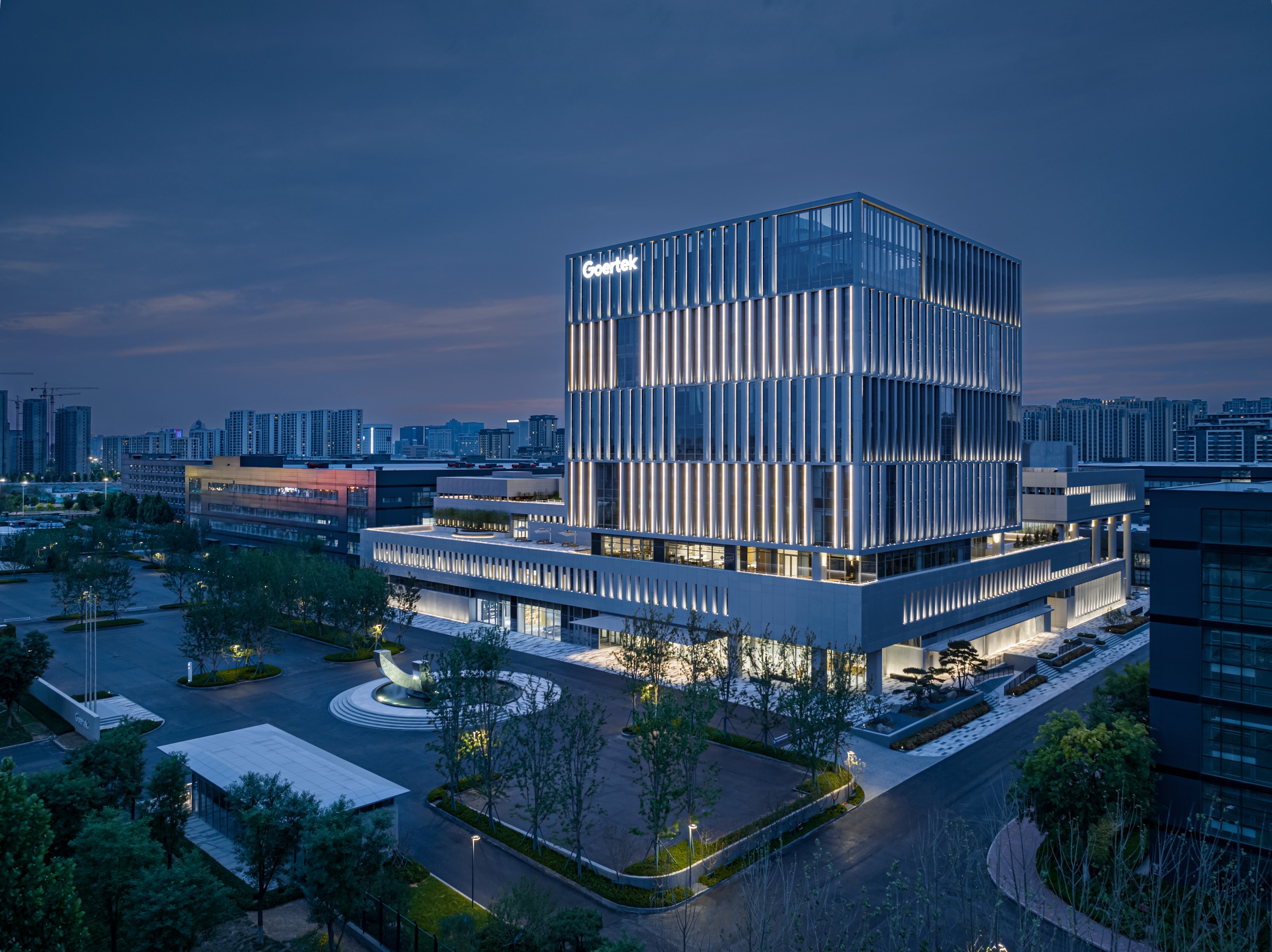
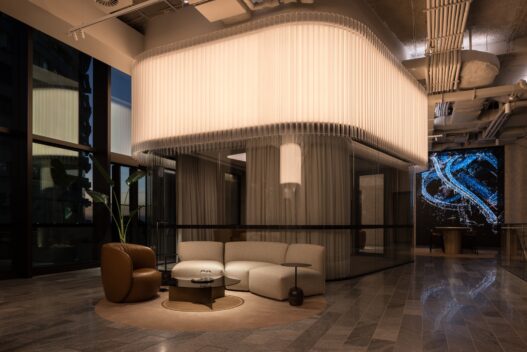
The arrival lobby carries this logic forward and resolves it into a more stable condition. The large lantern-like volumes hover with a quiet authority. Their scale resists the human body. They occupy the air with the confidence of structural elements, yet their material presence dissolves at the edges where the luminous surface fades into the surrounding volume. These forms do not flood the space indiscriminately. Their luminance has been calibrated to hold its perimeter, allowing the surrounding architecture to remain legible. The glow settles onto adjacent surfaces with restraint. The floor receives a softened gradient. The glass enclosure gathers reflections that shift with the observer’s position. The visual field stays composed, and the hierarchy of elements remains intact. 
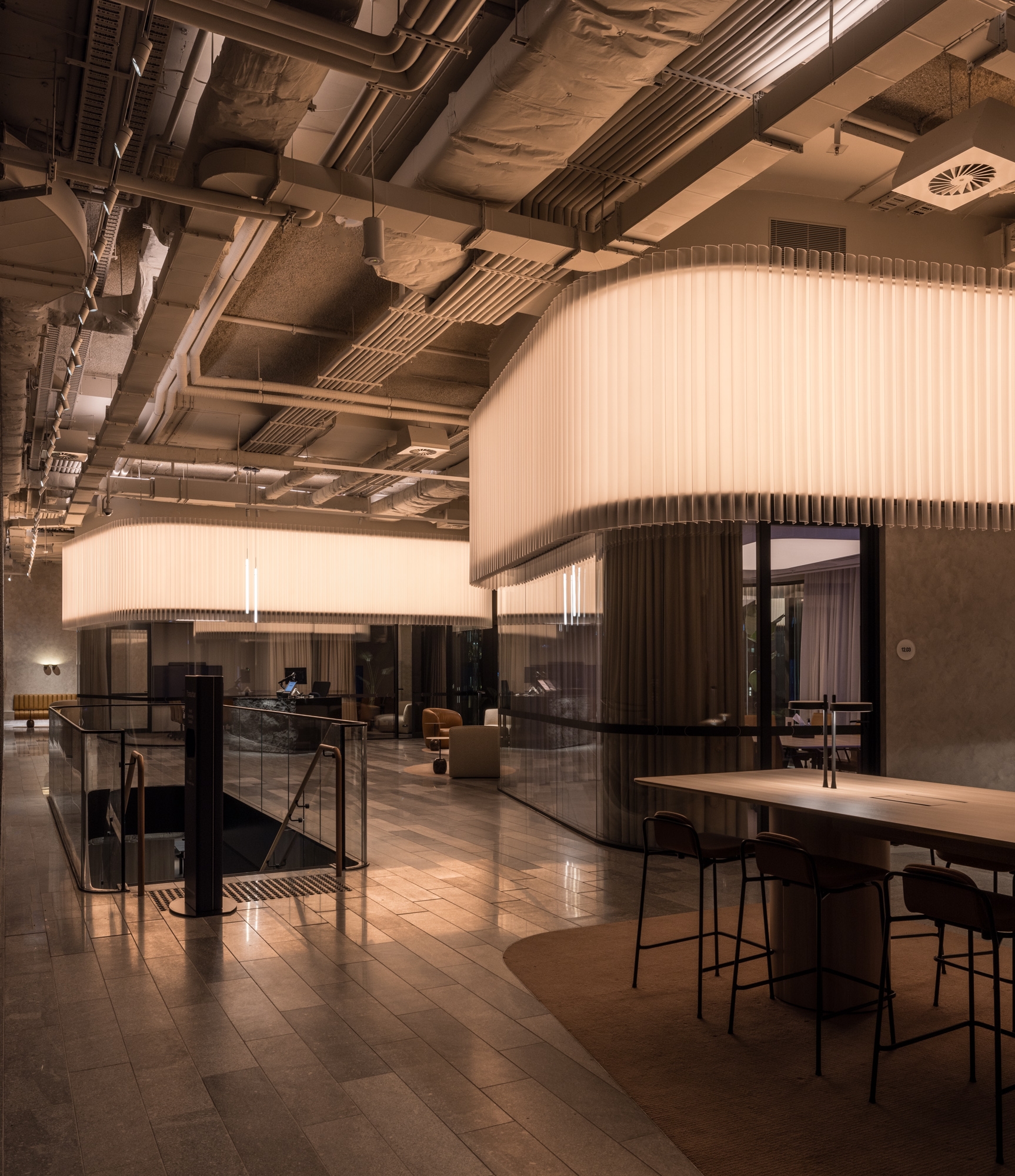
This restraint reveals a disciplined understanding of luminous balance. The lantern volumes function as anchors, stabilizing the perceptual field of a double-height space that could easily lose coherence. Their presence introduces a center of gravity. Movement around them feels oriented. The visitor’s body registers their position instinctively, and circulation begins to organize itself in response.
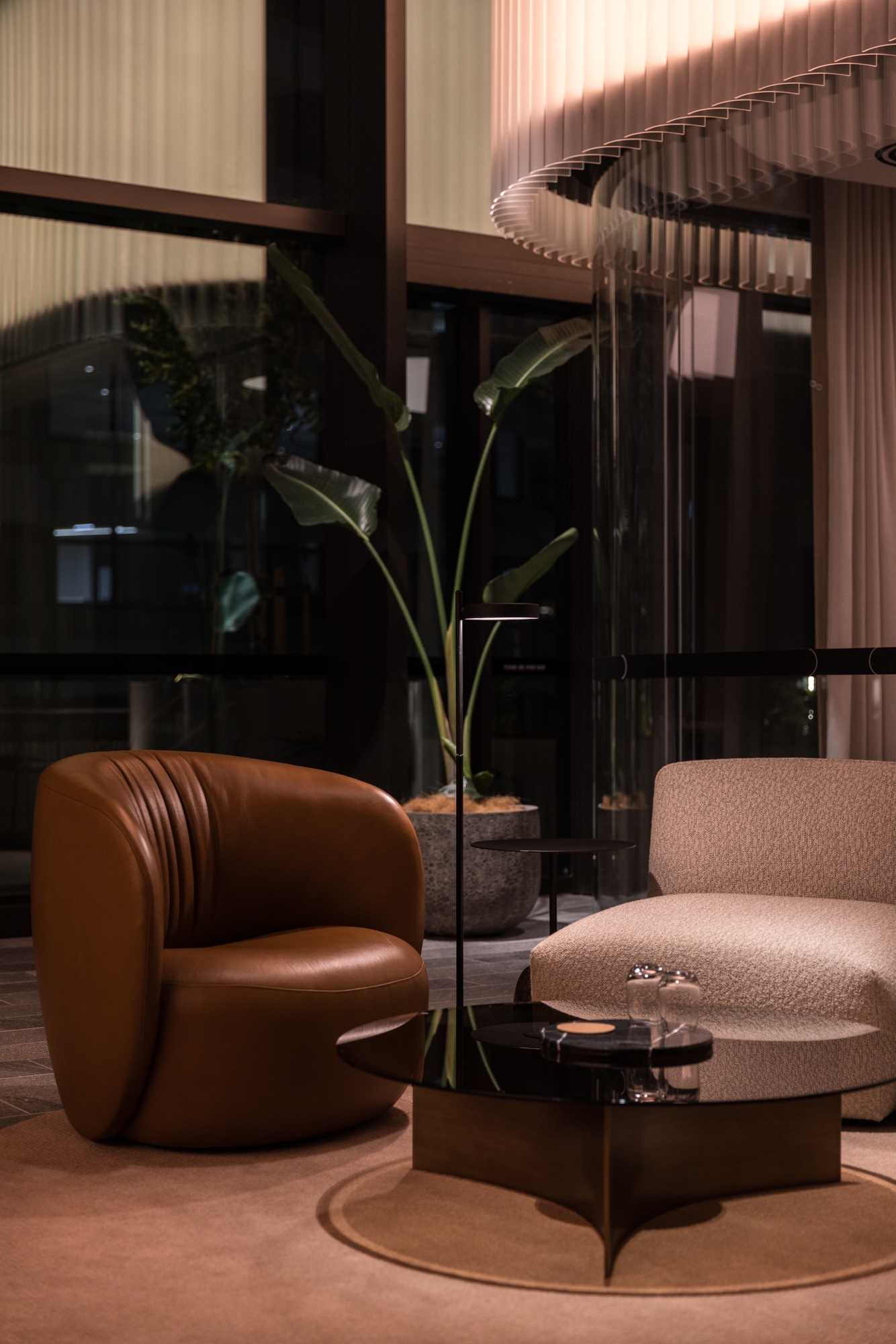
The open lounge beneath one of these volumes demonstrates how light can compress space without physical enclosure. The seating area becomes its own microclimate. The overhead luminance lowers the perceived ceiling height within that zone. The effect is subtle and depends on a narrow margin of luminance contrast. Too bright, and the surface would flatten. Too dim, and the volume would disengage. The chosen intensity sustains an equilibrium. The light settles onto upholstery and skin with an evenness that avoids glare while preserving clarity of form.
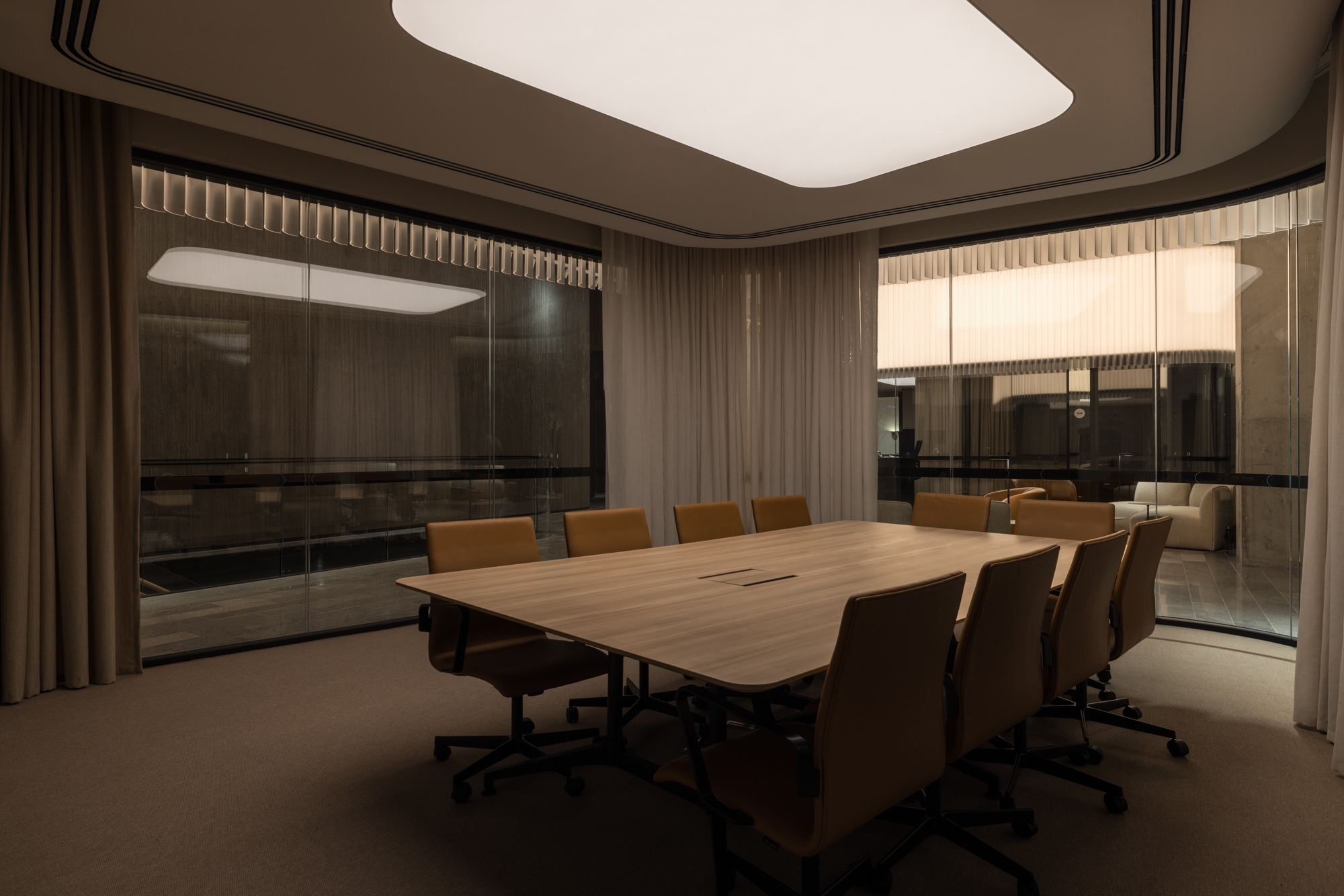
The meeting room offers a different expression of control. The luminous ceiling plane appears continuous and calm, with no visible points of origin. This absence of visible fixtures eliminates distraction. Faces and gestures become the primary visual content. The lighting supports the act of communication by maintaining consistent vertical illumination. Shadows do not interrupt eye contact. The space sustains attentiveness through visual comfort. At the same time, the uniformity introduces a degree of detachment. The environment feels precise and measured. Emotional warmth becomes secondary to optical performance. The room carries the atmosphere of a controlled chamber where information moves efficiently.
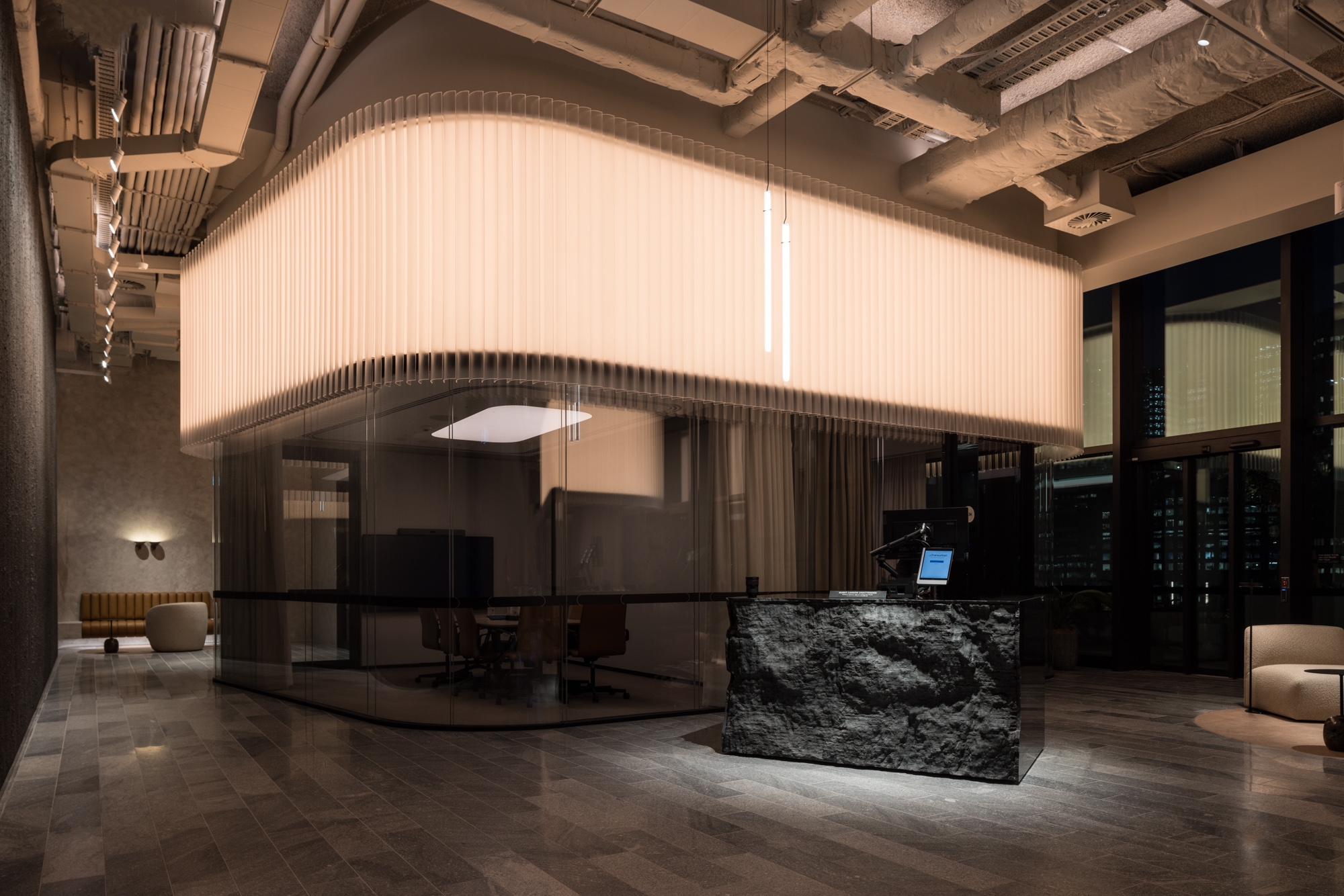
Across the workplace, the integration of automated color temperature adjustments introduces a temporal layer that extends beyond immediate perception. The gradual shifts remain below the threshold of conscious attention. Occupants do not experience a moment of change. They experience a continuity that aligns with the rhythm of the day. This strategy places responsibility on the system rather than the individual. Light assumes the role of environmental mediator. The building begins to behave as an organism with its own internal clock.
This level of control requires discipline in execution. Minor deviations in calibration could disrupt the visual coherence. The success of such a system depends on precision that often escapes casual observation. When aligned correctly, the result carries a quiet authority. The workplace gains a sense of stability. The environment appears attentive.
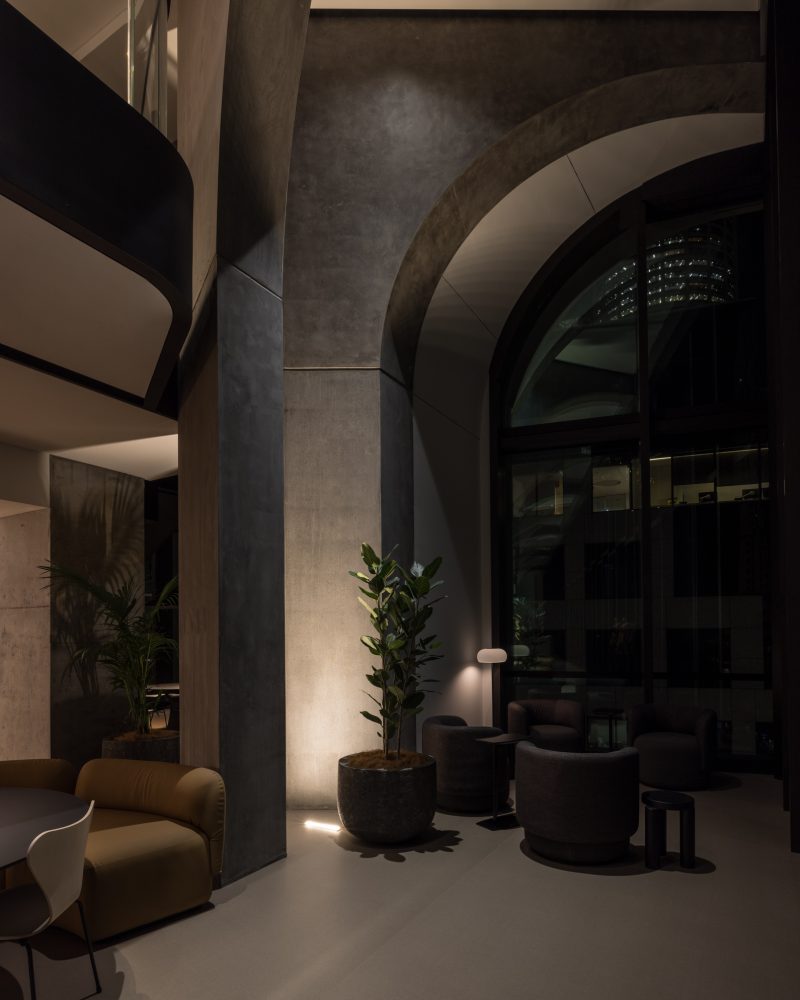
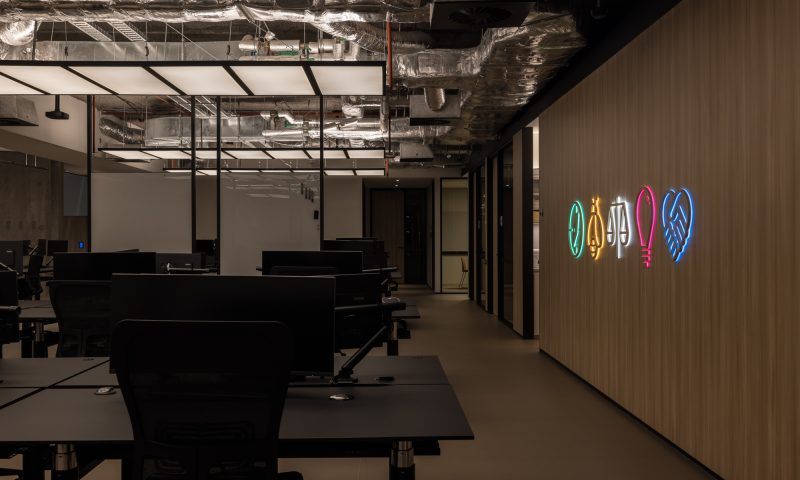
The darker circulation zones demonstrate an understanding of visual recovery. After exposure to brighter areas, the eye requires moments of rest. These subdued spaces allow the visual system to reset. Small points of low-level light along the floor guide movement without demanding attention. The body moves through them without hesitation. These areas support the larger luminous composition by providing contrast and rhythm.
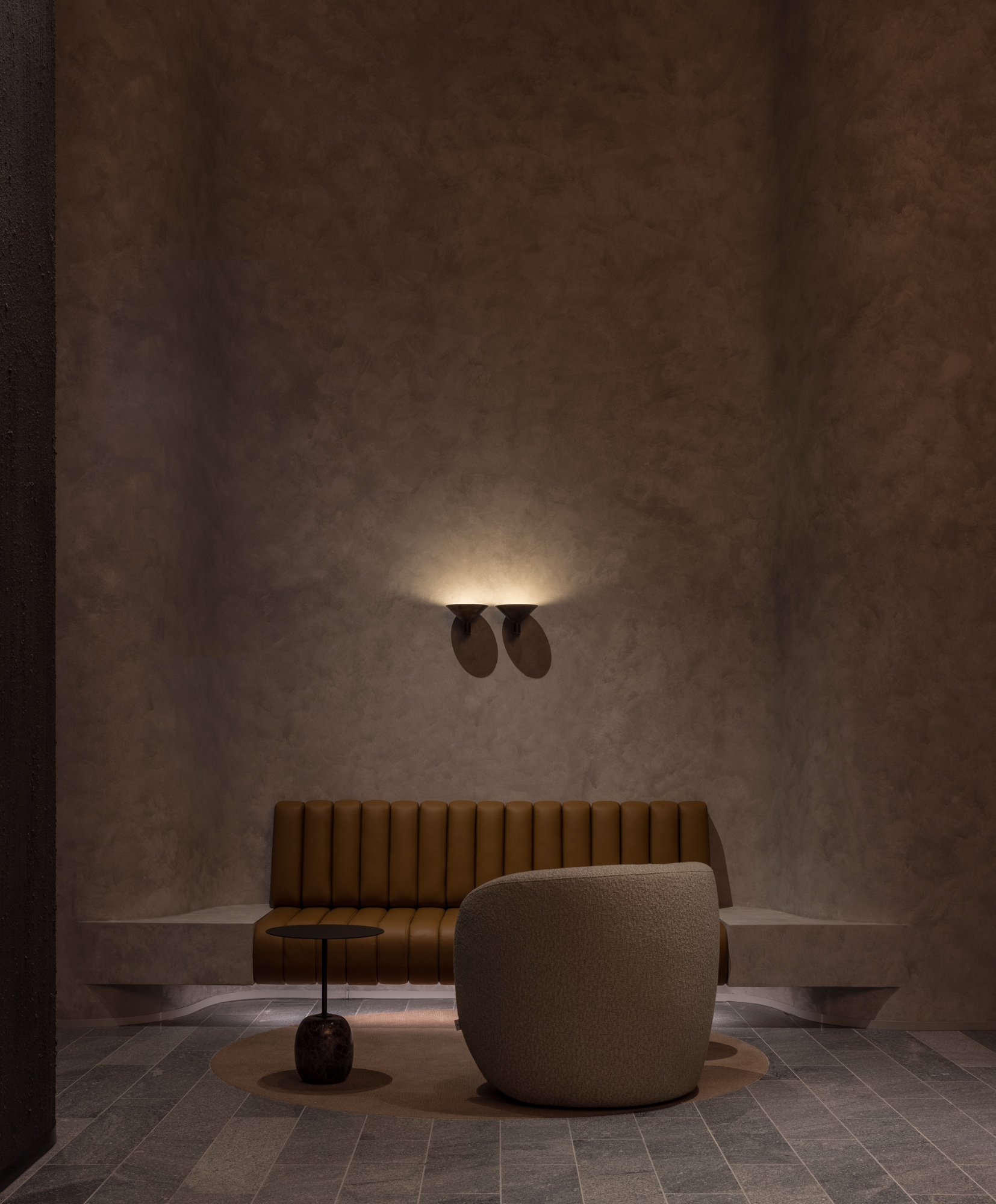
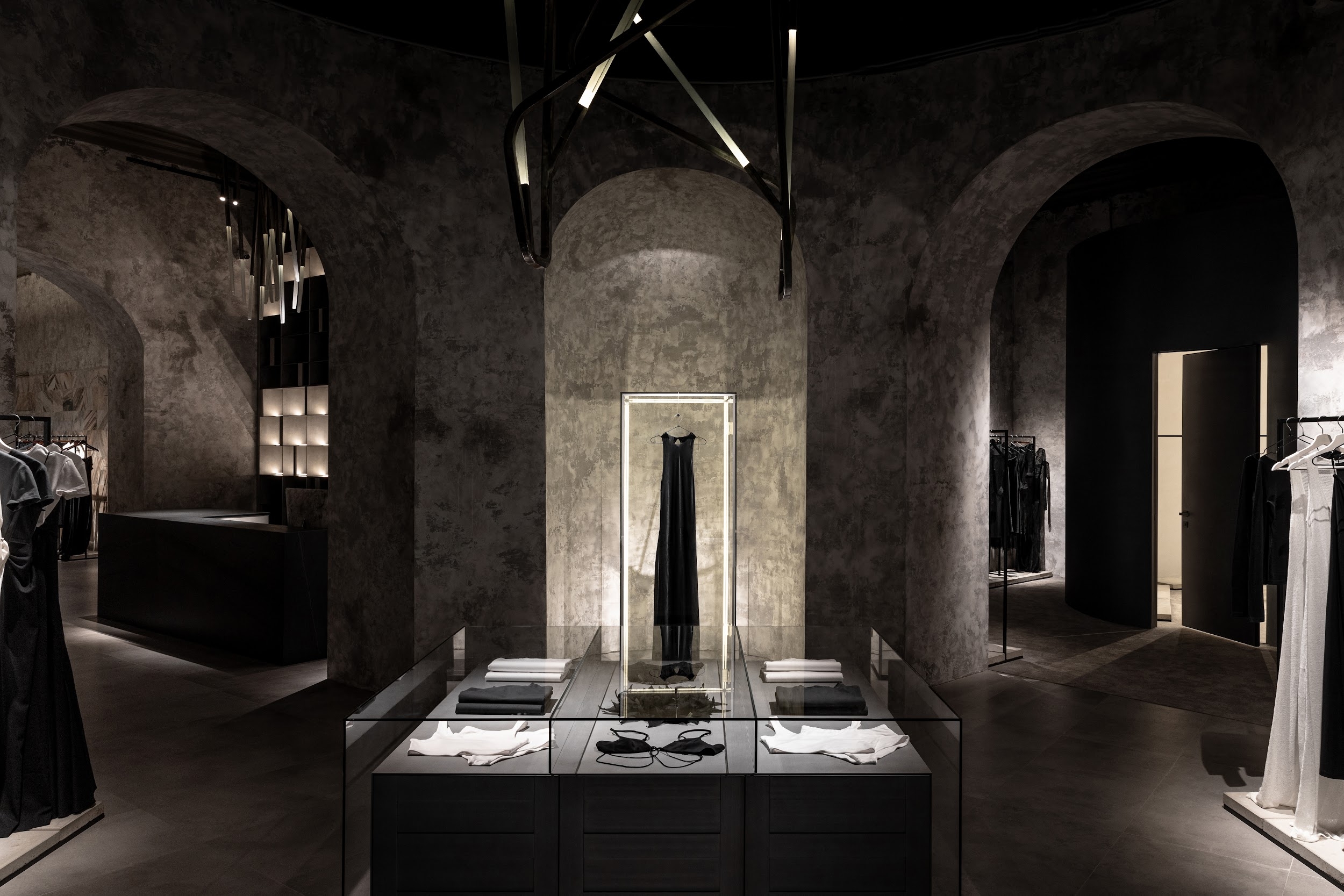
Yet this reliance on controlled atmospheres introduces a condition where the building’s identity becomes inseparable from its technological systems. The lighting carries a significant portion of the architectural expression. The physical materials recede into a supporting role. Their textures remain present, though their emotional resonance depends on illumination. The architecture reveals itself through light rather than mass.
This relationship defines the project’s central ambition. Light operates as the primary author of spatial meaning. Surfaces act as receivers. Volume becomes visible through luminance gradients. The workplace gains coherence through these orchestrated conditions.
The most compelling aspect lies in the consistency of intention. Each luminous gesture acknowledges its role within a larger sequence. The immersive corridor prepares the senses. The lantern volumes stabilize orientation. The workspaces sustain visual comfort. The darker passages allow withdrawal. These conditions unfold with a narrative clarity that remains perceptible even without conscious analysis.
Over time, occupants will likely stop noticing the mechanisms behind these effects. The lighting will dissolve into the background of daily routine. Its success will reside in this disappearance. The environment will feel composed without revealing the effort required to maintain that state. The building will continue to perform its quiet work, shaping perception moment by moment, holding the fragile agreement between body, space, and light.