






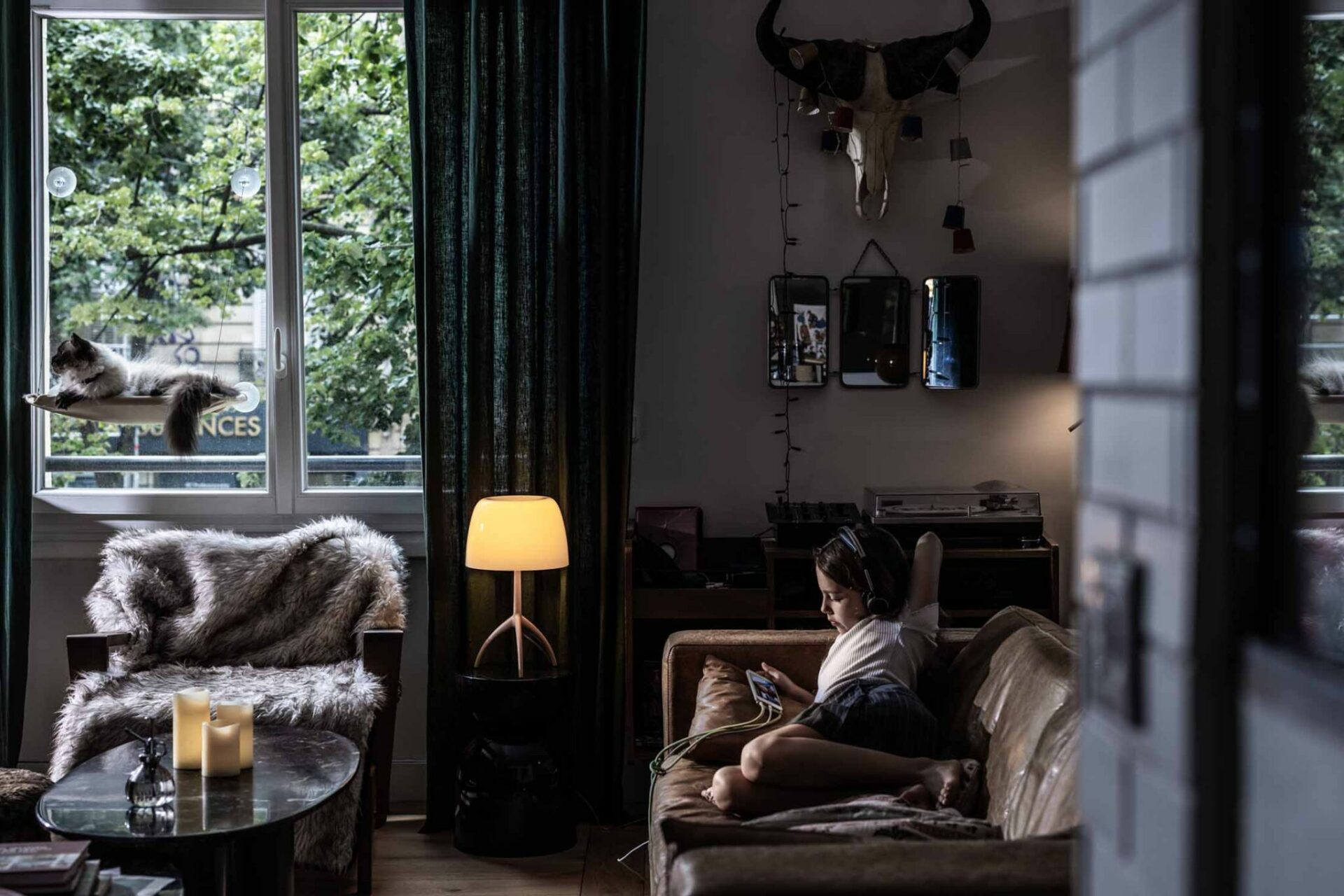
A Quiet Vessel of Warmth
There is a moment in the evening when objects on a bedside table lose their independence and begin to merge into a single, unreadable mass. Books become blocks. Surfaces flatten. The room forgets its own depth. In that suspended state, before the lamp is turned on, the Lumiere exists as a dormant form, its colored glass holding no responsibility beyond its own outline. Its presence is polite, almost withdrawn, as if waiting for permission to participate. 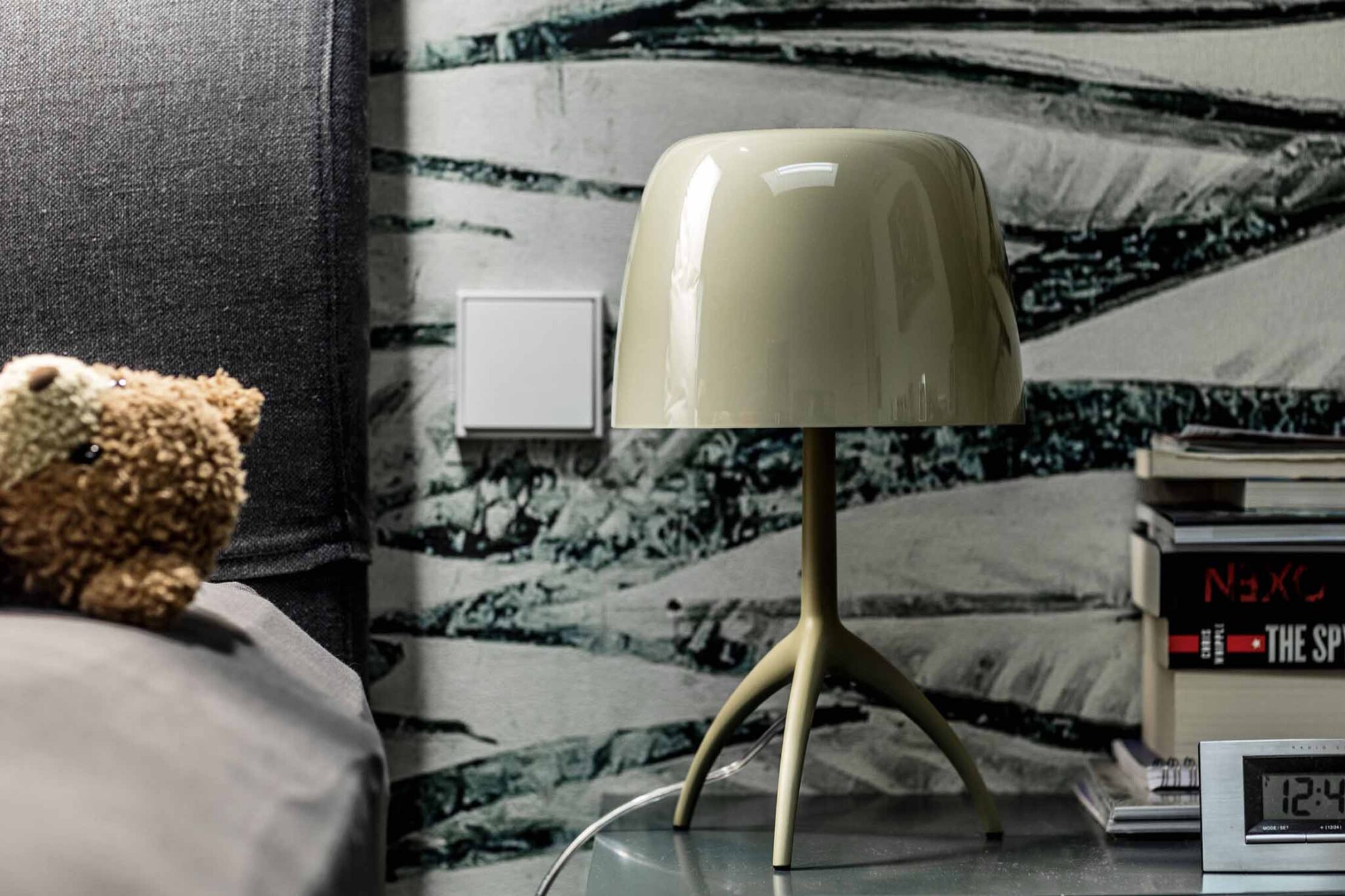
When illuminated, the change unfolds with remarkable composure. The glass does not simply reveal the light source inside. It reshapes the light into something that feels settled and deliberate. The glow remains contained within the volume before extending outward, and this containment gives the illumination a sense of weight. The light seems to belong to the glass, as though it has been absorbed and re-authored by the material. This decision defines the emotional register of the lamp. The room does not suddenly become brighter. It becomes more legible. Edges regain their softness. Surfaces recover their depth.
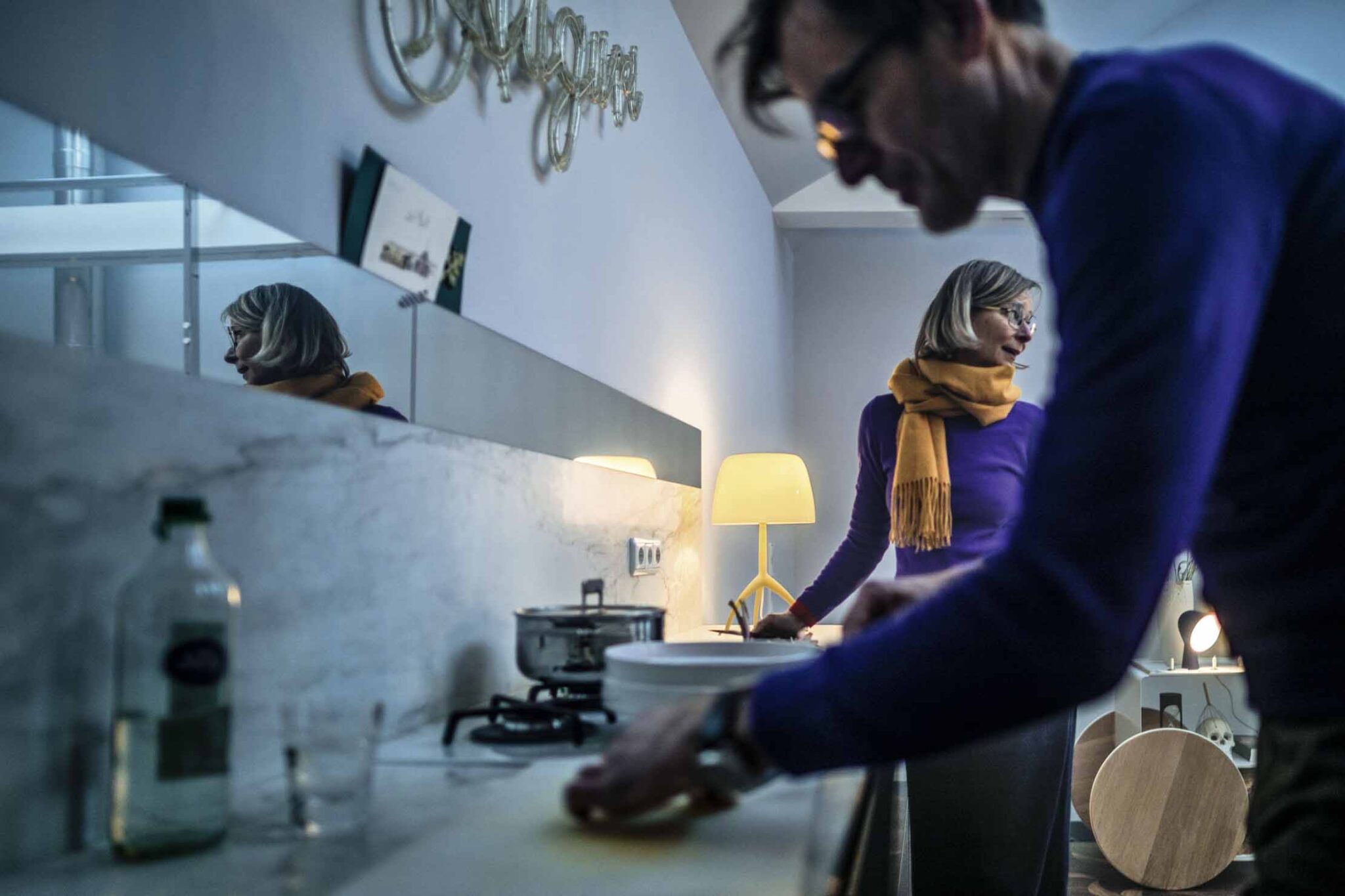

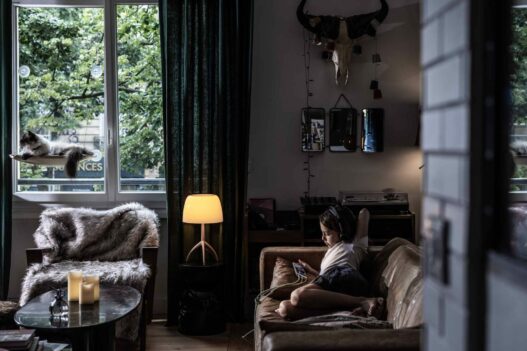
The curvature of the diffuser plays a decisive role in this experience. Its rounded profile guides the light downward and outward in a controlled field that stays close to the table. The immediate environment becomes the primary recipient. The wood beneath it responds with a muted sheen, revealing texture that remained invisible in ambient darkness. Objects placed nearby gain a sense of physical presence. A book cover, a small object, the corner of a frame all begin to occupy their own visual territory again. The lamp restores separation between things.
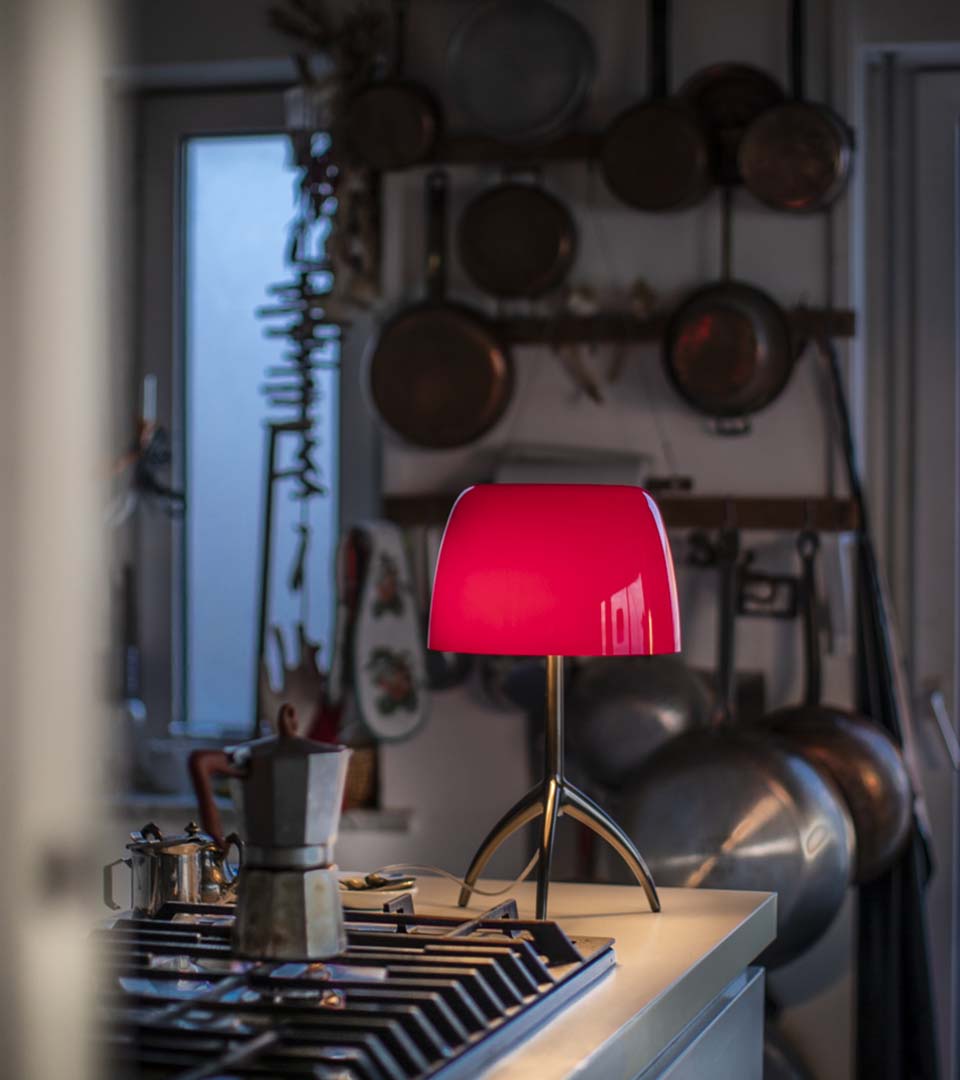
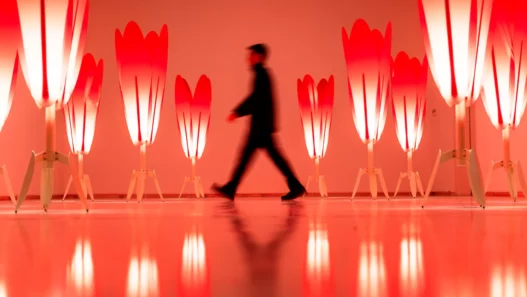
The colored glass introduces a subtle psychological layer. The red version carries a density that alters the emotional temperature of the space. The light emerges with warmth that feels physical, almost tactile. This warmth does not travel far. It concentrates itself around the lamp, reinforcing the intimacy of its reach. The lamp creates a center of gravity in the room, a point toward which attention naturally settles.
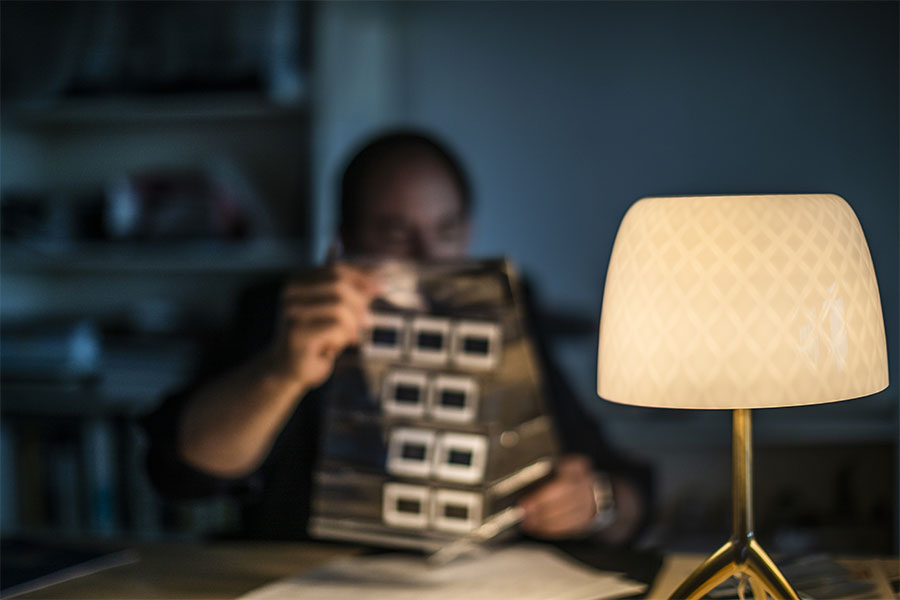
The base holds this luminous volume with surprising restraint. Its slender metal structure avoids competing with the glass, allowing the illuminated form to remain dominant. The small distance between the diffuser and the table allows a shadow to form beneath it, and this shadow gives the light a boundary. That boundary makes the illumination feel intentional. It prevents the lamp from dissolving into the environment. The object remains present, even as it emits light.
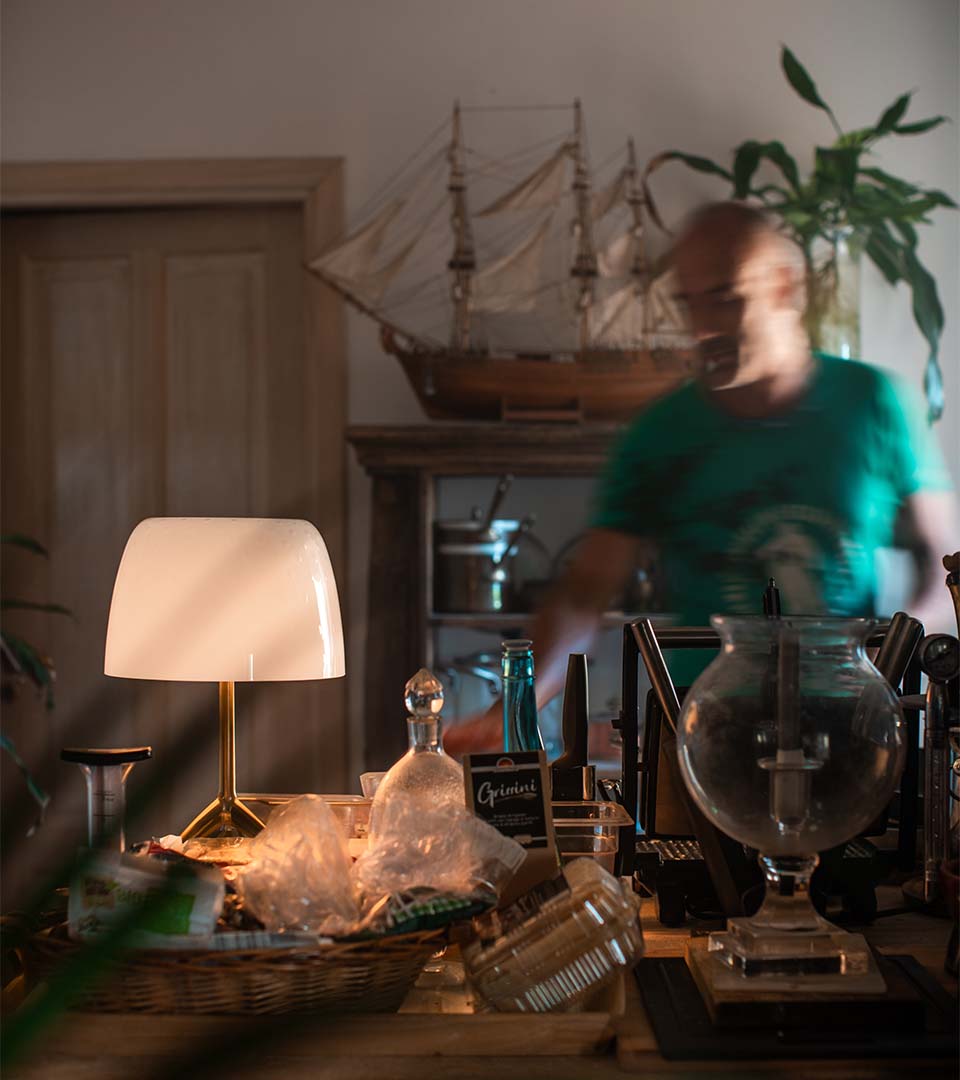
This design reveals a clear understanding of how people live with light over time. Its intensity supports stillness. It allows the eyes to rest. It invites slower activities that unfold without urgency. The lamp does not attempt to serve every function within the room. Its focus remains on atmosphere and proximity. This focus gives it clarity of purpose.
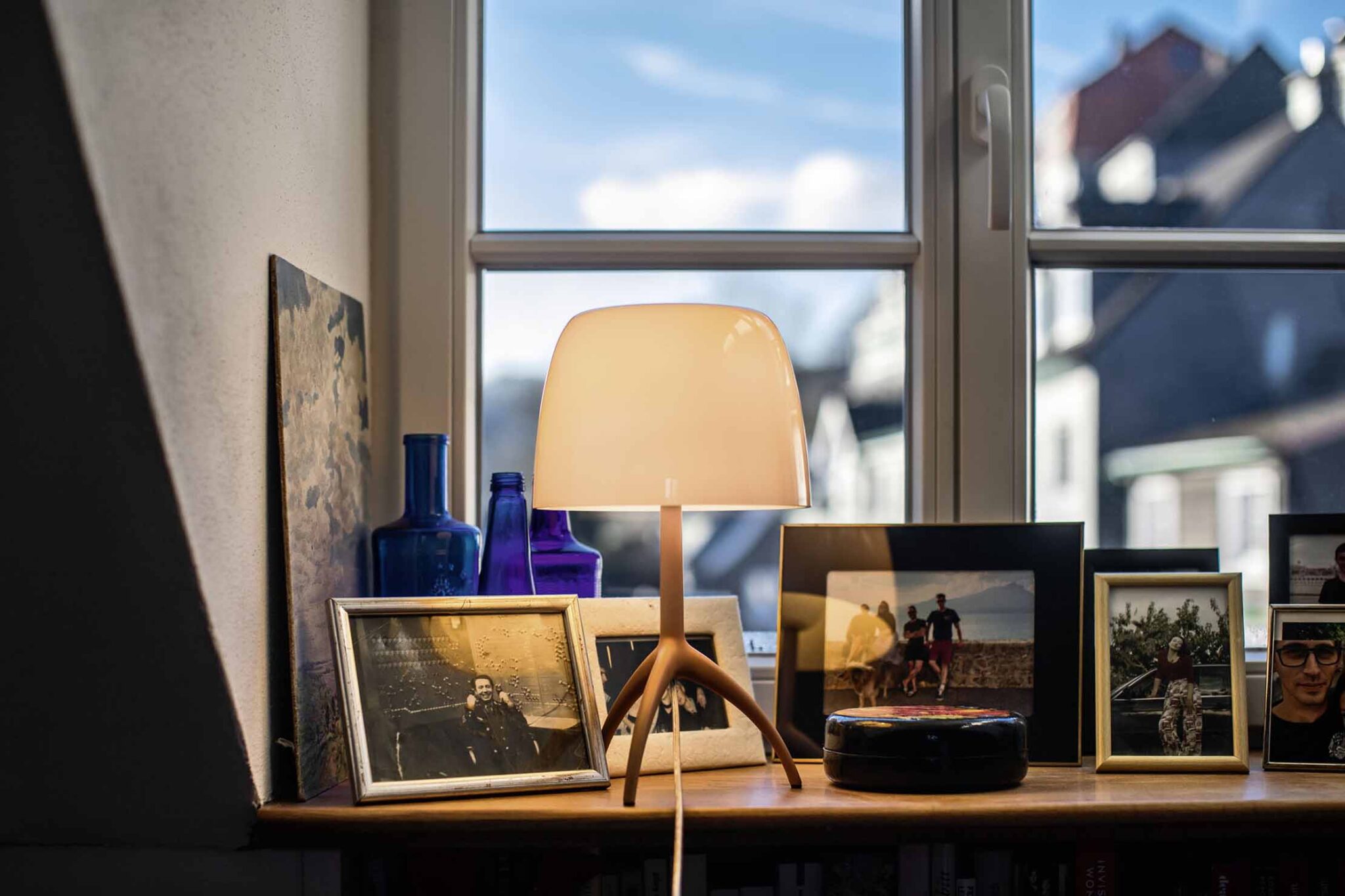
There are practical limits embedded in this approach. The lamp does not provide the level of brightness needed for detailed visual tasks. Its light fades before reaching distant surfaces. These limits feel consistent with its intention. The lamp defines a personal zone rather than a fully illuminated room.
What ultimately gives the Lumiere its lasting presence is the way it assigns identity to an ordinary place. A bedside table exists primarily as a surface for objects. With this lamp in operation, that same surface becomes a destination. The light gathers there, holds its position, and reshapes the meaning of the surrounding space. The lamp does not rely on excess form or technical display to achieve this. Its effect emerges through control, proportion, and the quiet authority of light held carefully within glass.