







Steel Horizon, Burning Pulse
He walks into a space that already has a climate.
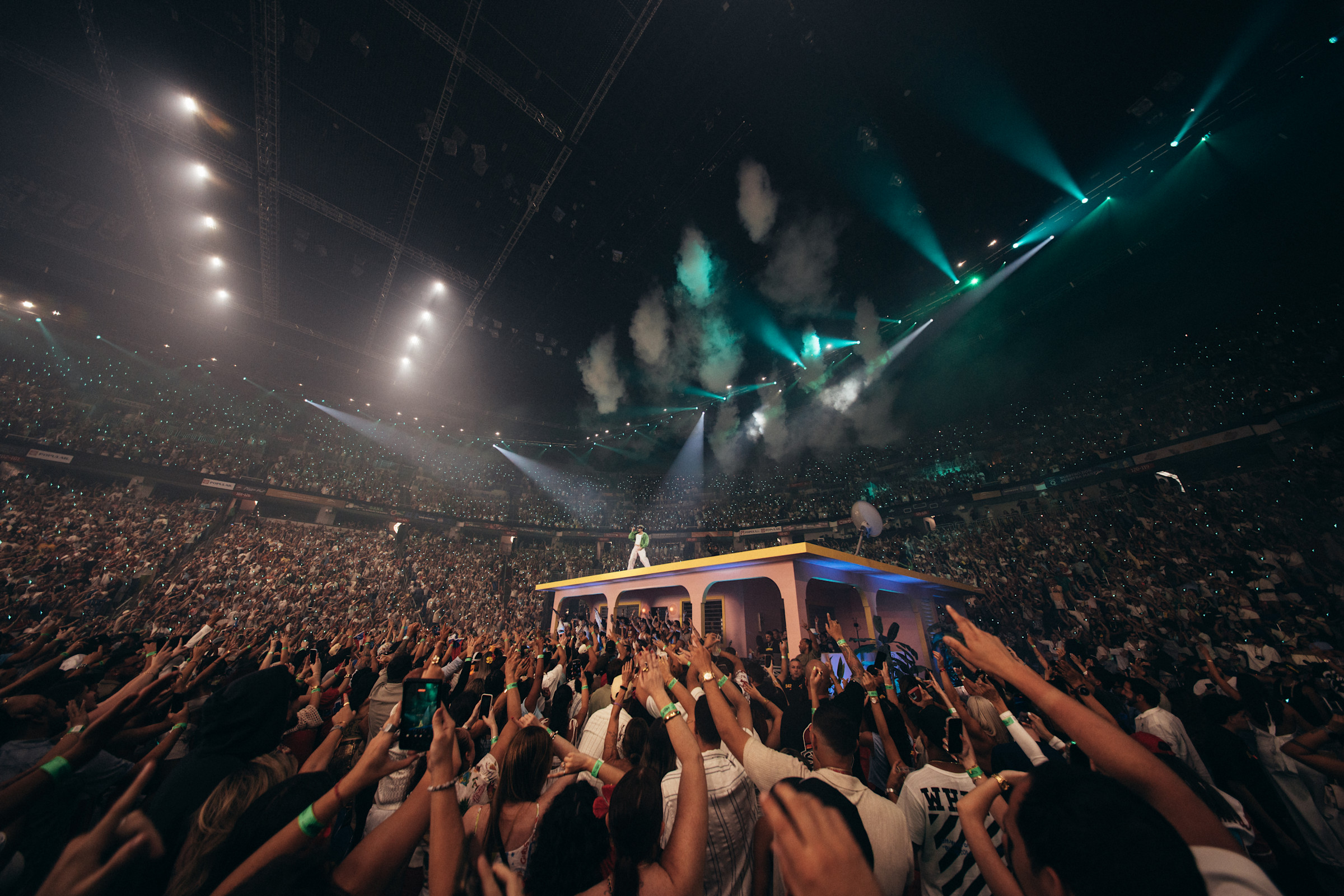
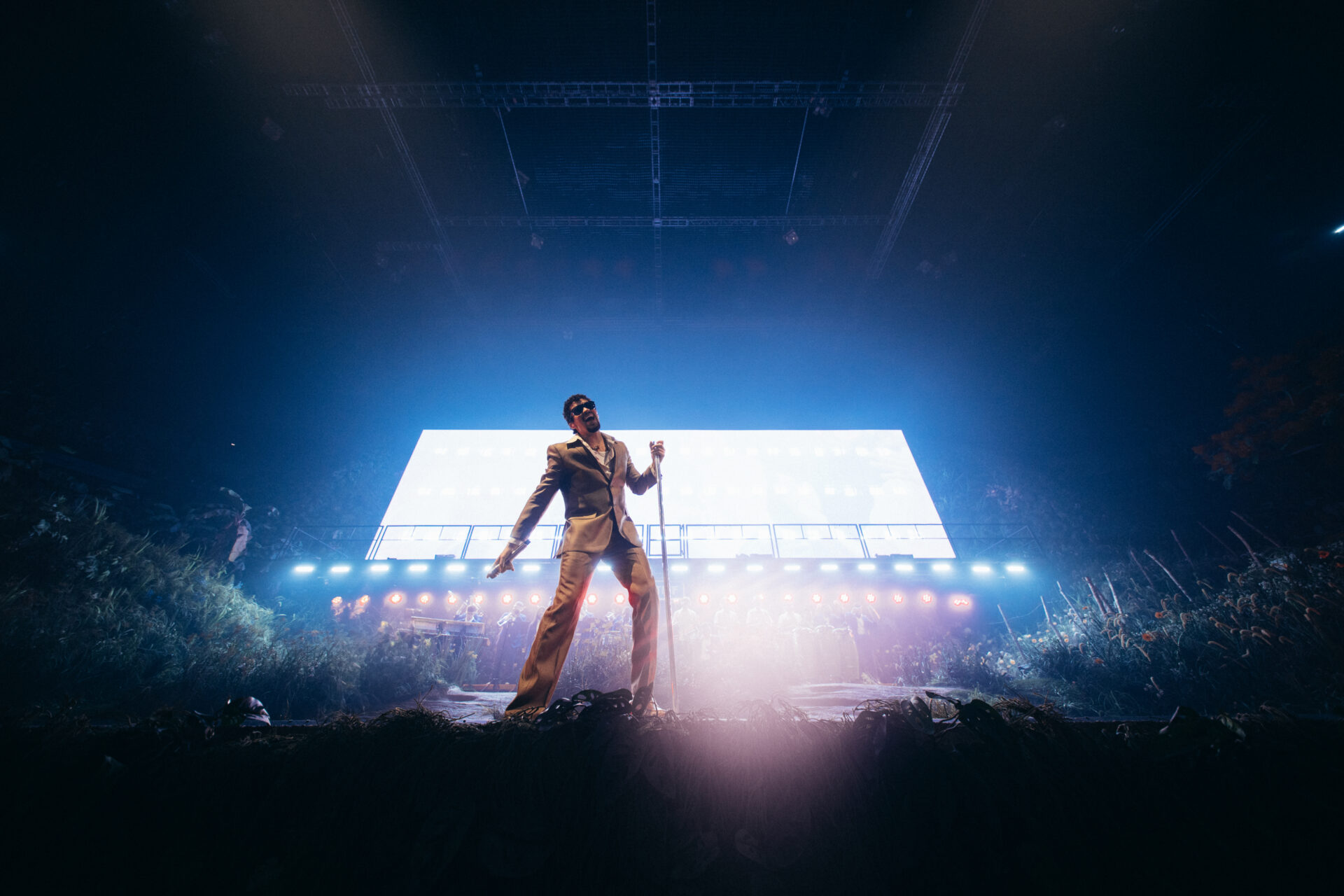
Before he arrives, the stage carries the neutrality of an engineered platform. Steel truss hangs in a rational grid, video panels sit dormant, fixtures remain inert objects with lenses that reflect nothing. The architecture exists in technical readiness, absent of emotional temperature. The lighting’s first real intervention is the creation of air. Haze fills the volume with measured density, and suddenly the space begins to reveal its depth. Light gains something to rest on. Distance becomes visible. 
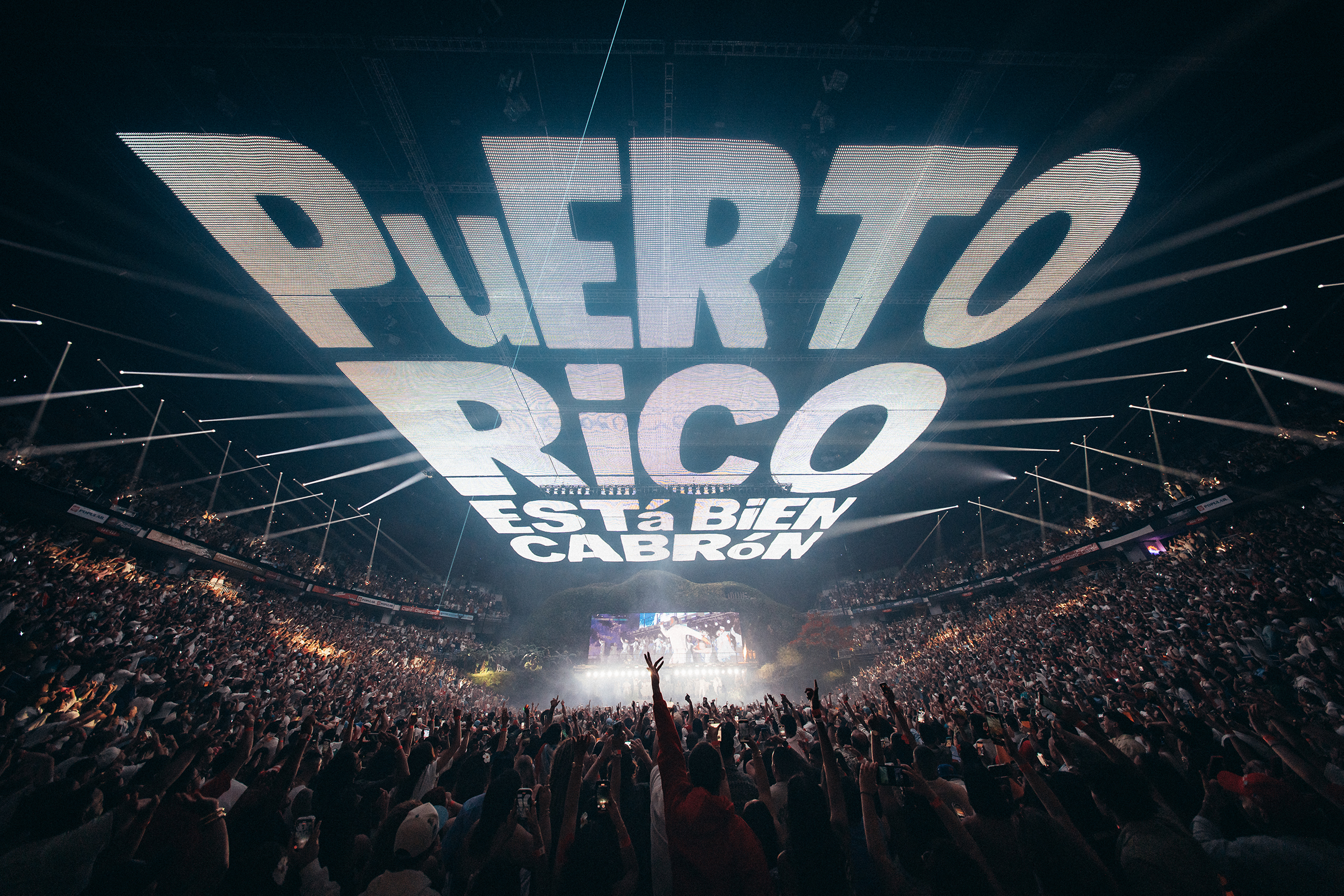
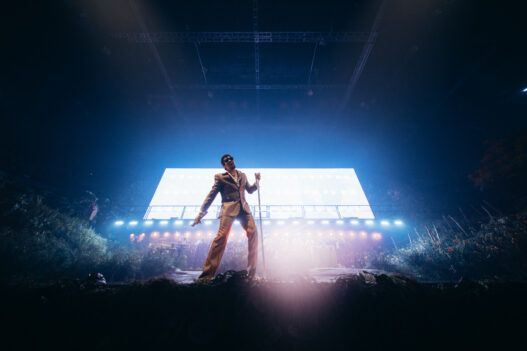
A wide, pale video plane anchors the upstage wall. Its luminance is held at a level that avoids dominance. It behaves like an illuminated atmosphere, not an image competing for attention. This decision defines the performer’s outline with unusual precision. His body stands forward of that surface, separated cleanly through contrast. The eye understands his position instantly. He occupies ground. He does not dissolve into media.
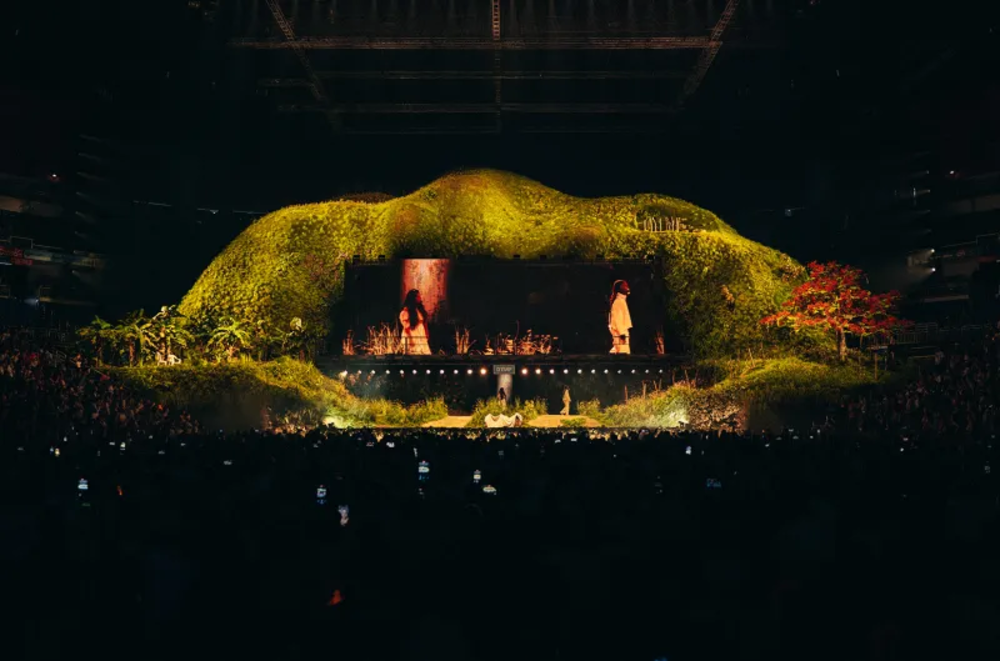
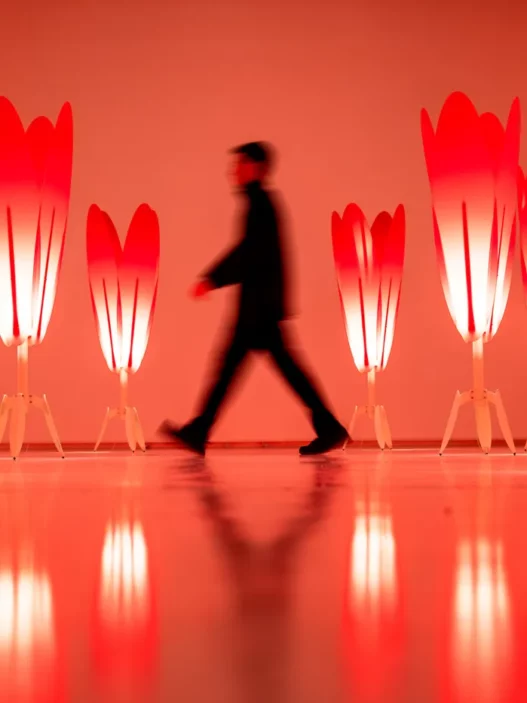
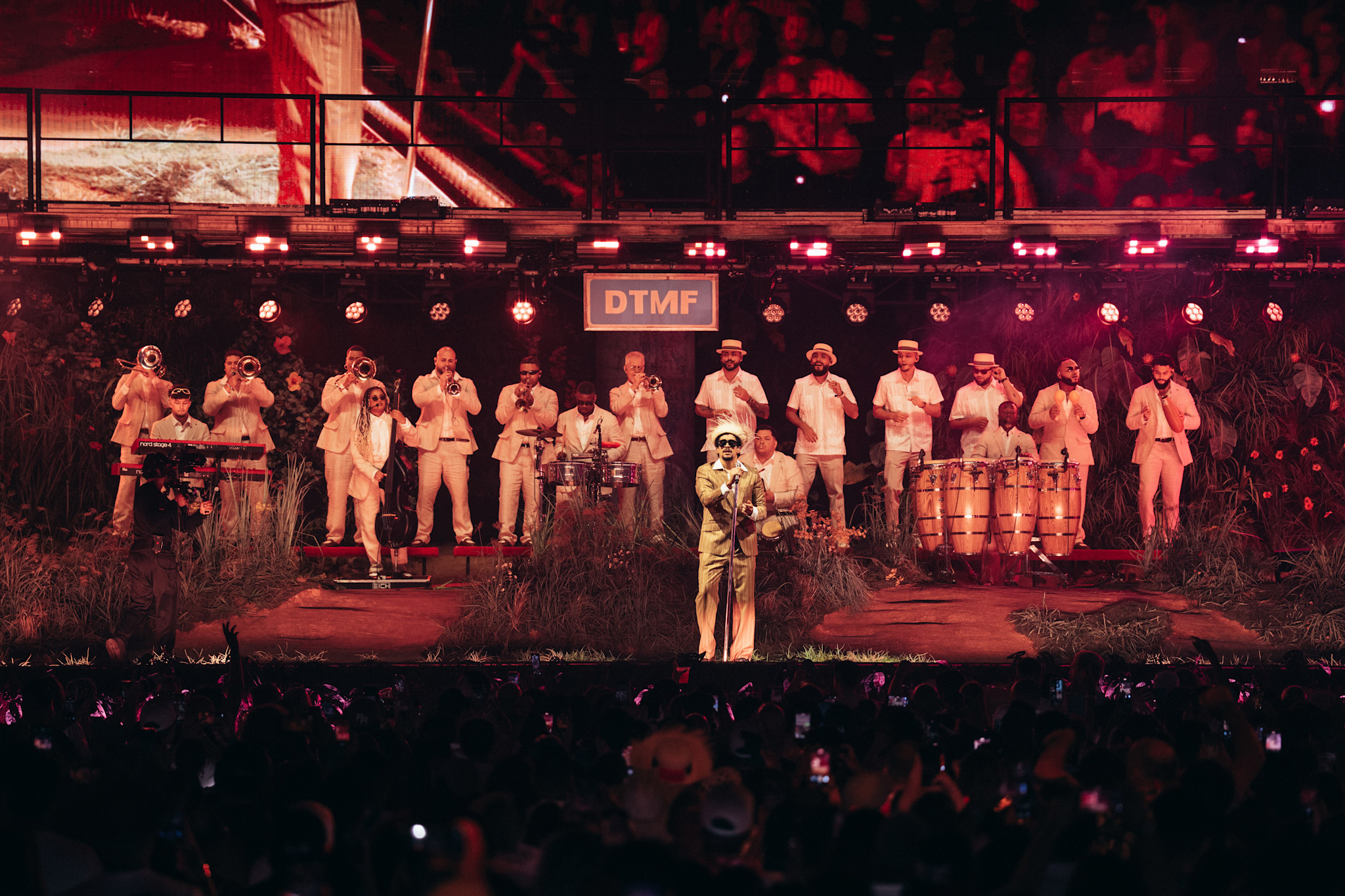
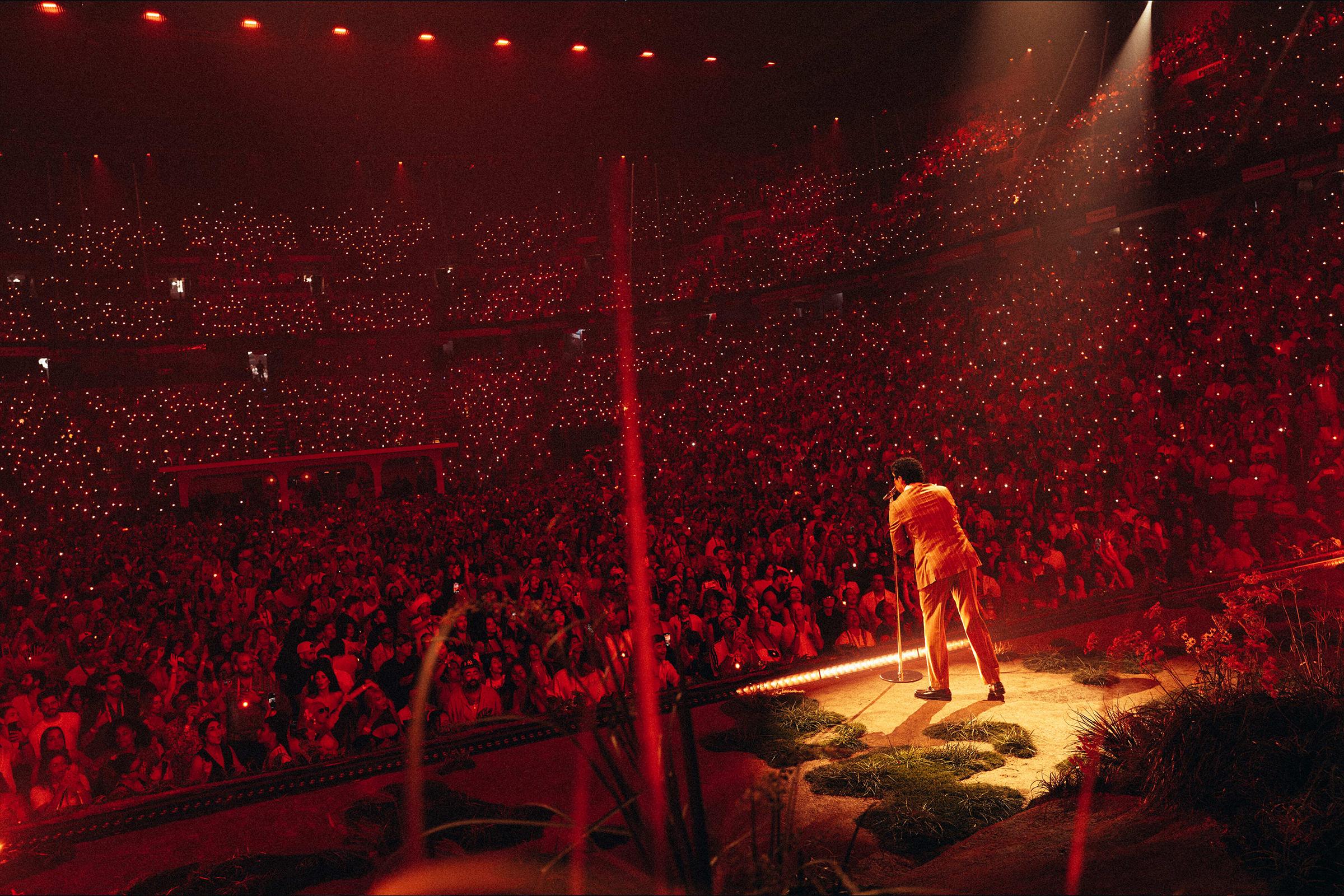
Low-positioned fixtures along the deck introduce a band of warm light that travels horizontally across the stage. This light carries the tonal character of late coastal sun, slightly amber, slightly contaminated with red. Its angle allows shadows to rise upward across his clothing and face. Texture remains intact. Fabric folds, muscle tension, and gesture retain their physical evidence. The lighting protects material presence.
Overhead, the rig operates with a different intention. The moving heads emit narrow columns that descend with sharp edges, revealing the full height of the venue. These beams do not search randomly. Their orientation maintains vertical discipline. They extend the stage upward into the ceiling, establishing a continuous volume. The performer exists inside a container defined by light.
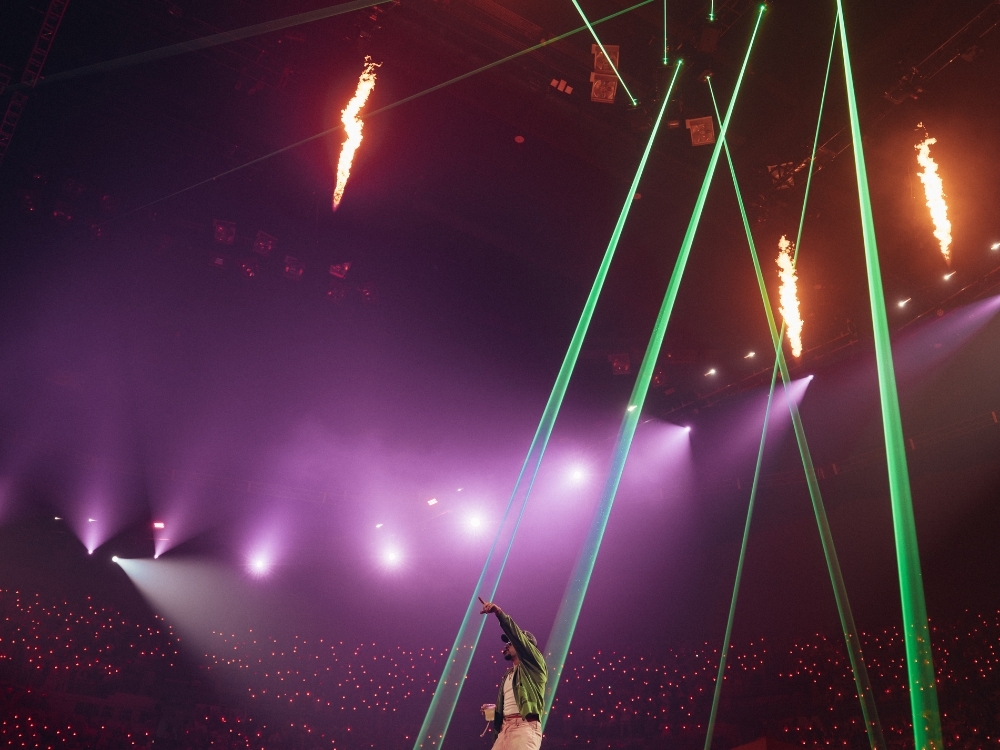
During the laser sequences, the geometry tightens. Green lines descend with exactness, intersecting the performer’s body and the floor in fixed coordinates. The atmosphere holds these lines in suspension, giving them weight. They function as temporary boundaries. When he raises his arm into one of these beams, the gesture acquires resistance. The light does not simply illuminate his movement. It gives it something to press against.
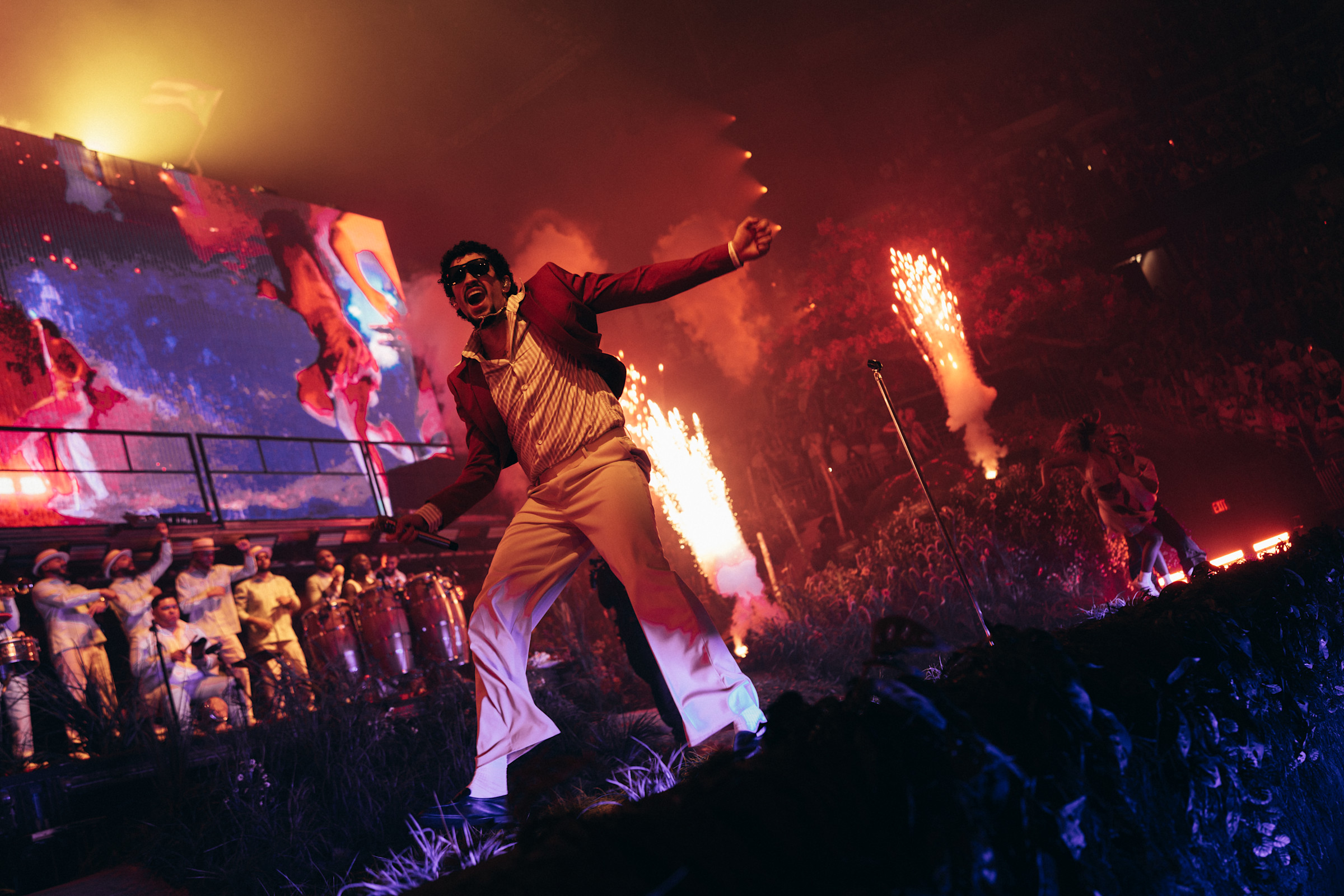
Pyrotechnic bursts introduce brief ruptures in this order. Flame rises from above with violent brightness and unstable edges. Its color temperature disrupts the cooler spectrum surrounding it. The lighting system accommodates this intrusion by maintaining controlled output nearby. No fixture attempts to overpower the flame. The visual field reorganizes itself around the combustion.
The audience exists primarily in absence. Most of the seating bowl remains in darkness, interrupted by hundreds of small red points. These distributed lights flatten the crowd into a distant surface. They remove individual identity and replace it with collective presence. This transforms the performer’s orientation. He faces a field, not a group.
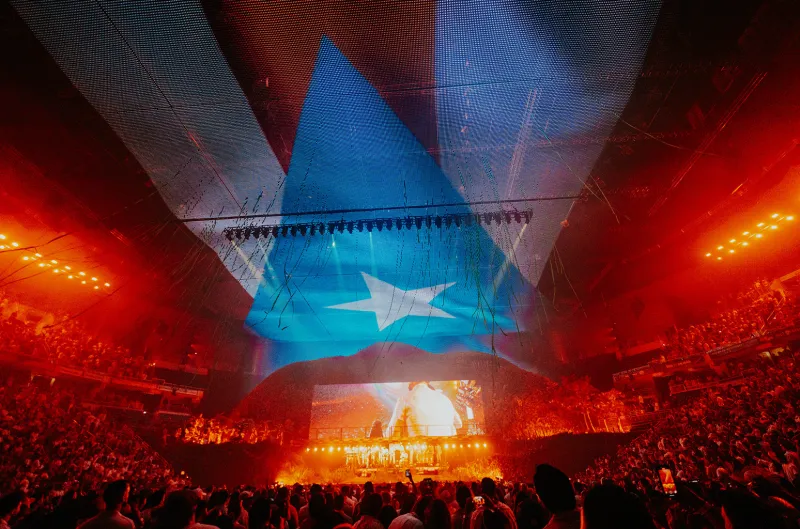
Throughout the performance, the lighting maintains strong backlight as a structural constant. This ensures the performer’s silhouette remains readable even when front illumination drops. His outline persists. The design demonstrates sustained attention to positional clarity.
Video content integrates without overwhelming the physical environment. Its brightness levels remain calibrated to support depth perception. The performer stays forward in visual hierarchy. The stage retains dimensional integrity.
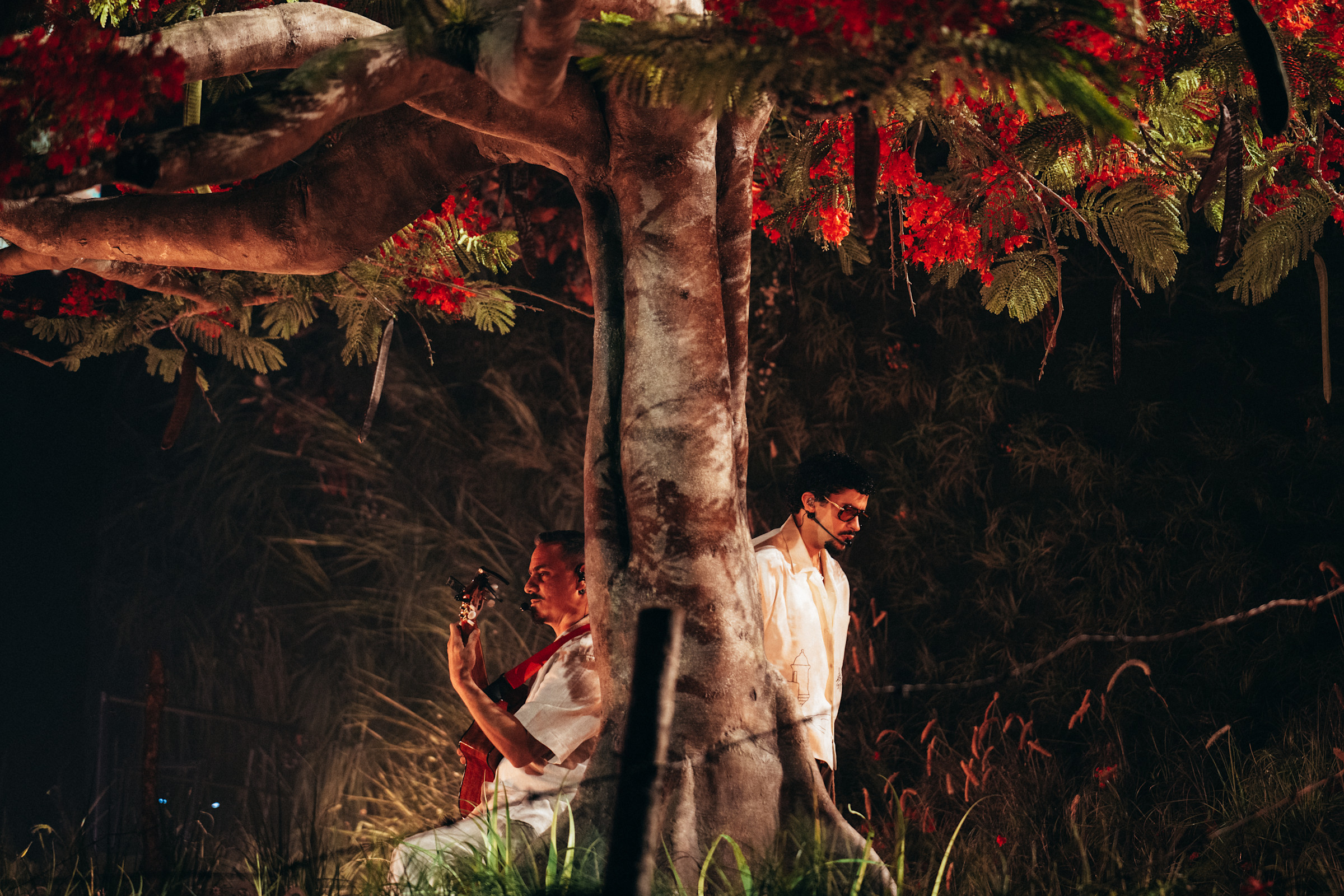
At increased intensity levels, multiple systems activate simultaneously. Moving beams, lasers, video, and flame occupy the same visual moment. The composition becomes dense. The eye receives information from several directions at once. During these passages, the performer’s physical gestures require effort to maintain visual priority. The lighting permits this complexity. It does not simplify the image for comfort.
The most significant shift occurs in how the stage is perceived over time. At the beginning, it reads as constructed infrastructure. By the midpoint of the show, it carries environmental identity. Light assigns scale, distance, and orientation. The performer moves through a place that did not exist before illumination defined it.

When the output recedes, the transformation reverses. The beams disappear into their housings. The haze thins. The video plane loses intensity. The architecture returns to neutrality.
What remains is the memory of volume created through controlled emission. The lighting does not decorate the performance. It establishes the physical conditions in which the performance becomes legible.