







How the World Marked the Arrival of 2026 Through Fireworks, Projection, and Public Spectacle
Midnight on December 31, 2025 arrived not as a quiet moment of reflection but as a synchronized global broadcast of light. From the towering glass spires of Dubai to the chill winds sweeping the banks of the River Thames, the transition into 2026 was traced not simply by counting down seconds but by orchestrating light itself: fireworks, LEDs, lasers, projection mapping, and even drones reconfigured the night sky into a living canvas of human aspiration and ritual.
Across major geographies, United Arab Emirates, Australia, the United States, the United Kingdom, Frrance, Spain, Germay, Japan, South Korea and Thailand, lighting designs for the New Year fused local cultural identity with technical ambition. Each location told its own story about the year past and the one awaiting. This was less about pyrotechnic bravado and more about staging collective experience, audiences looking upward as if light could clarify the promise of tomorrow.
United Arab Emirates: Precision, Power, and the Persian Gulf Horizon
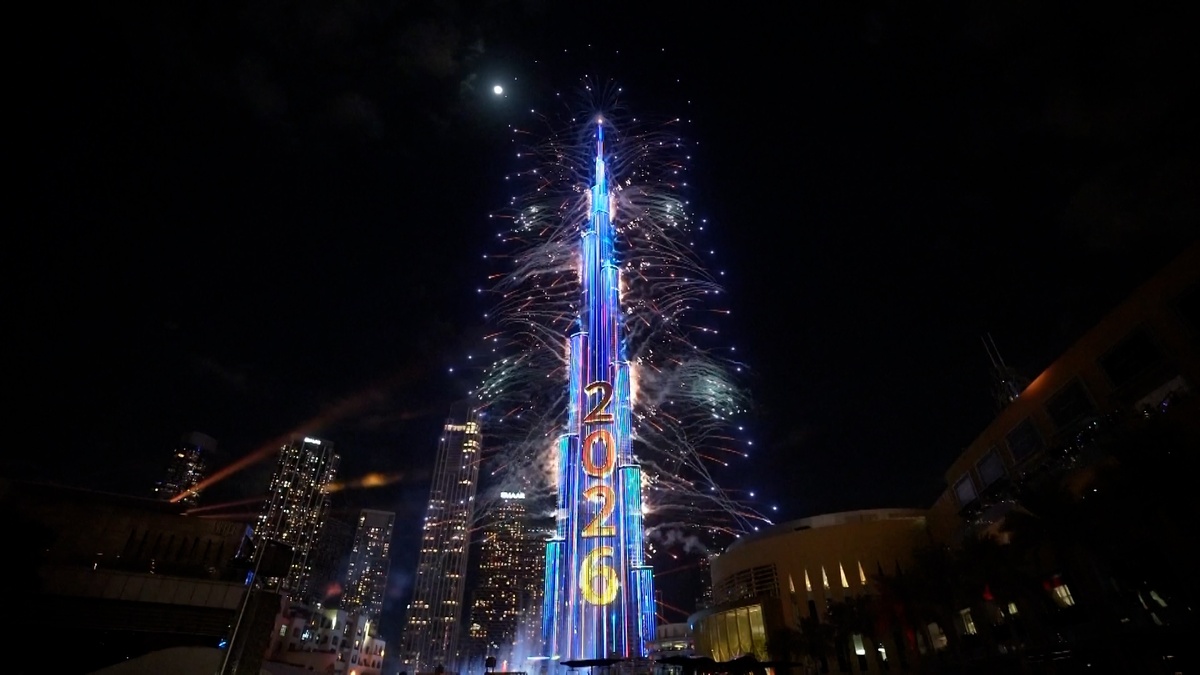

In the United Arab Emirates, New Year’s Eve 2026 unfolded as a masterclass in large-scale lighting orchestration. Dubai’s skyline functioned less as a backdrop and more as an active interface. The Burj Khalifa once again became the central narrative surface, its LED facade delivering a meticulously timed sequence of motion graphics, laser bursts, and chromatic transitions that replaced traditional countdown theatrics with something closer to cinematic pacing.
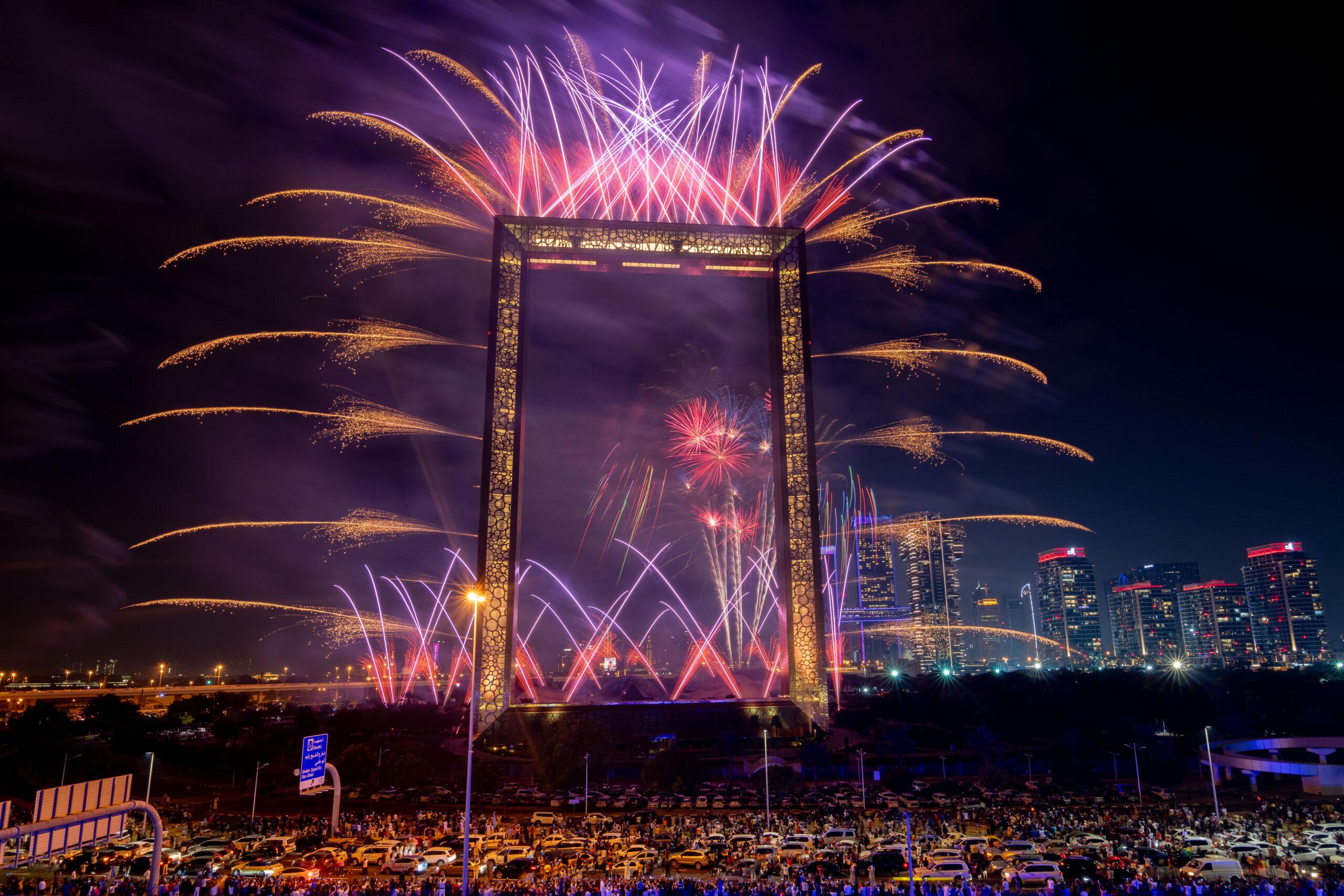
What differentiated this year was spatial ambition. Fireworks radiated across multiple zones simultaneously, from Downtown Dubai to Palm Jumeirah, with reflections rippling across the waters of the Persian Gulf. The gulf itself became part of the composition, absorbing and amplifying the spectacle through mirrored light and atmospheric haze. This was not spectacle for spectacle’s sake. It was controlled grandeur, engineered to feel seamless, inevitable, and unmistakably national in tone.
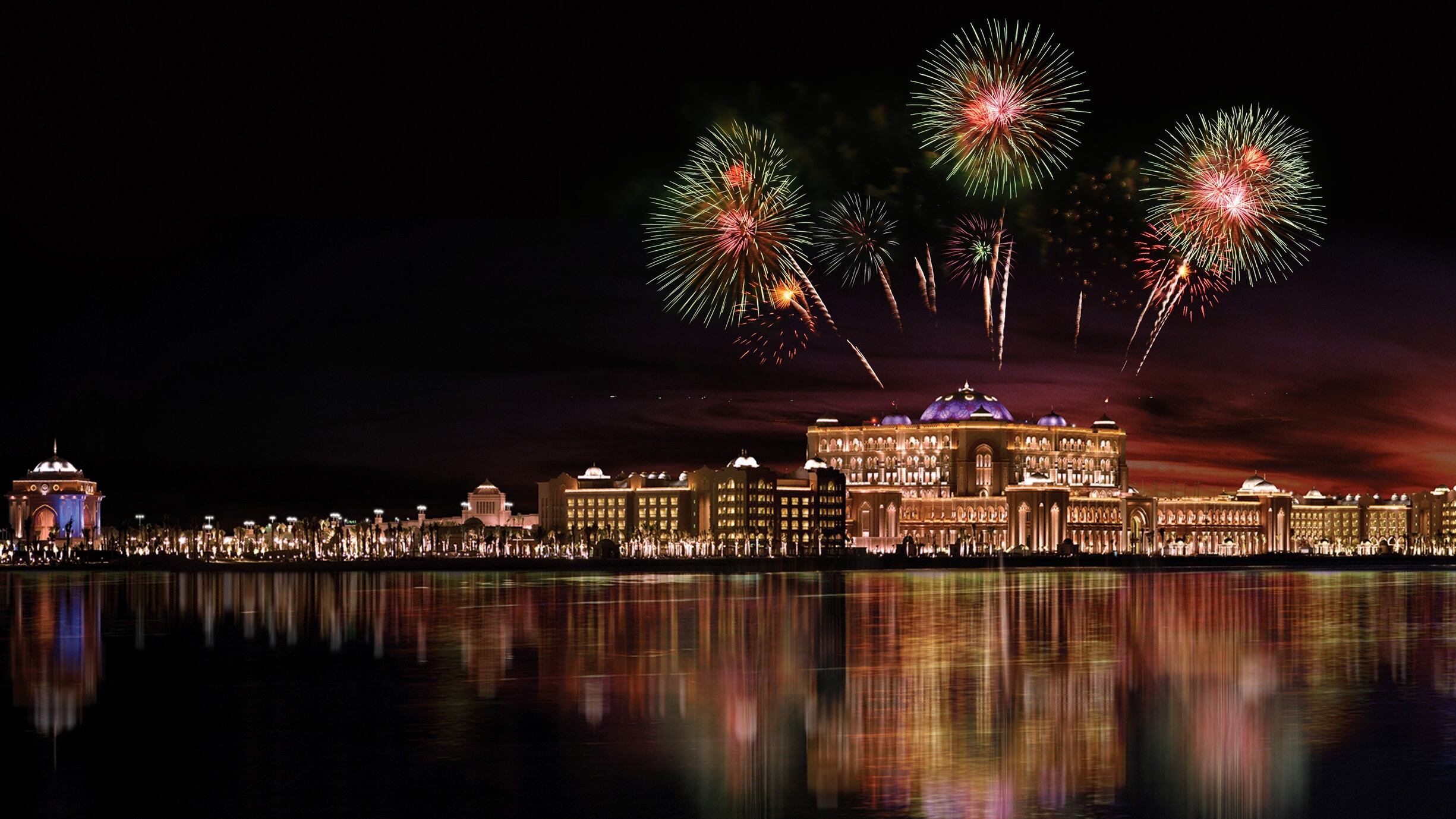
In Abu Dhabi, celebrations along the Corniche and cultural zones leaned into restraint and symbolism. Architectural lighting emphasized form over flash, bathing landmarks in warm, deliberate tones that suggested continuity rather than rupture. Across the Emirates, lighting design communicated confidence: technologically advanced, visually disciplined, and emotionally calibrated for a global audience watching in real time.
Australia: Light as Collective Memory
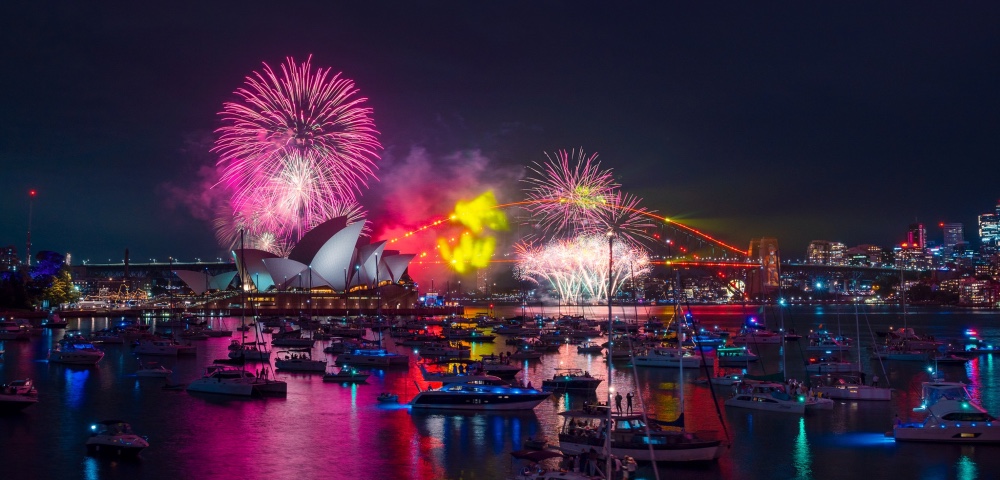
Sydney’s New Year’s Eve has long been synonymous with fireworks, but in 2026 the city’s approach carried an unusually reflective undercurrent. The Sydney Harbour Bridge and Opera House remained the structural anchors, yet the lighting narrative unfolded with pauses, tonal shifts, and intentional restraint. Color was used sparingly at times, allowing darkness to punctuate the sky before erupting into carefully timed bursts.
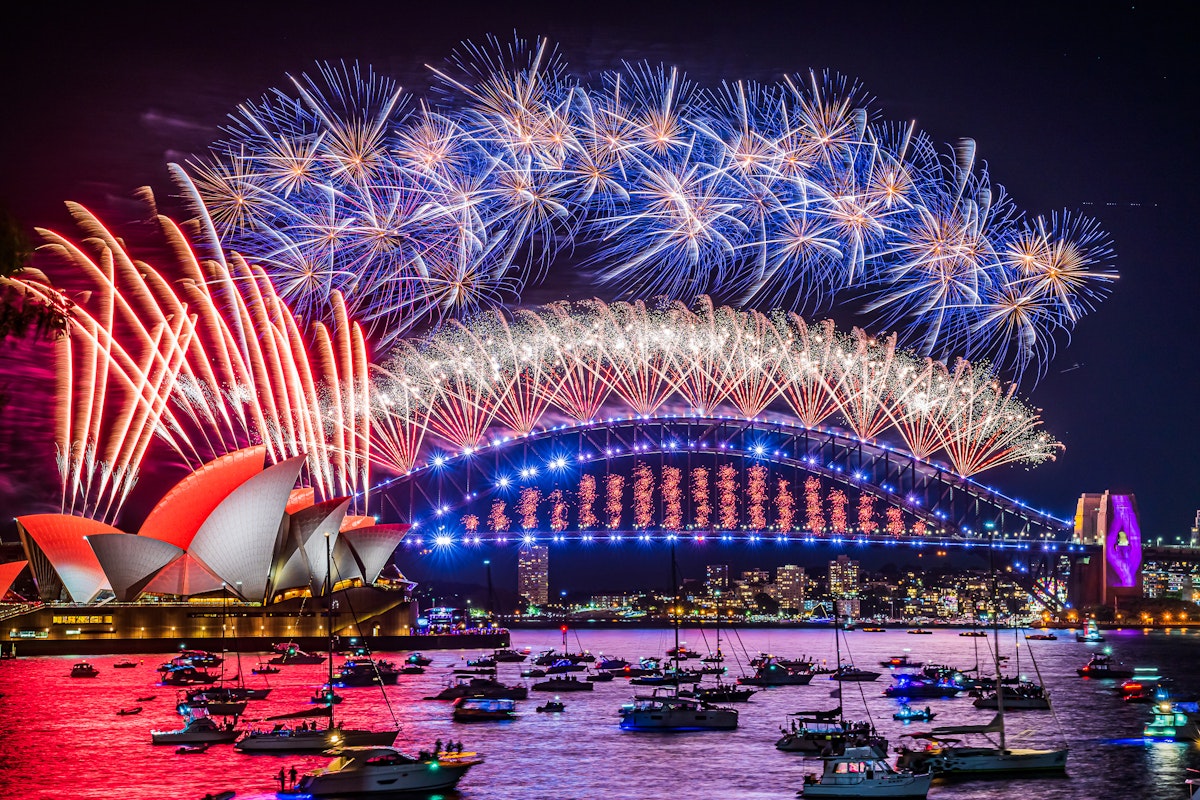
The lighting design acknowledged a year marked by loss and recovery. Rather than overwhelming the skyline, it guided the viewer through a sequence of emotional registers. Cool tones gave way to warmer hues. Silence briefly interrupted sound. Fireworks were choreographed to suggest ascent rather than explosion. The result was a celebration that felt less like a broadcast and more like a communal gesture, using light to hold space for memory while still affirming forward motion.
United States: Times Square Reimagined
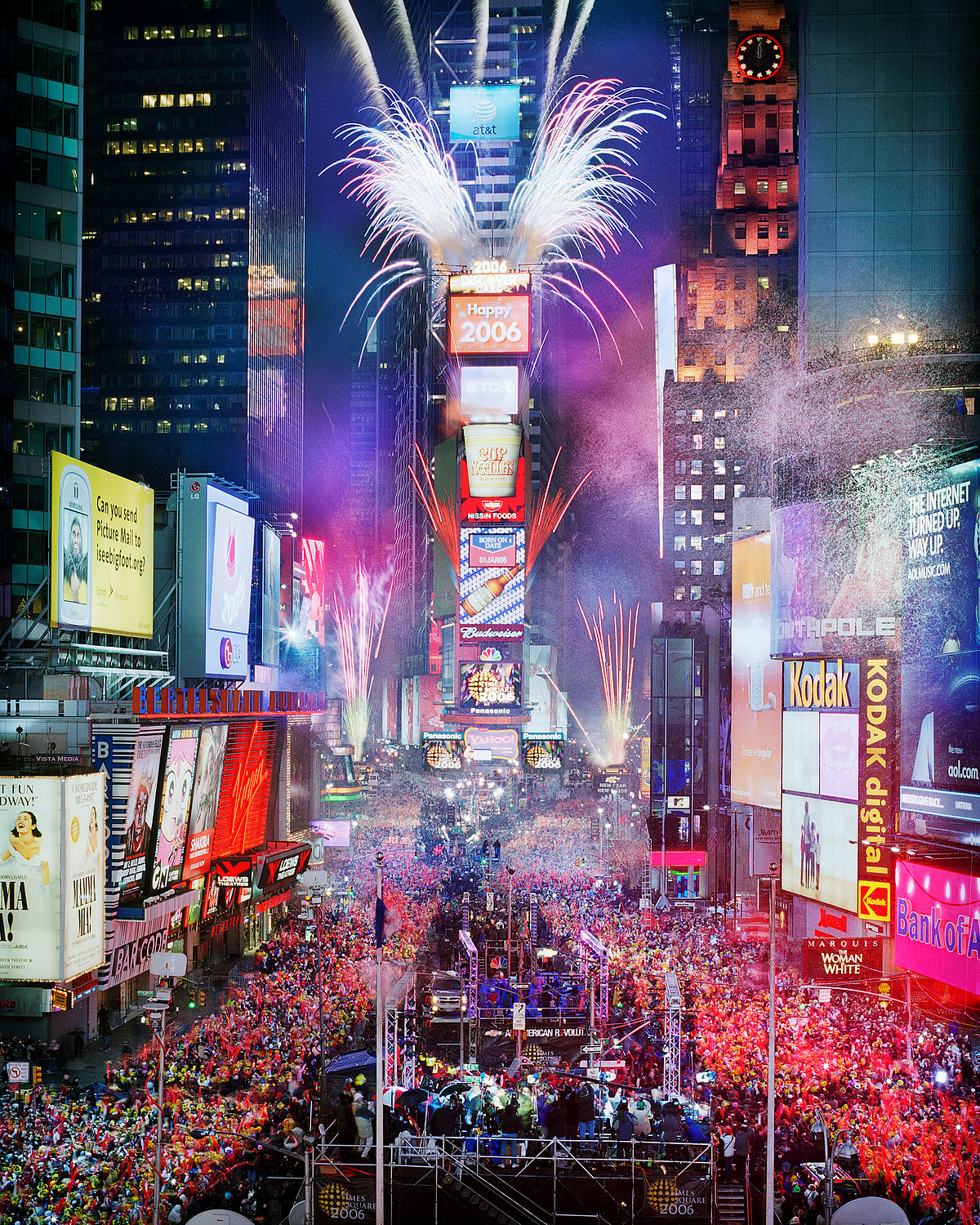
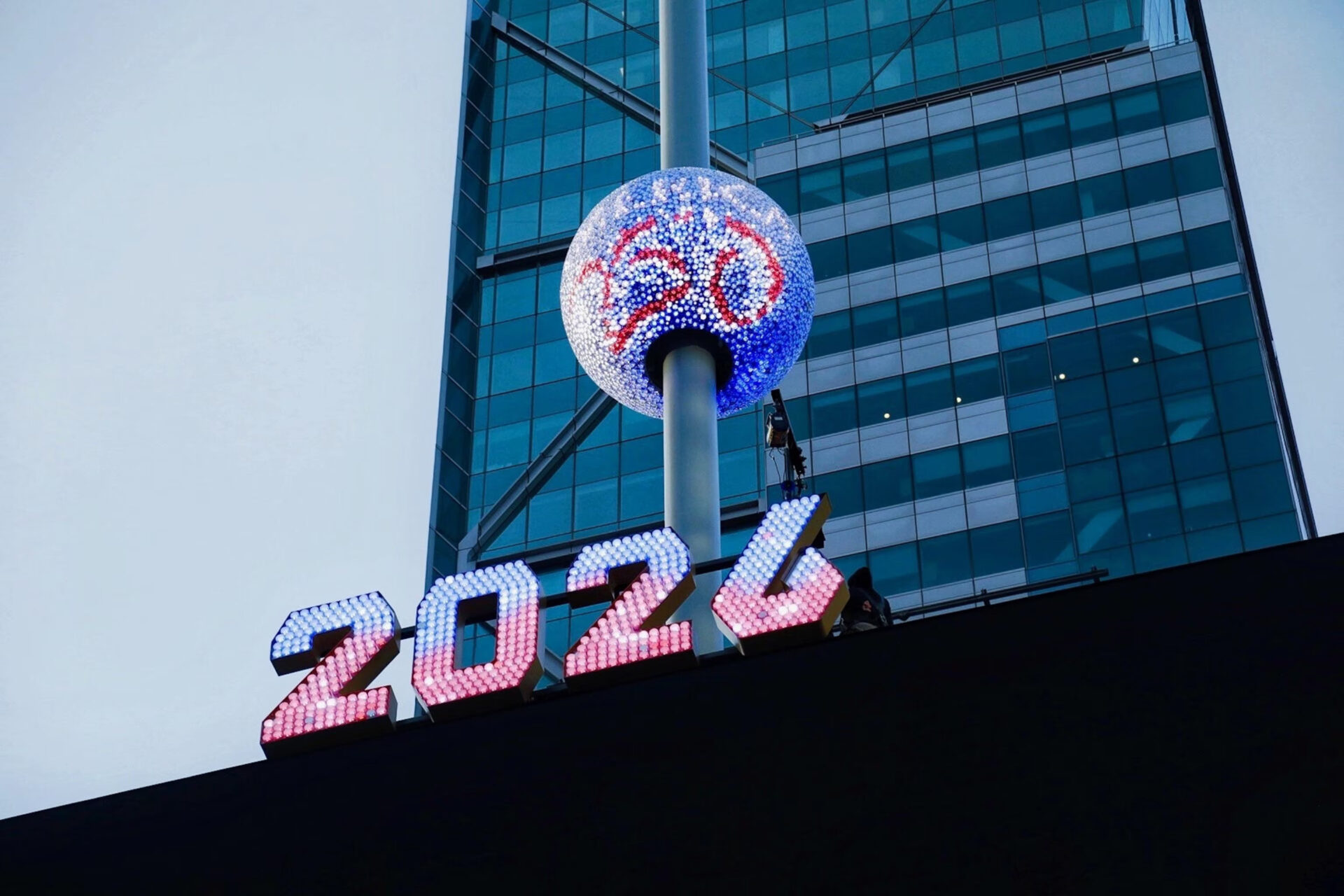
In the U.S., the lighting centerpiece of New Year’s Eve continues to be Times Square, where revelers traditionally gather for the Ball Drop. In 2026, that event evolved into something both historic and symbolic: the Constellation Ball, a 12,000-pound sphere equipped with advanced LED lighting, became more than a countdown device. Its programmable lights and expanded color palette offered not just numerals but mood, atmosphere, and narrative nuance, visual punctuation to a country stepping into a bicentennial year of reckonings and anniversaries.
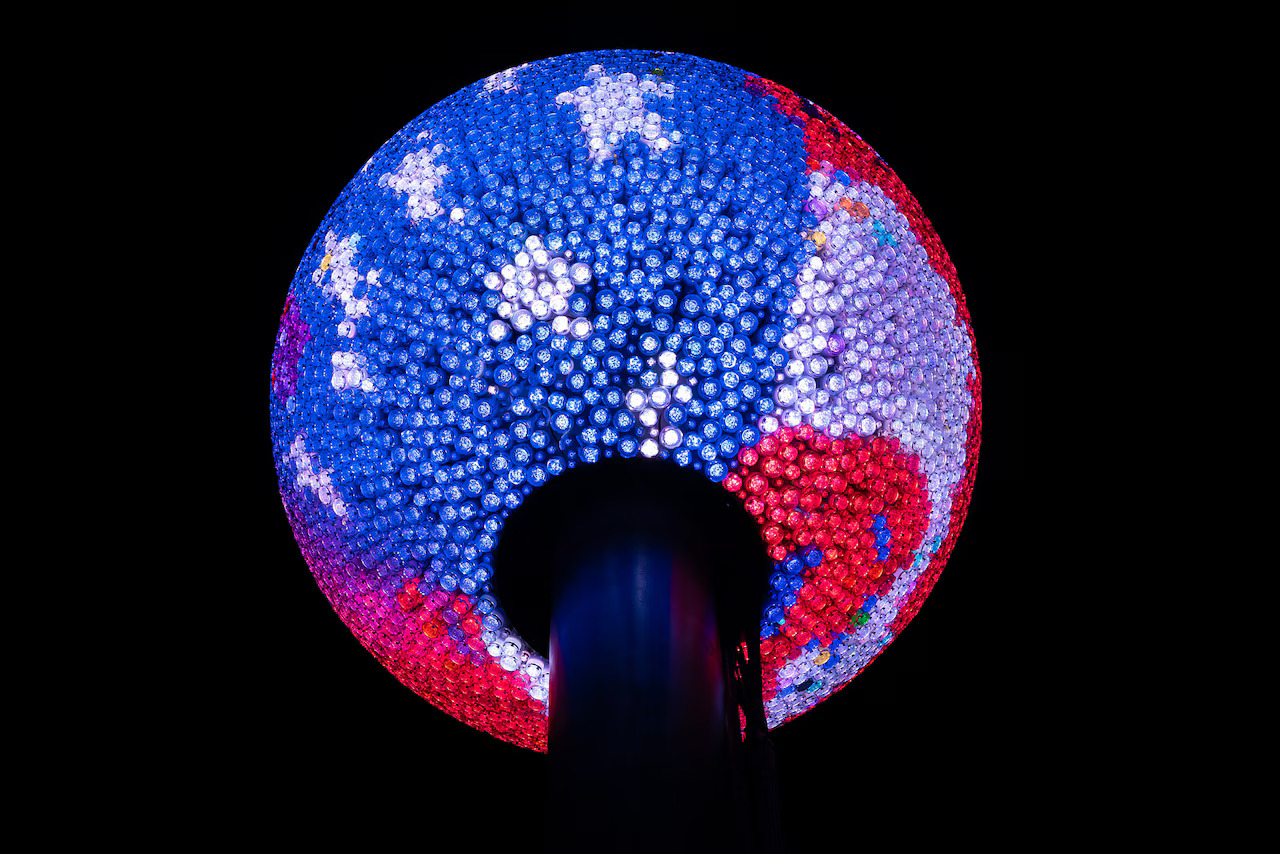
The lighting experience didn’t end at midnight. A post-drop illumination of the ball in red, white, and blue as part of the America250 initiative extended the spectacle into a reflection on identity and nationhood. Throughout the city, confetti, spotlights, and momentary pyro flashes were deployed like punctuation marks on a long evening of broadcast entertainment.
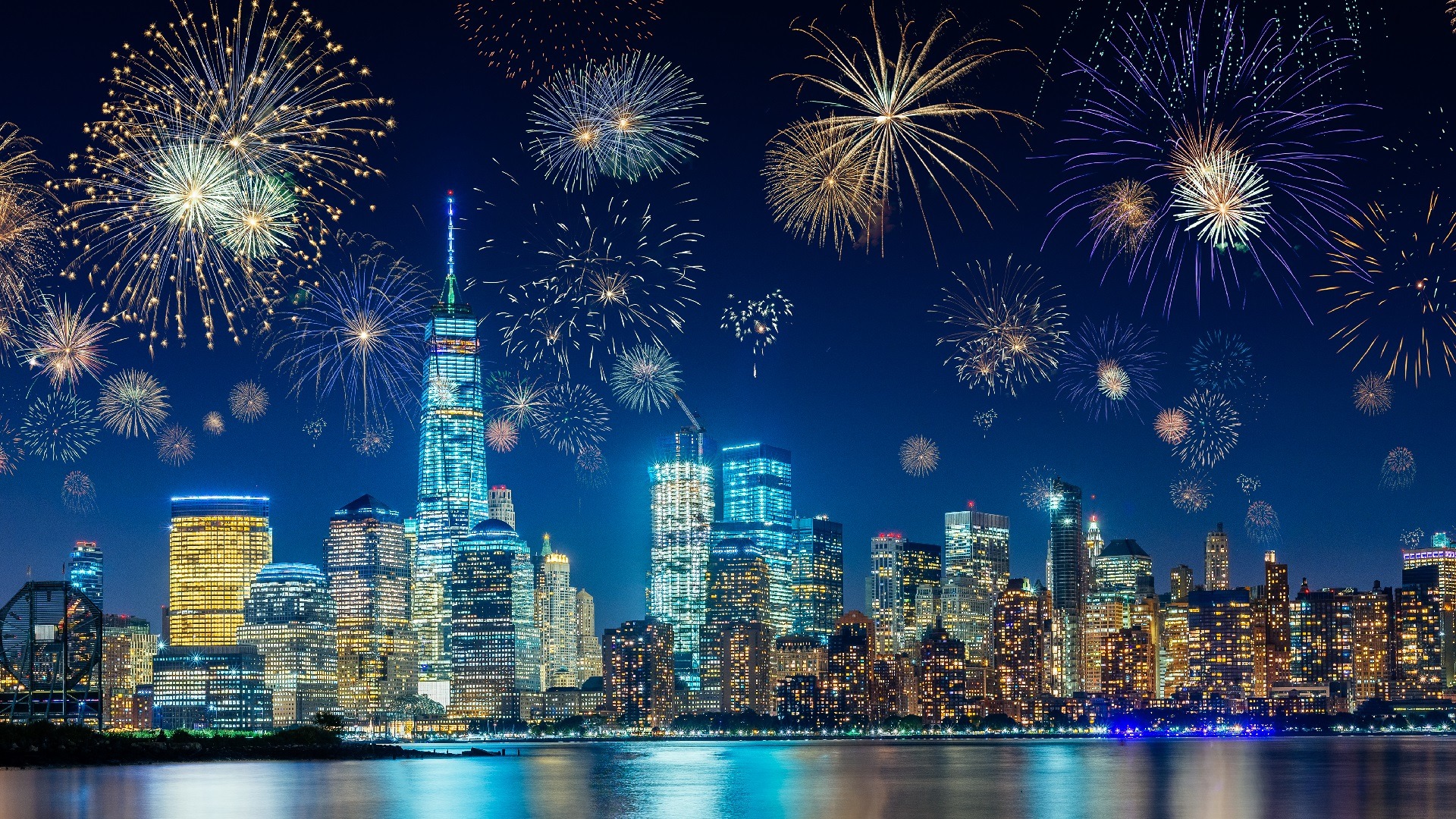
Across other U.S. cities, fireworks continued as communal affirmation: Washington Monument projections, local firings over historic monuments, and coast-to-coast events that placed light at the center of civic gathering rather than marginal decoration.
United Kingdom: The Thames as Narrative Spine
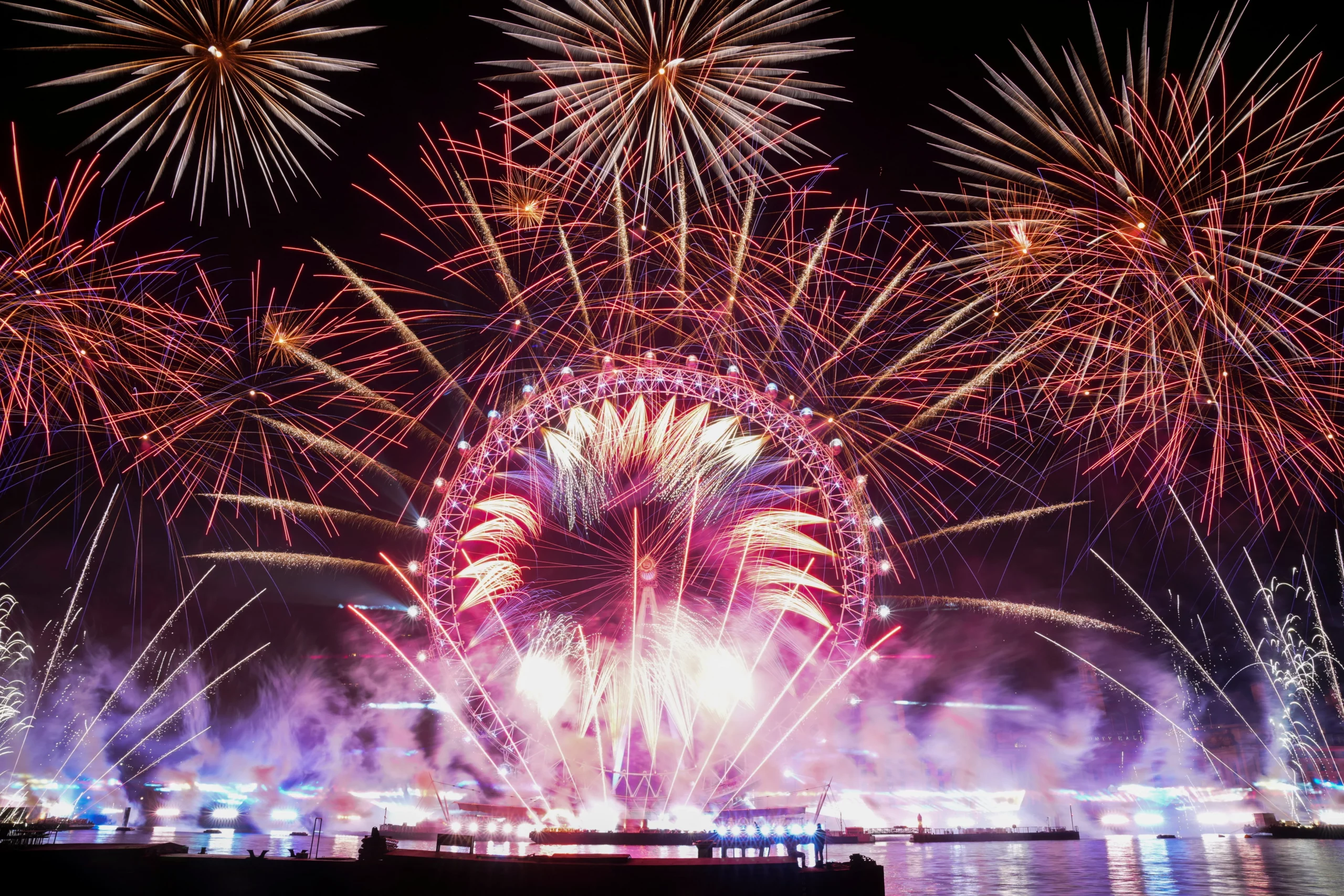
London’s New Year’s Eve display reaffirmed the River Thames as both physical and symbolic axis. Fireworks erupted in dialogue with architectural lighting, particularly around the London Eye, whose illumination acted as a visual metronome for the night. The palette leaned toward saturated primaries, punctuated by moments of stark white light that cut cleanly through the winter air.
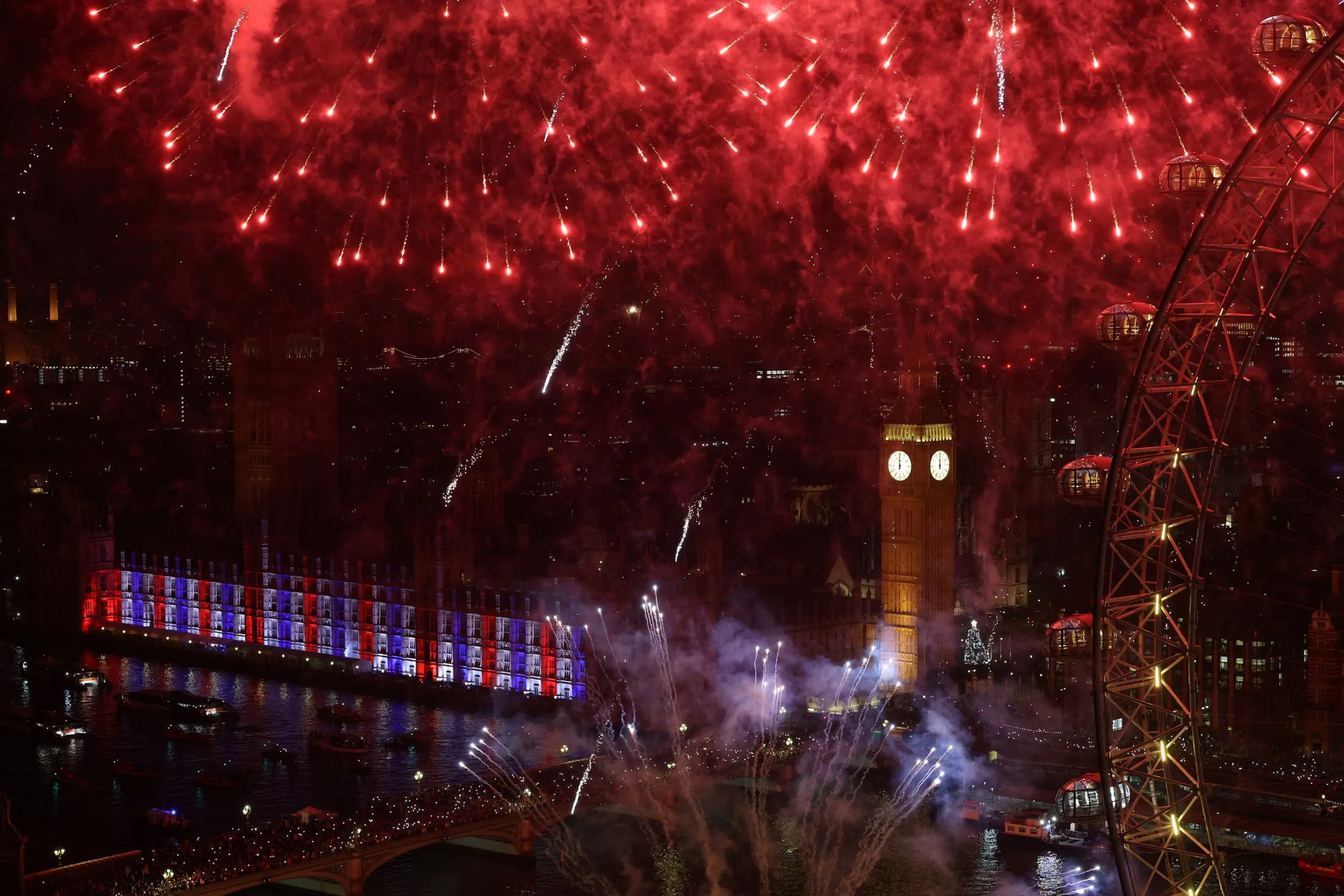
What distinguished London’s approach in 2026 was narrative cohesion. Lighting sequences referenced shared cultural moments, public achievements, and collective resilience. Bridges, buildings, and the river itself were treated as chapters in a single visual story. The effect was less chaotic than in previous years, more legible, more intentional. Light here functioned as public speech.
Thailand: Chiang Mai and Bangkok, Two Languages of Light
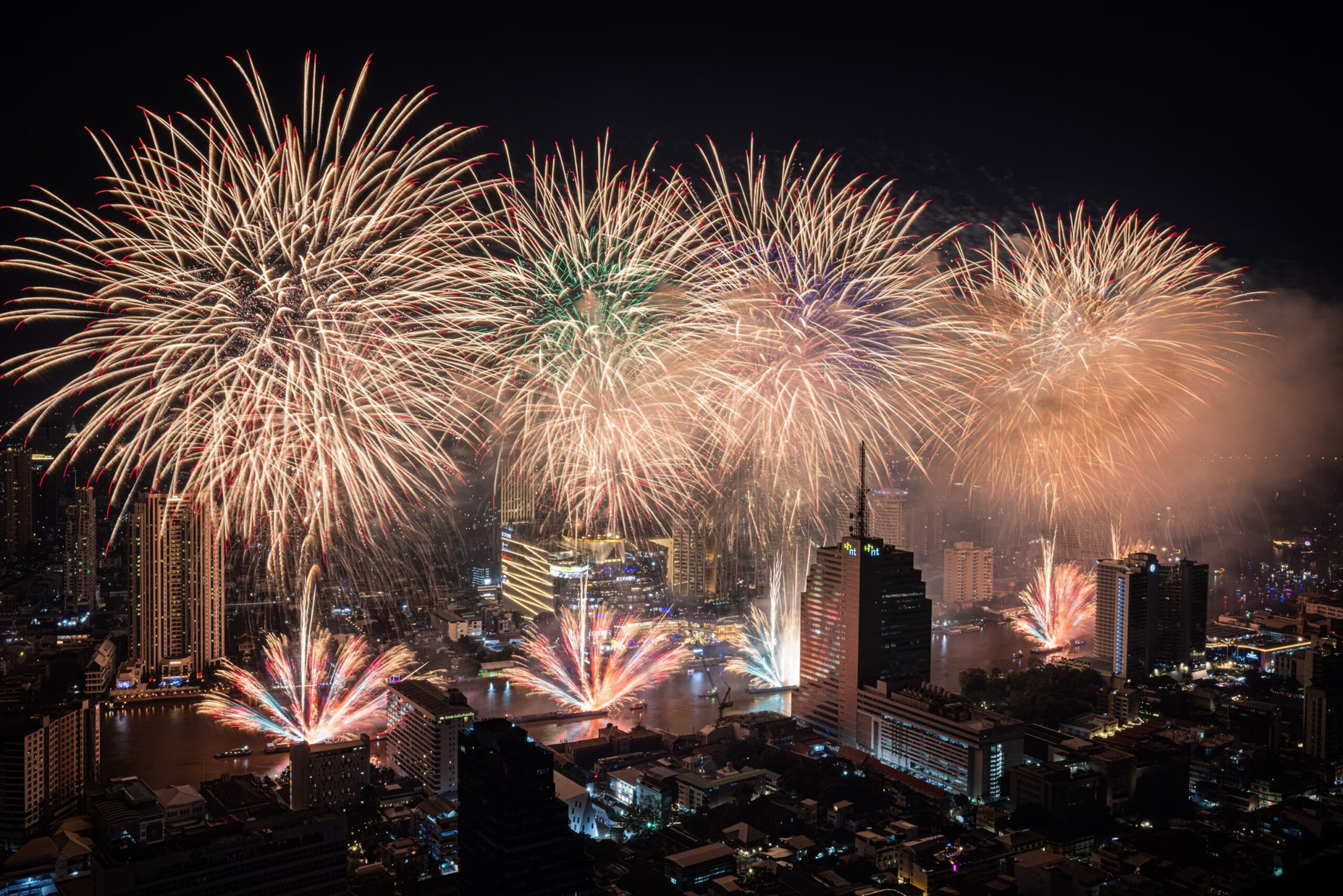
Thailand presented two distinct interpretations of New Year lighting. In Bangkok, celebrations along the Chao Phraya River combined fireworks, drones, and stage lighting into a rhythmic spectacle. Drones formed symbolic patterns above the river, while synchronized lighting along the banks created a sense of horizontal continuity. Music, light, and crowd merged into a single performative environment.
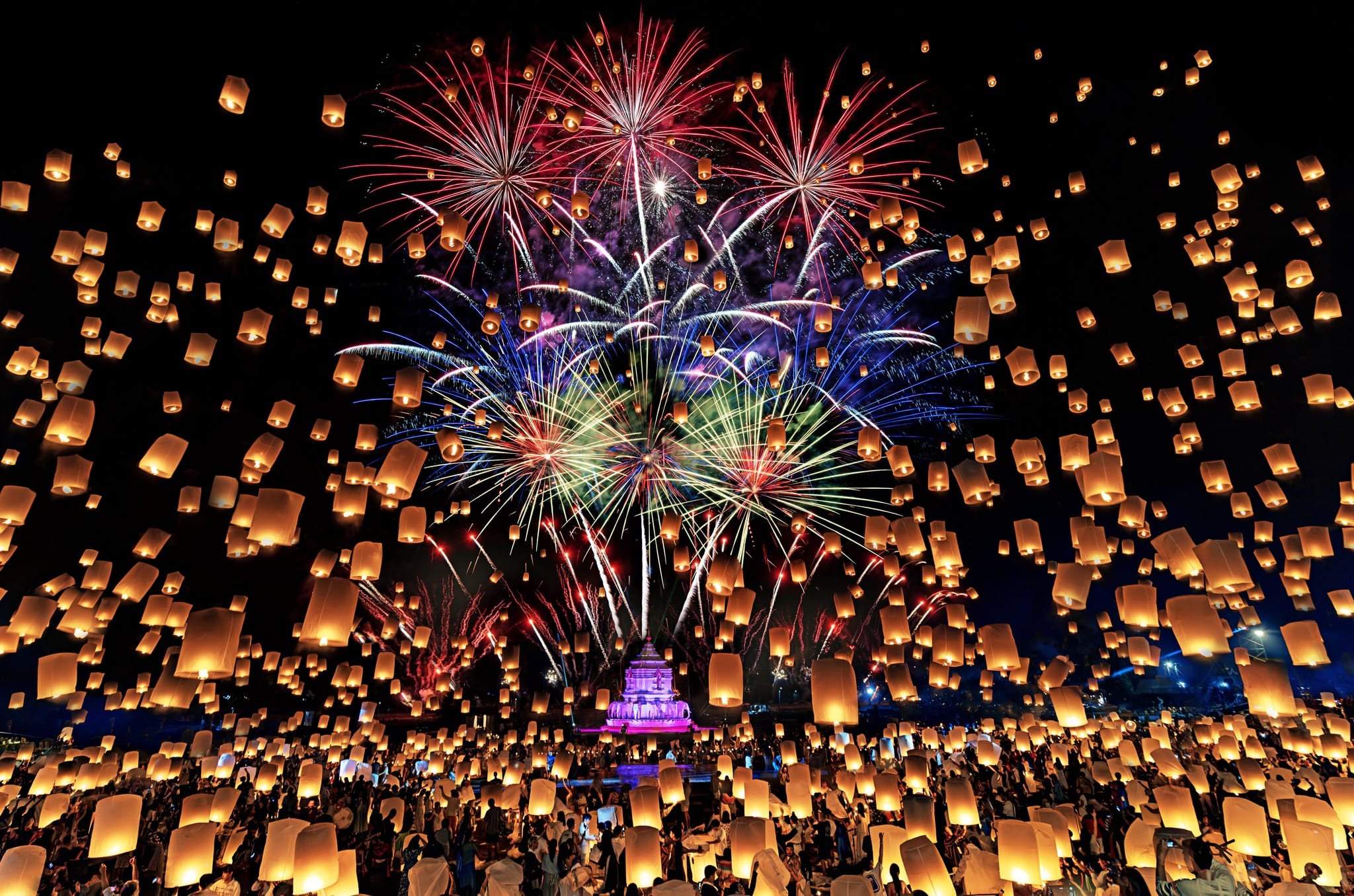
Chiang Mai offered a quieter, more contemplative counterpoint. Lanterns rose into the night sky, their warm glow forming slow, drifting constellations. Unlike the engineered precision of drones, these lights embraced unpredictability. Each lantern carried individual intention, yet together they formed a collective gesture. Here, light was not designed to dominate space but to release into it.
France: Paris and the Elegance of Controlled Illumination
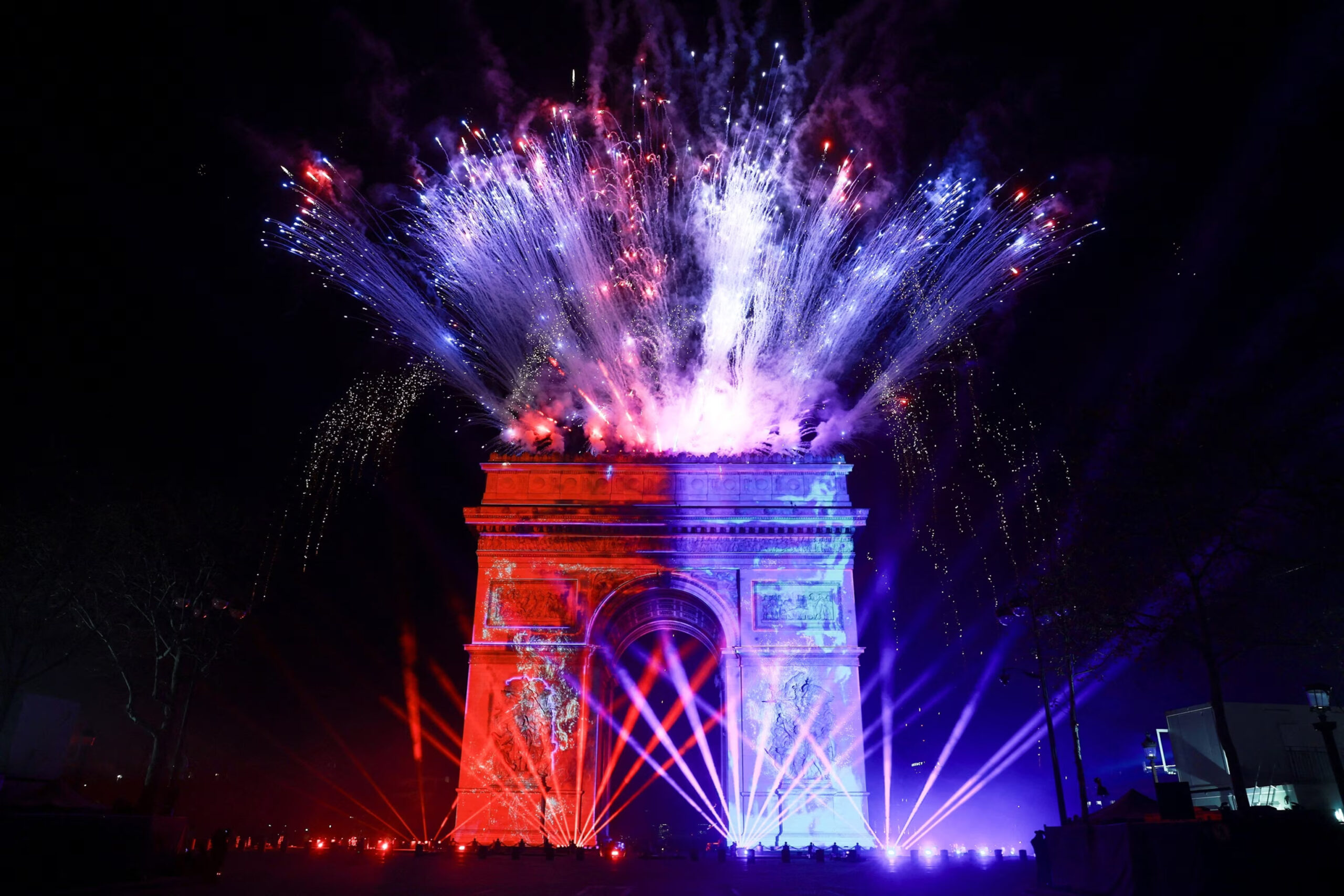
Paris welcomed 2026 with a refined approach that resisted excess. Along the Champs-Élysées and near the Eiffel Tower, lighting design favored compositional balance over spectacle. Architectural floodlights emphasized proportion and materiality, allowing iron, stone, and glass to assert their presence beneath carefully calibrated illumination.
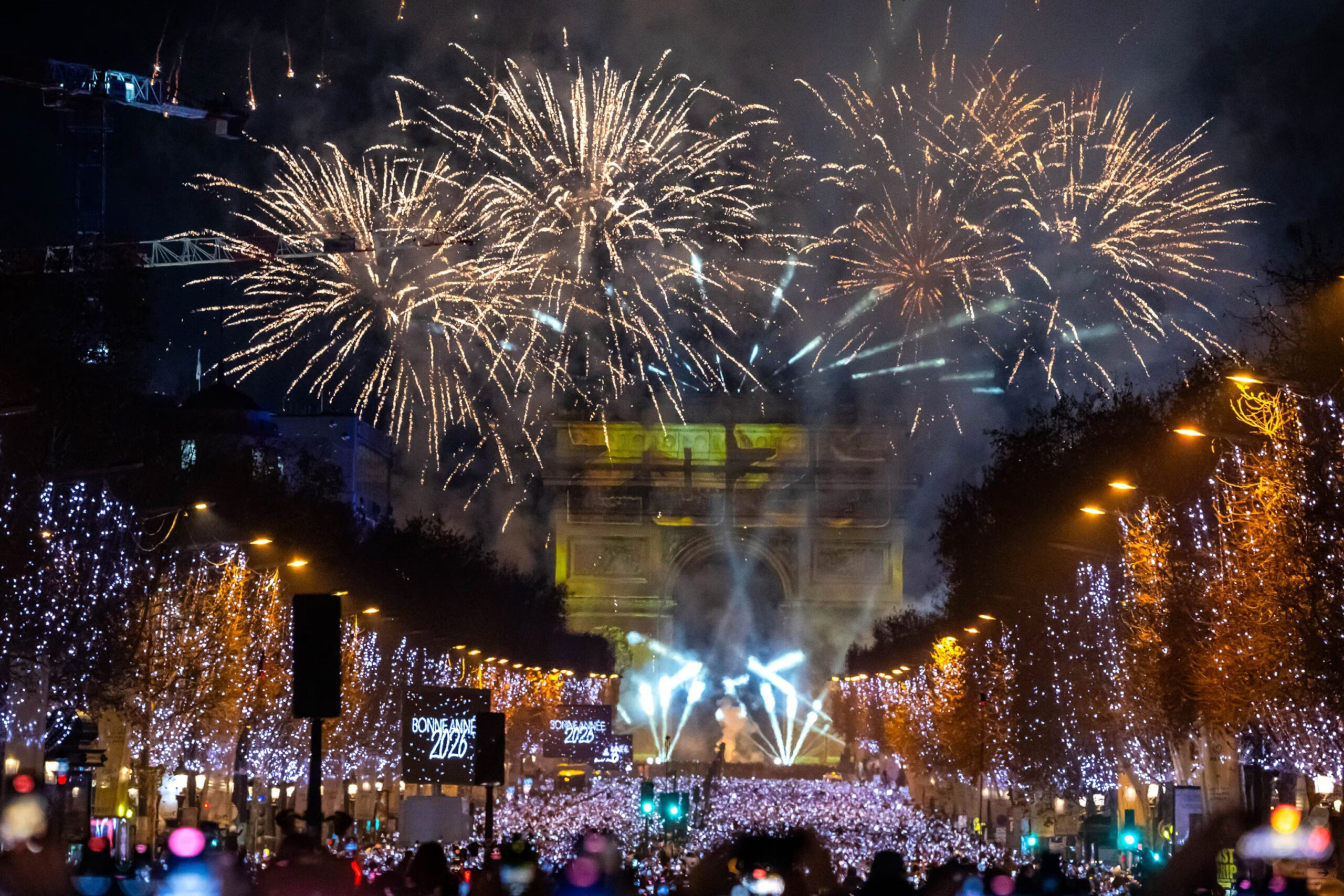
Fireworks were restrained, used as accents rather than declarations. Projection and ambient lighting played a greater role, turning familiar landmarks into softly animated surfaces. Paris did not attempt to outshine other capitals. Instead, it reaffirmed its belief in atmosphere, suggesting that light, when properly placed, does not need to shout.
Germany: Berlin and the Urban Pulse of Light
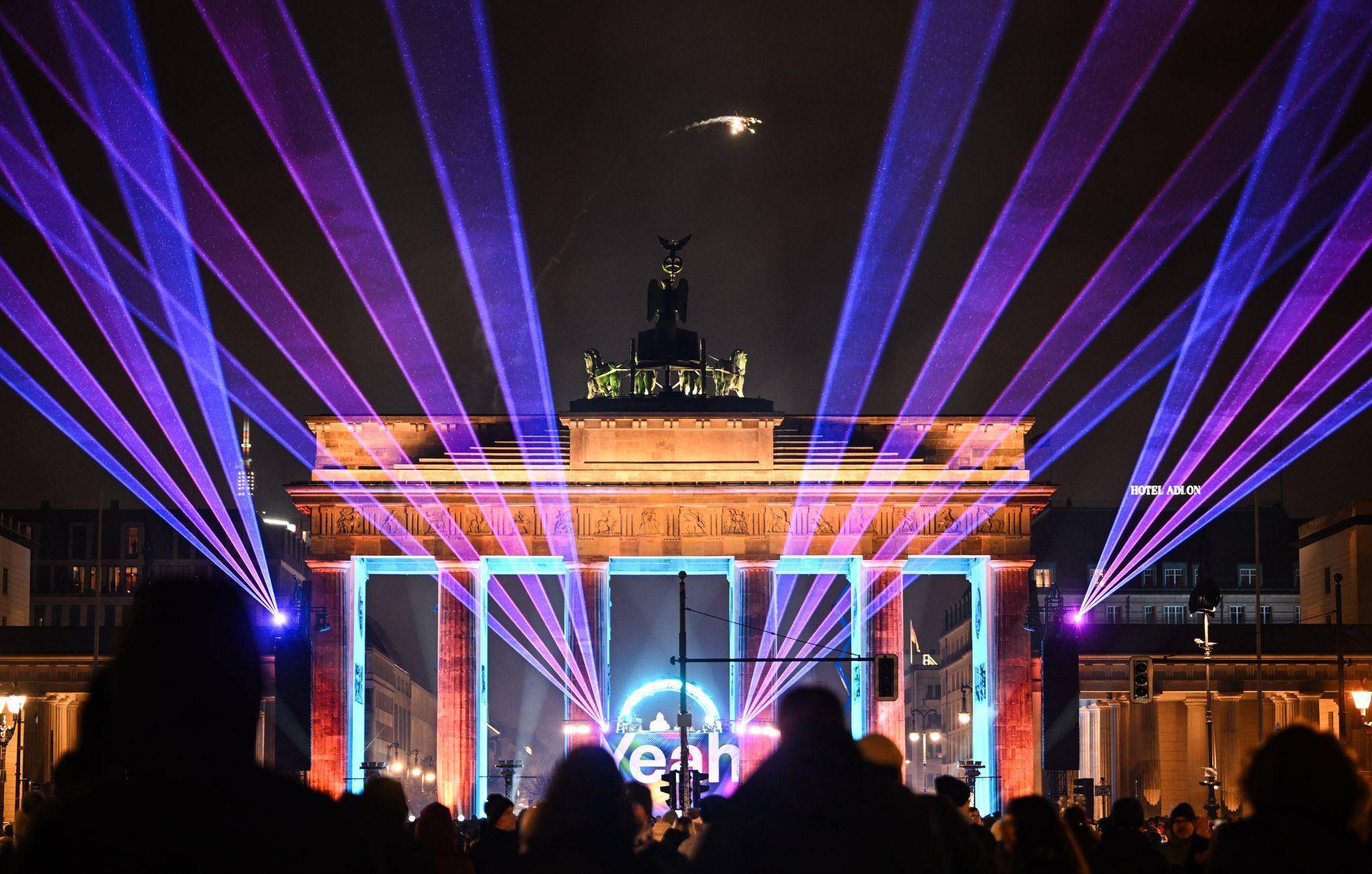
Berlin’s New Year’s Eve unfolded as a study in urban energy. Around the Brandenburg Gate and central districts, lighting design embraced density and motion. Beams cut across the sky, intersecting with fireworks that favored rapid sequences over grand finales. LEDs, strobes, and architectural uplighting created a layered visual noise that mirrored the city’s restless character.
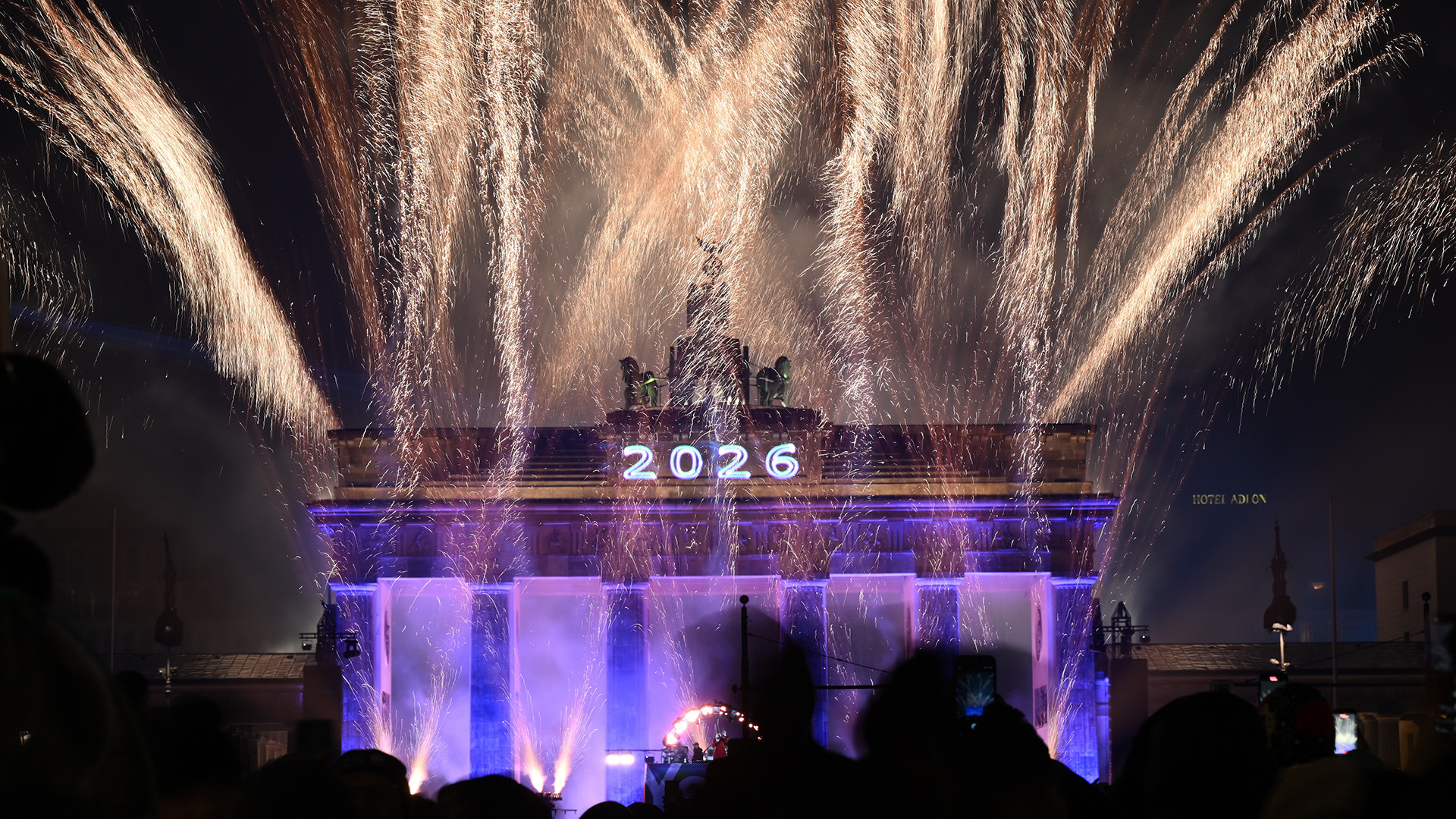
Unlike Paris, Berlin leaned into immediacy. The lighting felt temporary, almost volatile, as if designed to exist only in that precise moment. It was less about memory and more about presence. Light here did not commemorate. It activated.
Spain: Collective Ritual, Light, and the Drama of the Public Square
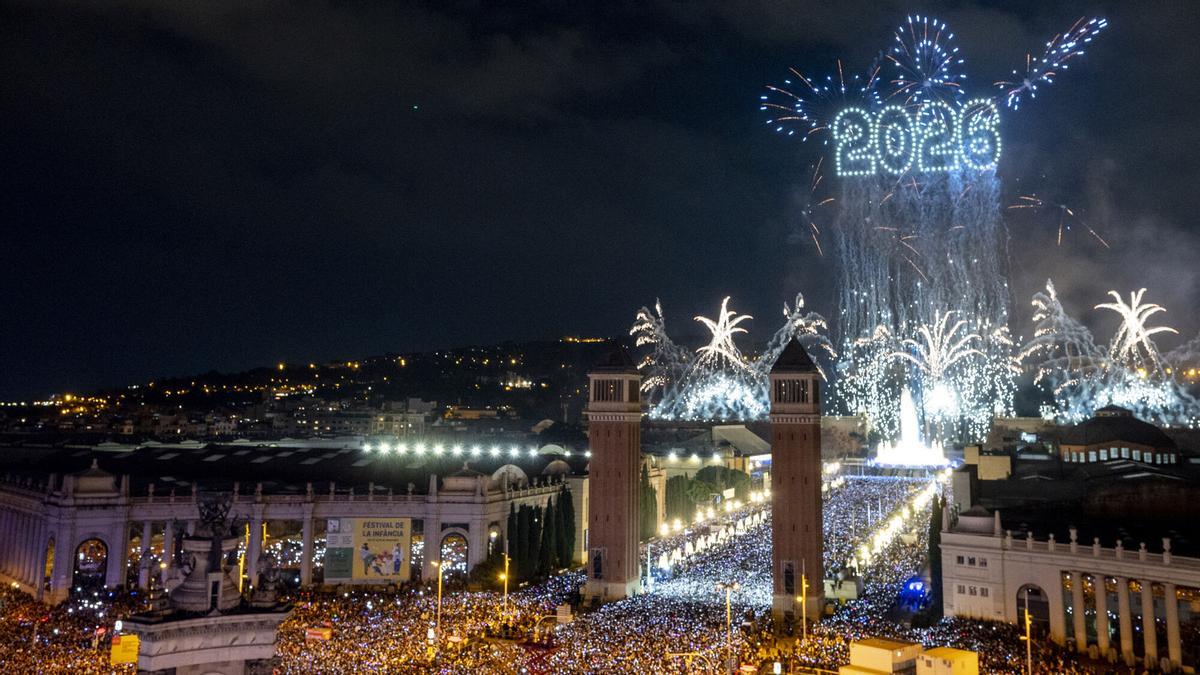
Spain welcomed 2026 with a confidence rooted in collective presence rather than technological excess. In cities such as Madrid and Barcelona, New Year’s Eve unfolded within public squares where architectural lighting, controlled fireworks, and broadcast illumination worked together to frame the crowd itself as the central spectacle. Light did not dominate space. It activated it.
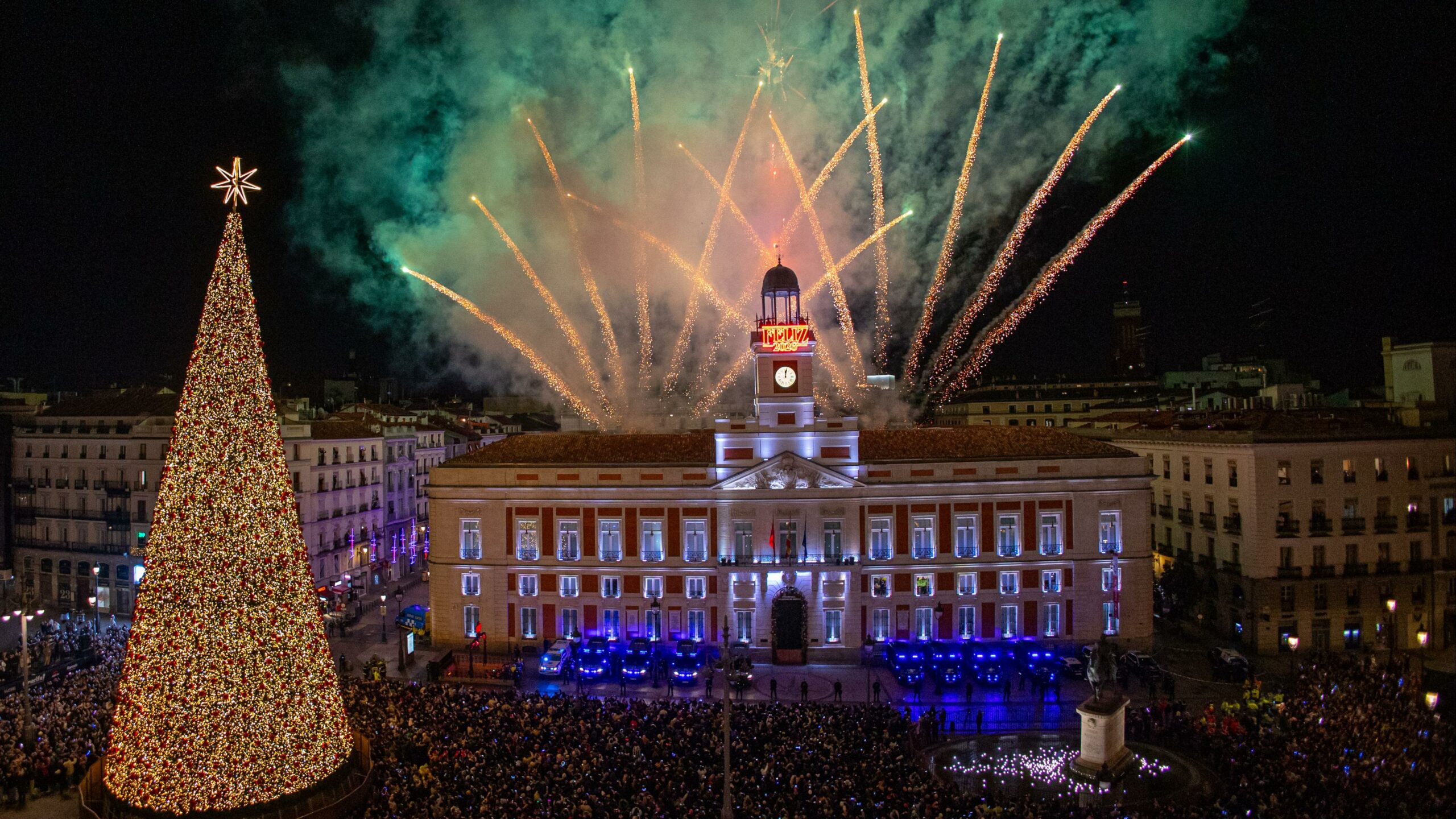
In Madrid’s Puerta del Sol, illumination emphasized rhythm and timing, reinforcing the ritualistic nature of the countdown rather than overpowering it. Fireworks were precise and brief, allowing façades, balconies, and historic surfaces to hold the visual weight. Barcelona leaned into warmer tones and spatial continuity, using light to connect streets, plazas, and waterfronts into a single, coherent field.
What made Spain exceptional in 2026 was not scale, but atmosphere. Lighting design supported social density, proximity, and shared anticipation. Midnight arrived not as an explosion, but as a release. Spain did not try to impress the sky. It spoke directly to the people standing beneath it.
Japan: Precision and the Power of Restraint
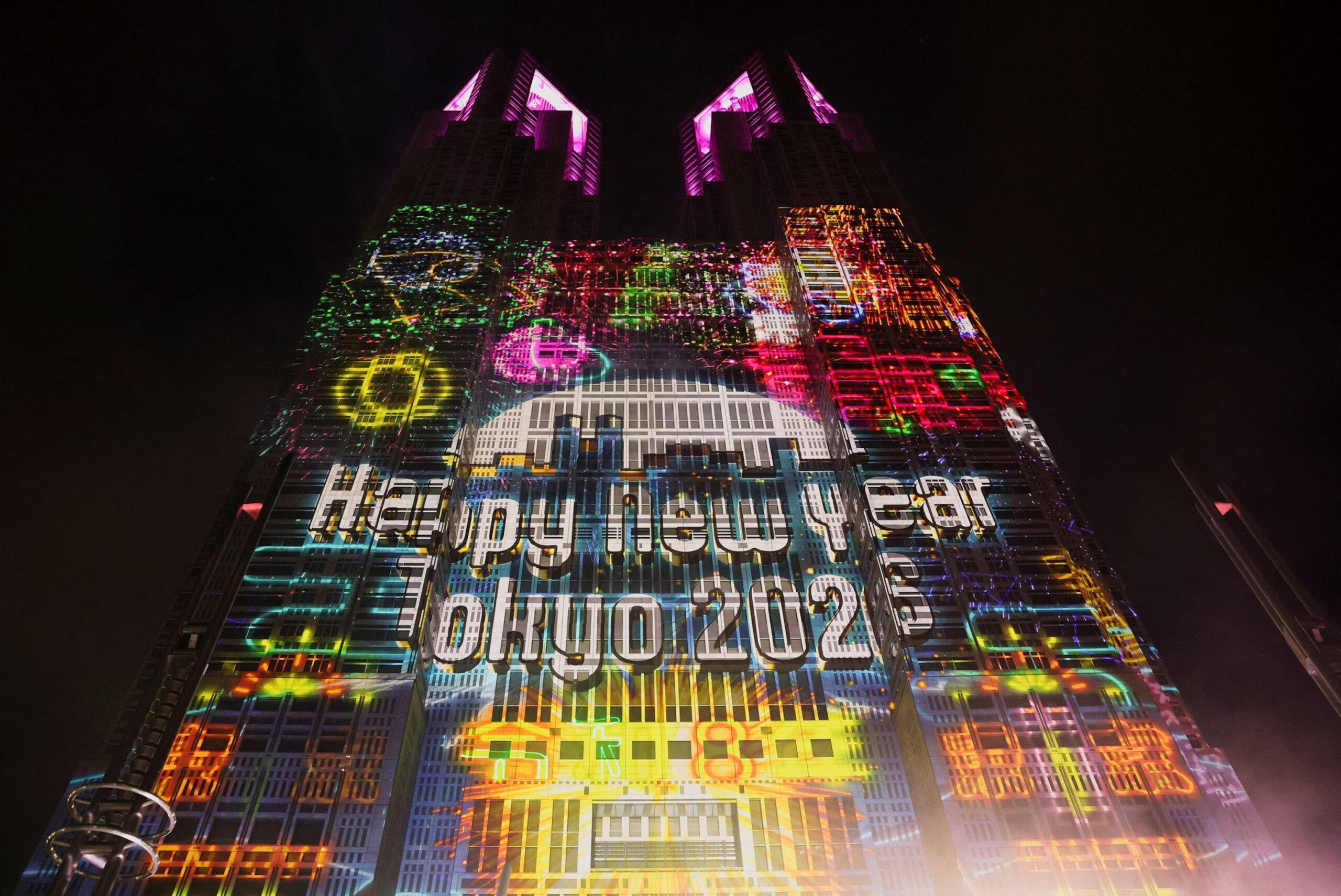
Japan welcomed 2026 with an emphasis on control rather than spectacle. In Tokyo, lighting remained architectural and measured, favoring steady illumination over dramatic fireworks. Buildings held their light with discipline, using precise color temperatures and minimal movement. Public spaces relied on ambient LEDs and deliberate darkness, framing the New Year as a passage rather than a climax. Light did not perform. It maintained order.
South Korea: Density, Media, and Urban Velocity
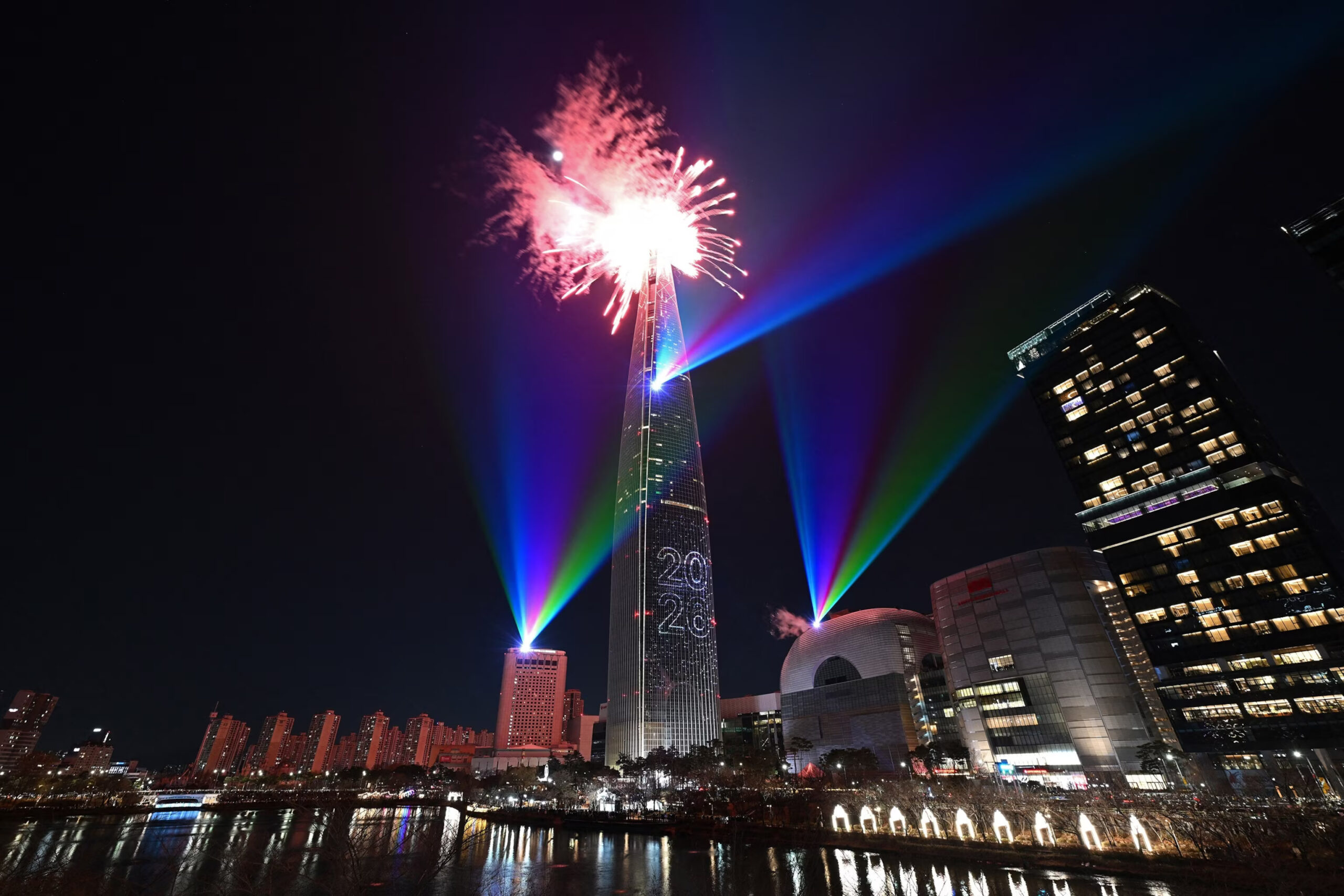
South Korea entered 2026 through saturation rather than silence. In Seoul, LED facades, media screens, and architectural lighting merged into a continuous visual field where light functioned as information as much as illumination. Fireworks played a secondary role, punctuating an already hyper-luminous environment. The city accelerated into midnight, organizing intensity through exact timing and layered design rather than scale alone.
Light as the World’s Shared Sentence
Across these cities, New Year’s Eve 2026 revealed a shared understanding: light is no longer decoration. It is structure, language, and emotional infrastructure. Whether through the technological authority of the UAE, the reflective tone of Sydney, the broadcast power of New York, or the quiet ritual of Chiang Mai, illumination became the means by which societies articulated who they were and who they hoped to become.
The world did not merely celebrate 2026. It wrote it, briefly, in light.