







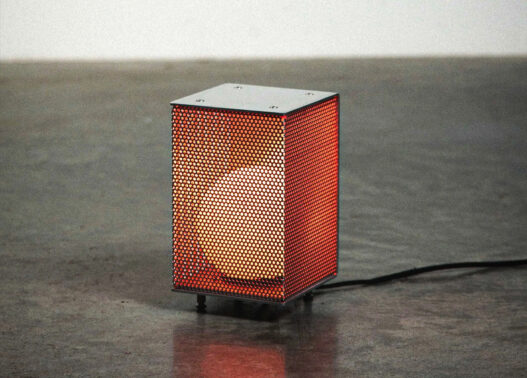
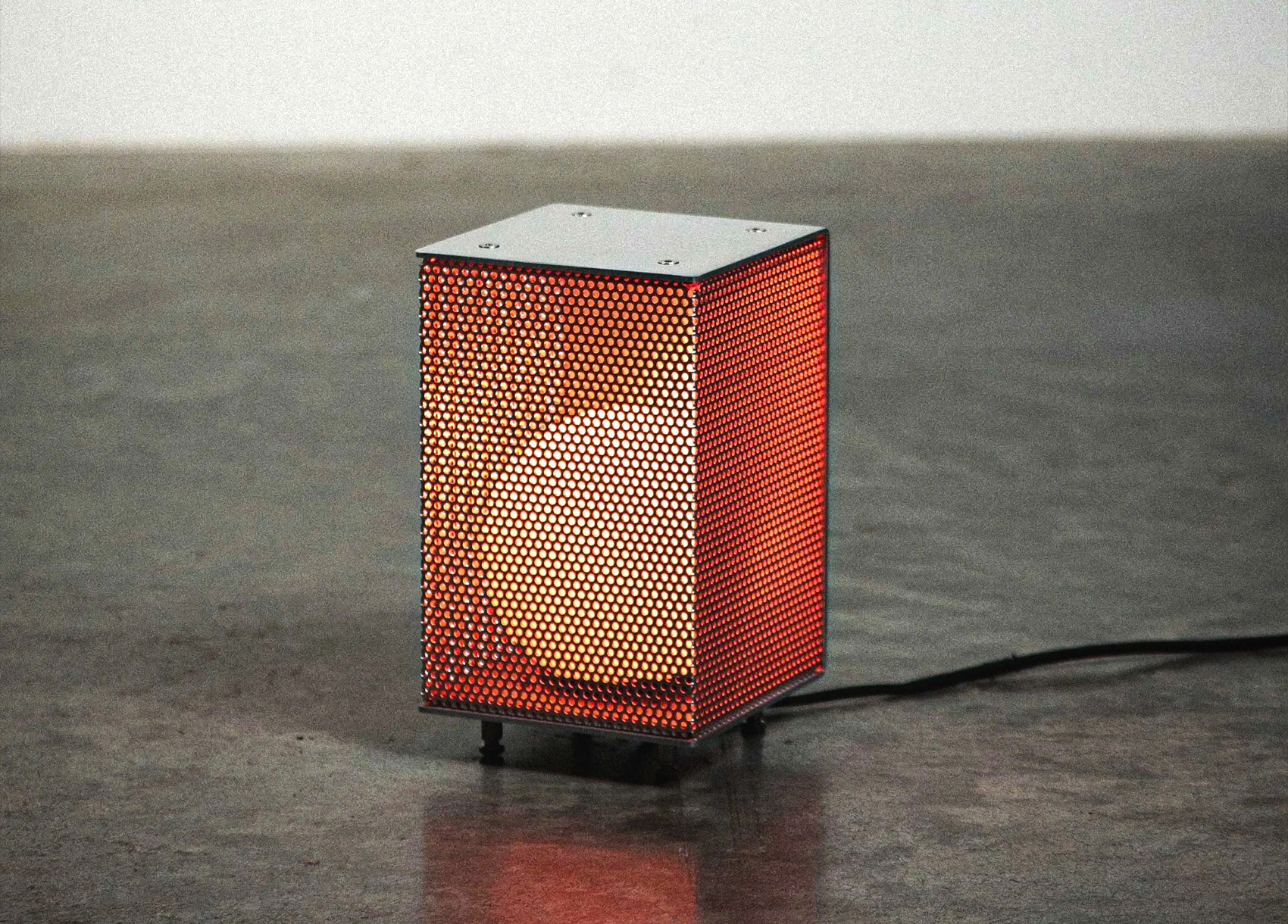
The lamp sits like an object that refuses apology. A cube of aluminum, composed with a stubborn clarity that suggests the designer set out to anchor light inside a form that has no desire to soften itself for domestic life. Its presence announces itself before it even emits a single lumen. The material asserts its own rules. It scratches, smudges, gathers the fingerprints and small erosions of touch, and this vulnerability shapes the entire lighting experience long before the fixture enters the realm of illumination. The decision to use aluminum in this raw behavioral state reveals the designer’s intention to create a piece that evolves through contact, turning patina into a slow record of time. Light becomes only one layer of the story. The object watches the home as much as the home watches it.
The perforated front panel introduces the lamp’s first gesture toward atmosphere. The grid of punctures is not decorative. It behaves like a membrane that filters an interior glow, trapping the source inside yet allowing enough escape for the eye to understand that something is breathing in there. The designer appears to have been drawn to the tension between concealment and revelation. Everything about the front surface reads as controlled leakage. The red bulb deepens that sensation through color rather than brightness. It paints the interior with a tone that feels less like illumination and more like heat, not in a literal sense but in the sense of a living ember. Before the lamp lights the room, it lights itself.
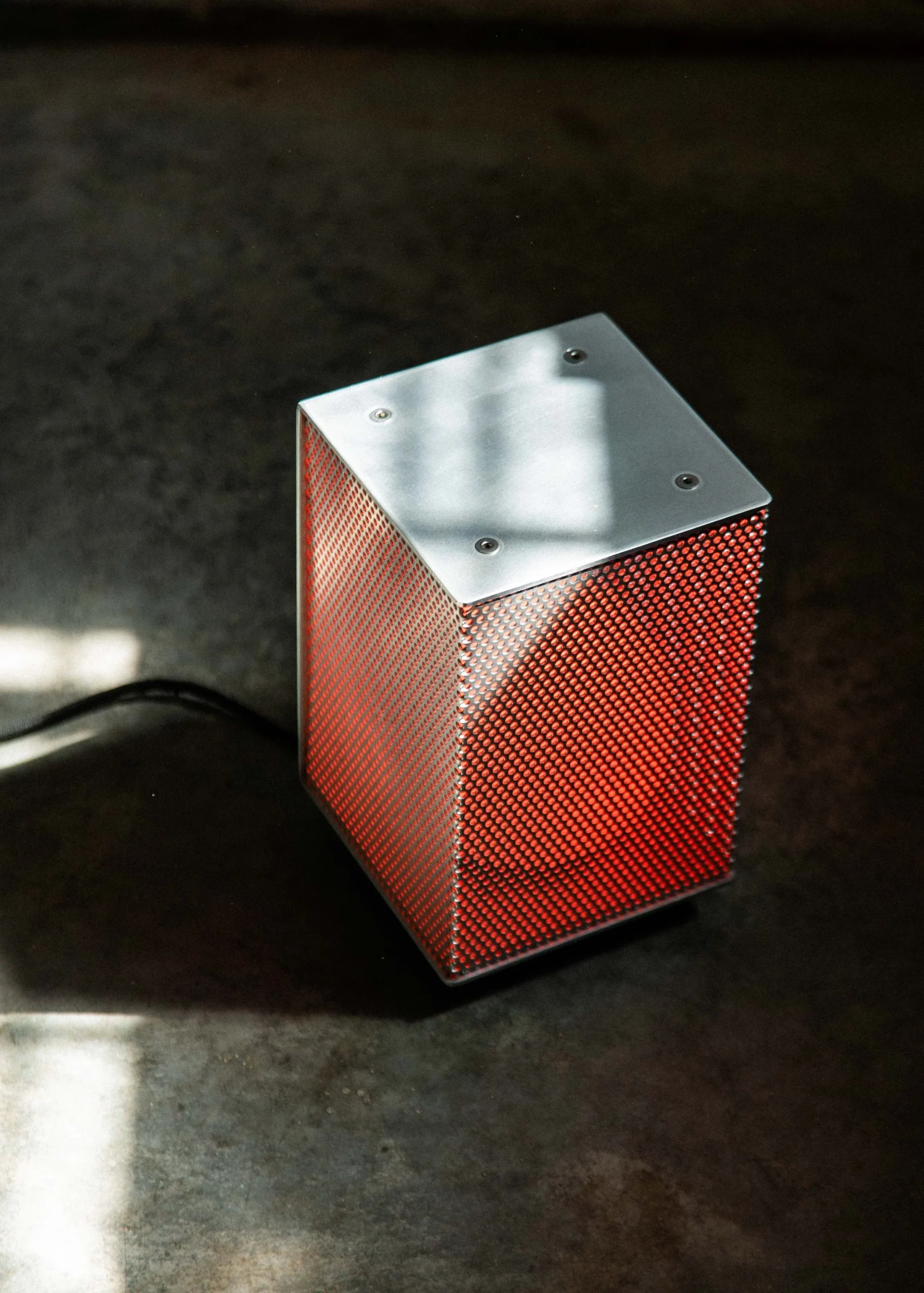

The perforations create a rhythm that assigns the light an unexpected texture. Instead of projecting a single clean wash outward, the lamp disperses a swarm of miniature points that blend into a wider field only at distance. The design avoids theatricality, yet the visual effect carries a faint reverence, as if the lamp acknowledges the weight of its own glow. The light escapes with hesitation, almost absorbing itself back into the cavity before committing to the surrounding space. This restraint shapes the identity of the illumination. The lamp creates a boundary, a soft perimeter where the light withdraws at the edges instead of pushing outward. It does not act as a general source. It prefers intimacy.
The interior cavity reveals more about the designer’s aim. The bent aluminum panels form a simple yet deliberate funnel that redirects the bulb’s output against the inner surfaces. This makes reflection the core mechanism of light distribution. You can sense the designer’s belief in indirect light as a means of character building. The lamp is not concerned with casting light efficiently. It seems invested in what happens when illumination first collides with metal before touching the world. The glow becomes conditioned by the material, acquiring a muted metallic warmth that contradicts the coldness normally associated with aluminum. This reversal shows the designer’s success in turning a harsh material into a vessel for subtle radiance.
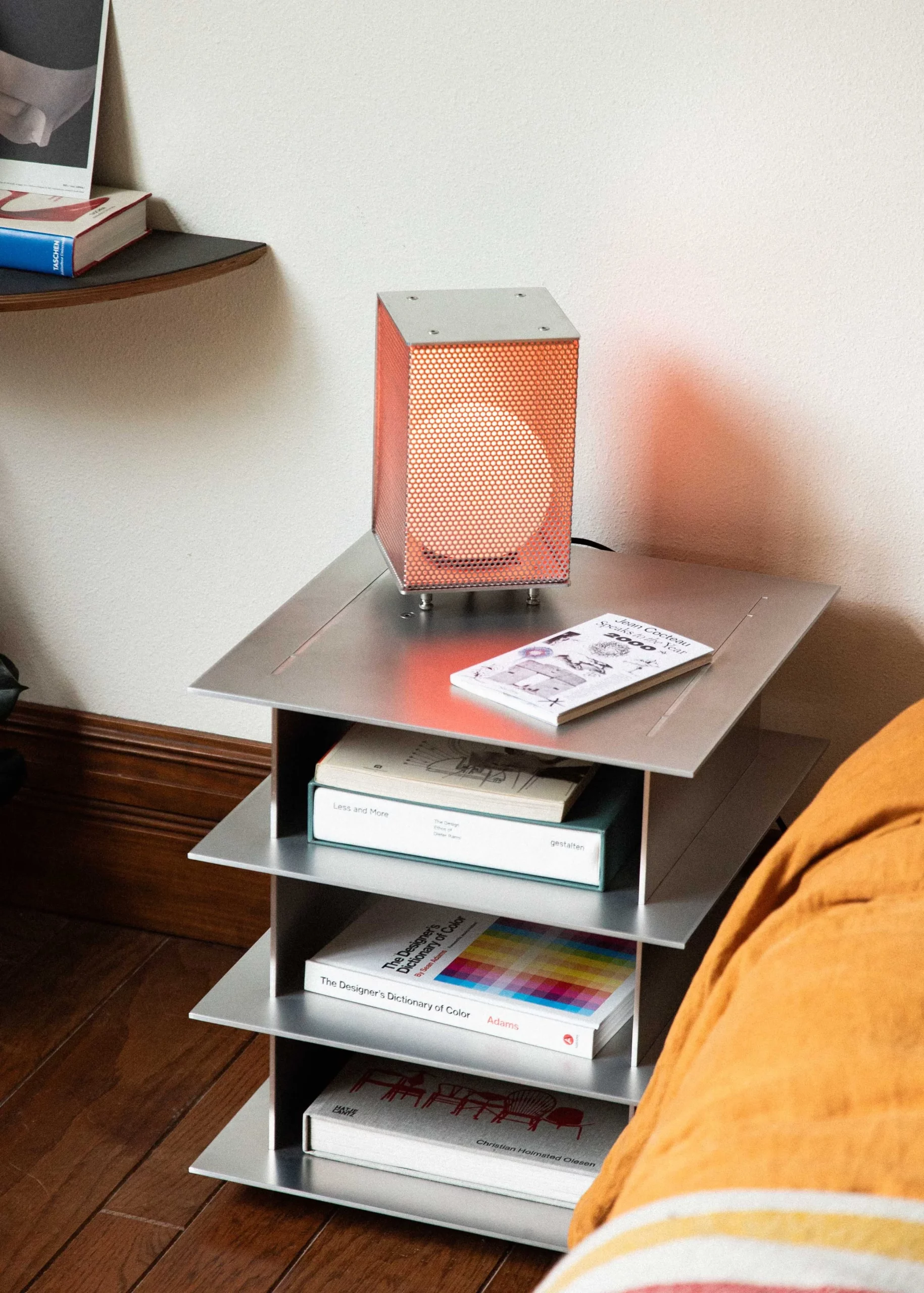
Without illumination, the lamp reads like a small industrial artifact. A block with no narrative. The moment the bulb activates, the object gains emotional dimension. The lamp’s identity shifts from rigidity to pulse. The red tone heightens this shift by introducing a chromatic expectation that questions whether the lamp is warming the room or signaling something. The designer clearly intended the light to sit between utility and symbolism. It functions, yet at the same time it performs. The atmosphere it generates positions it somewhere between a personal altar and a quiet machine. The lamp invites contemplation not through spectacle but through its ability to hold light like a secret that slowly leaks.
The proportions reveal another layer of intention. The cube stands tall enough to assert presence but remains compact enough to operate as a table companion. The height is just sufficient to allow the glow to hover slightly above the surface it occupies, creating a field of warmth that does not overwhelm. The designer seems to be navigating scale with caution, ensuring that the light stays low and grounded. The lamp behaves like a localized event. It does not attempt to define an entire room. It defines a corner of consciousness.
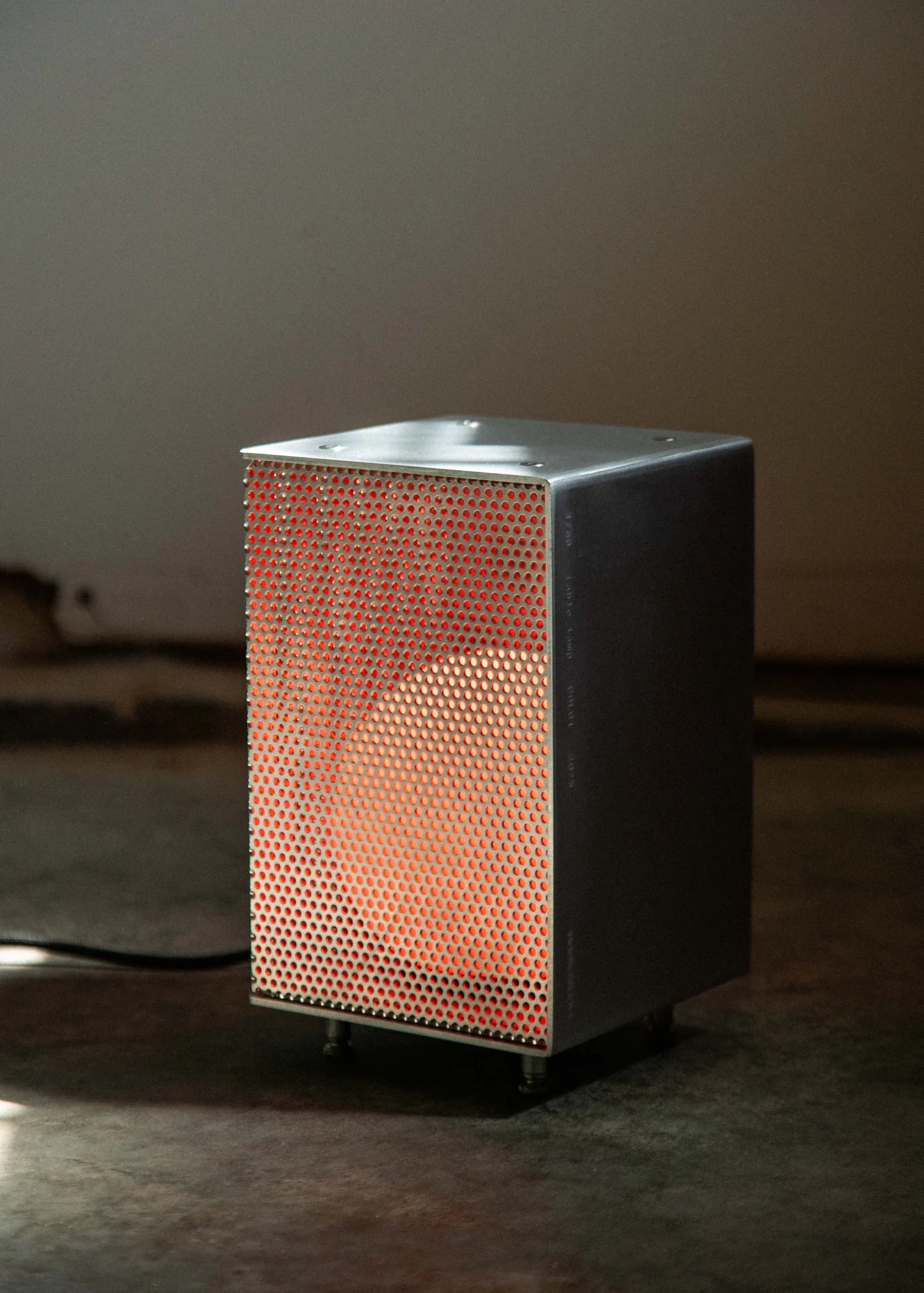
The choice of a replaceable red bulb feels deliberately anachronistic. In an era obsessed with integrated LEDs and sealed housings, the presence of a simple socket reads like a refusal to overcomplicate. This decision extends the designer’s ethos of rawness. A socket is an admission of mutability. It allows the owner to shift the lamp’s character without altering the object. The designer offers the framework, yet the user negotiates the final emotional register. This collaborative flexibility supports the lamp’s intention to evolve with time. As the aluminum accumulates marks, the chosen bulb reshapes the atmosphere. Light becomes a negotiation between object and human habit.
The lamp’s behavior in a dim environment reveals the most about its visual philosophy. The perforated screen creates an optical density that allows the inner glow to feel suspended rather than projected. The light turns into a presence that hovers behind the metal plane, as if the lamp holds something fragile and does not want to let it fall. It generates a contemplative quiet. The designer seems to have been pursuing an emotional temperature rather than a functional brightness. The performance of the lamp comes from how little it tries to impress. Its restraint is the source of its identity.
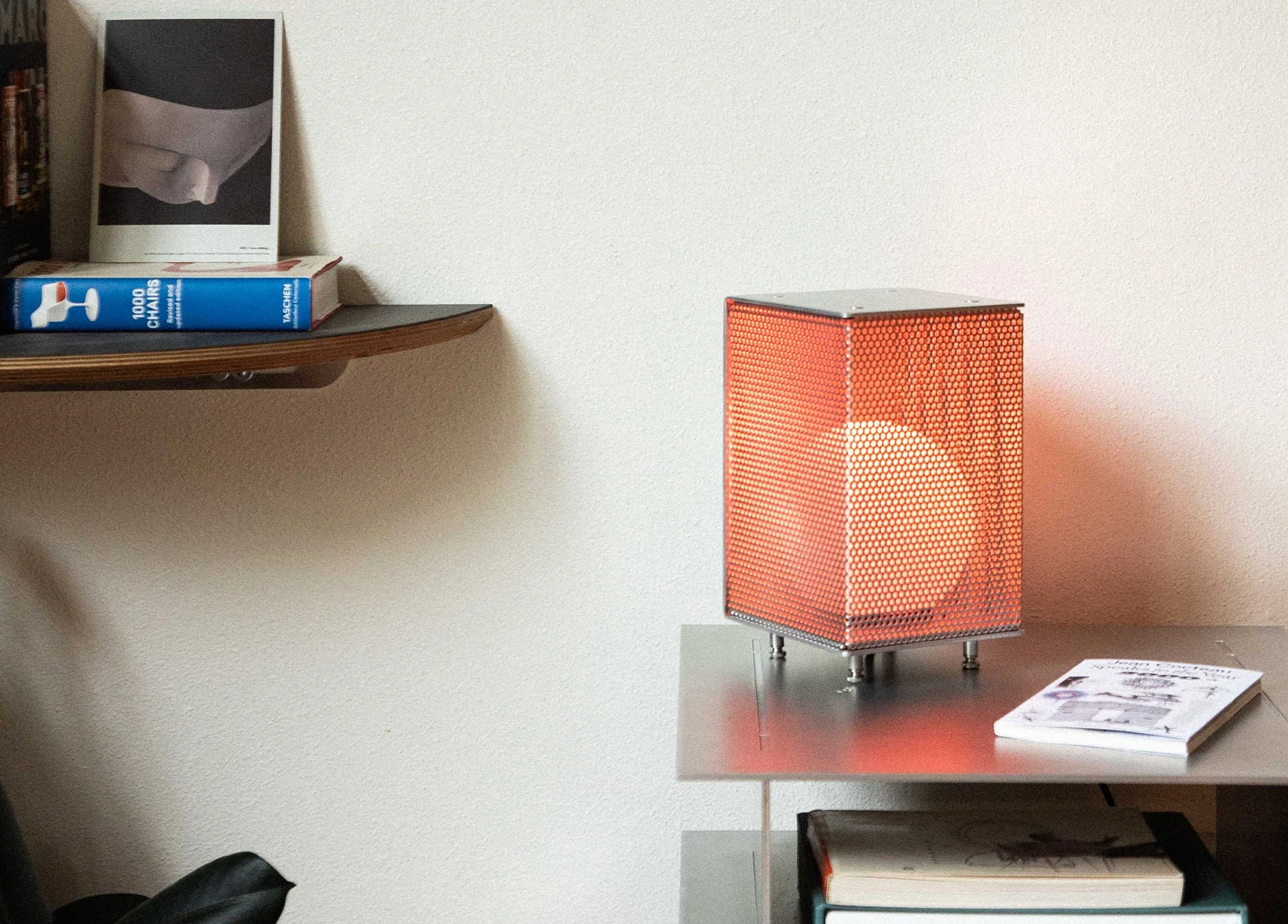
The notion that the lamp will develop sharper edges or shifting textures over time redefines the relationship between user and object. The designer invites the user into a long-term conversation with the material. This approach suggests a belief that light interacts not only with space but with memory. The patina becomes part of the illumination because each mark subtly alters the way light scatters. The lamp grows into its own imperfections. The designer’s achievement lies in recognizing that lighting can carry the record of touch, that illumination can absorb the evidence of a life lived around it.
The lamp ultimately stands as a study in containment. Light is not released so much as cultivated. The designer directs attention inward, toward the nature of glow itself, limiting excess and amplifying nuance. The lamp succeeds when viewed through this lens. It is not trying to solve a lighting problem. It is trying to express a philosophy about how illumination can inhabit an object. The lamp accomplishes this through material honesty, restrained geometry, and a willingness to let light behave with patience rather than urgency.
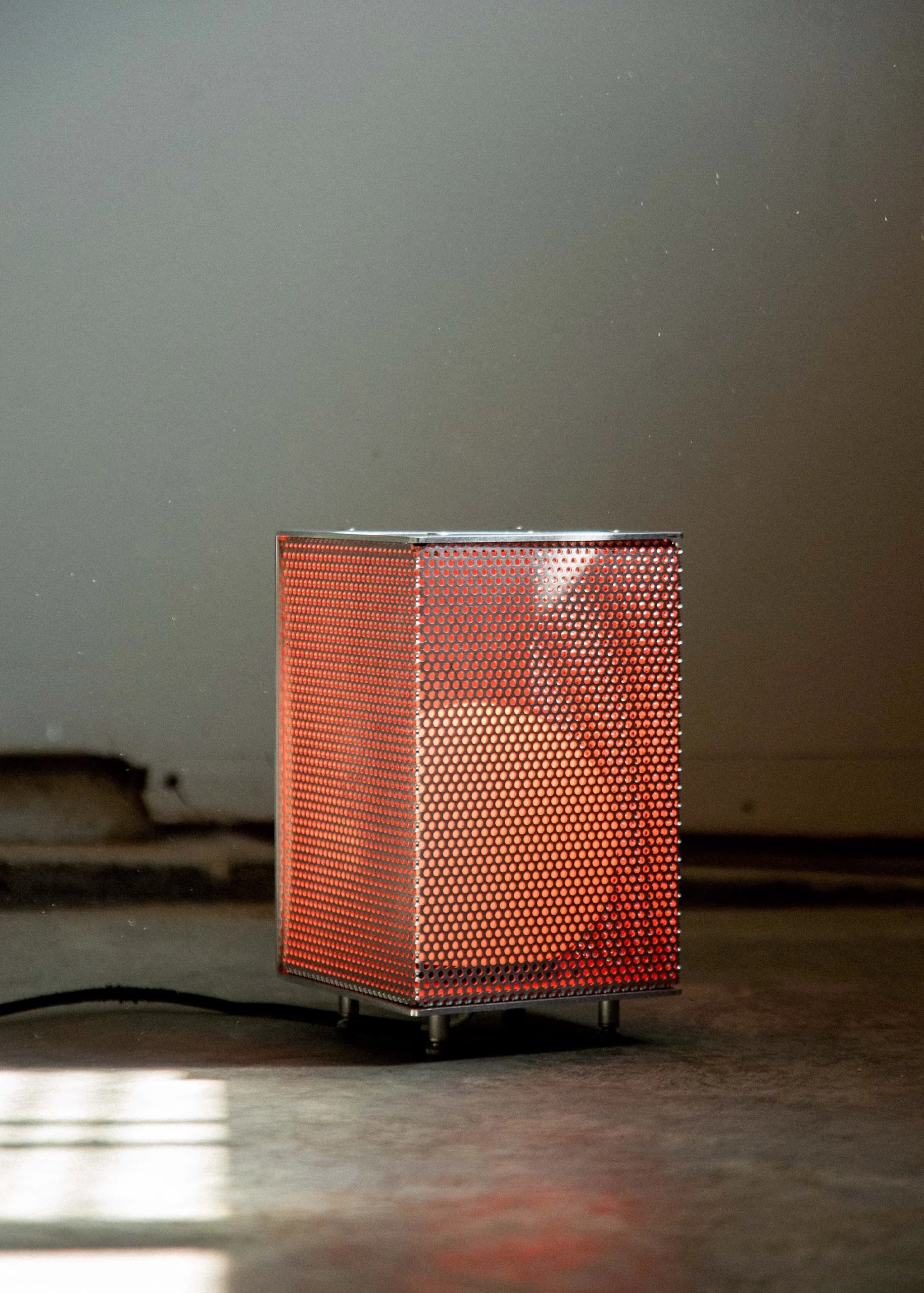
The result is a piece that gains meaning through endurance. It asks the room to slow down. It does not force itself into the visual landscape but reshapes it quietly. The designer appears focused on creating a lamp that understands the relationship between object and light as a long form of dialogue. The lamp becomes a companion that measures time not through brightness but through the gradual imprint of the home upon its surface. This sense of continuity transforms it from a functional product into a quiet observer. In its glow, you sense the designer’s pursuit of a light that remembers.