








Blooming motion held in glass
Brand: Lasvit
Designer: Martin Gallo
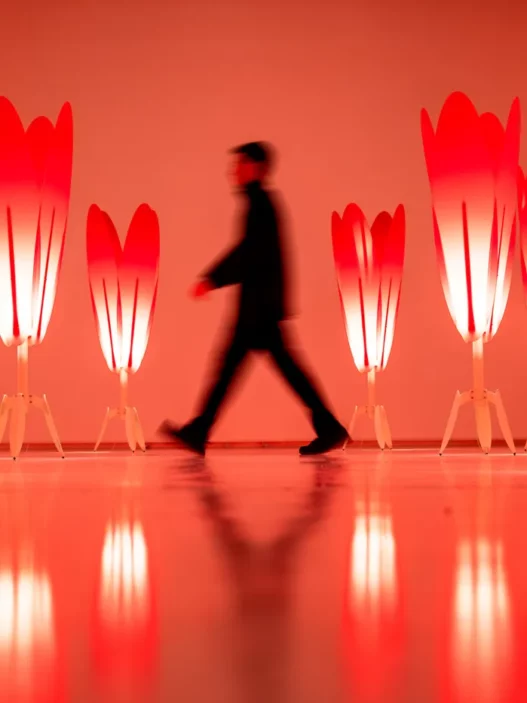
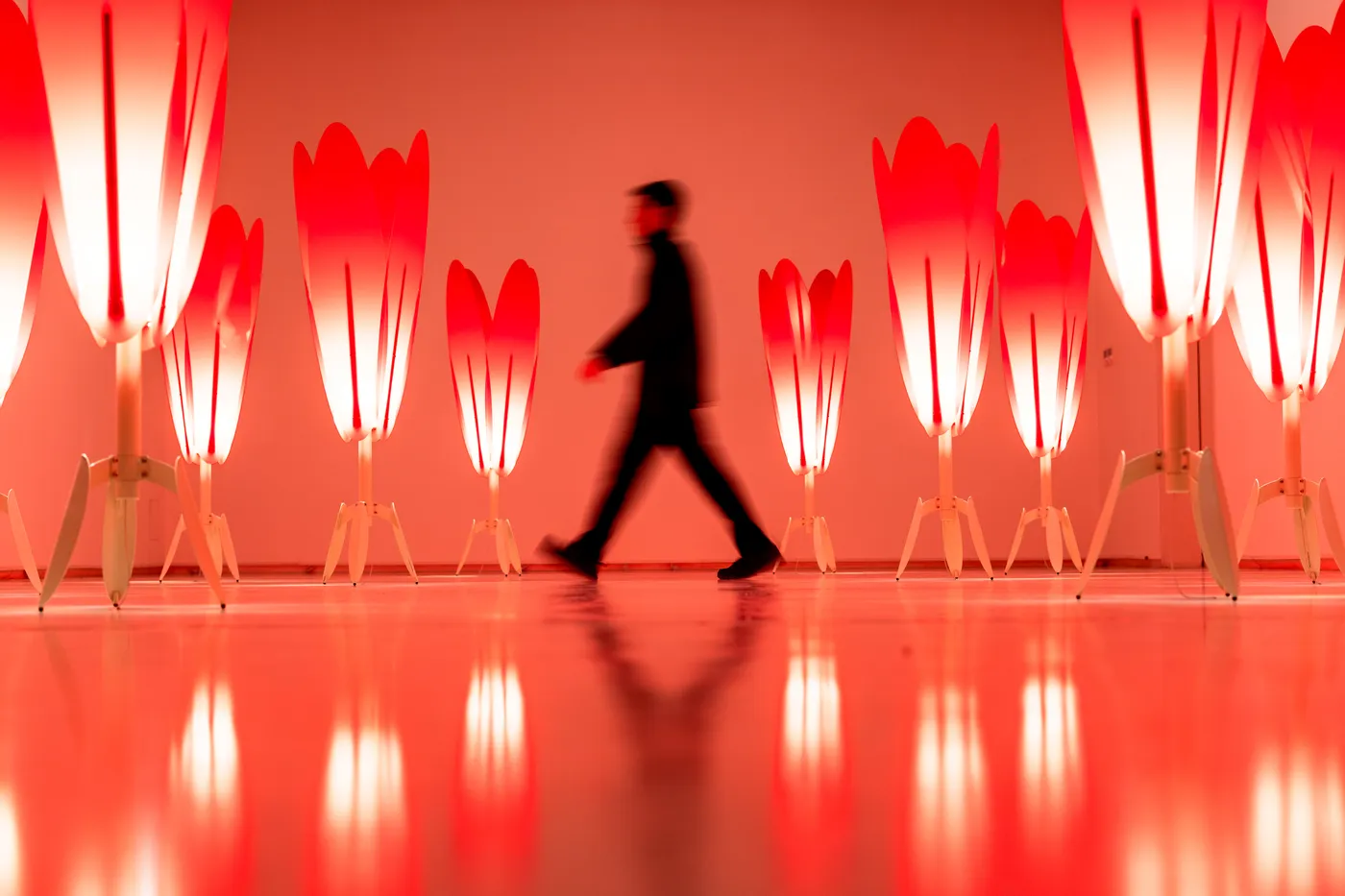
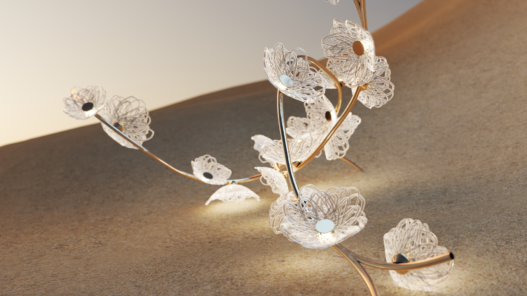
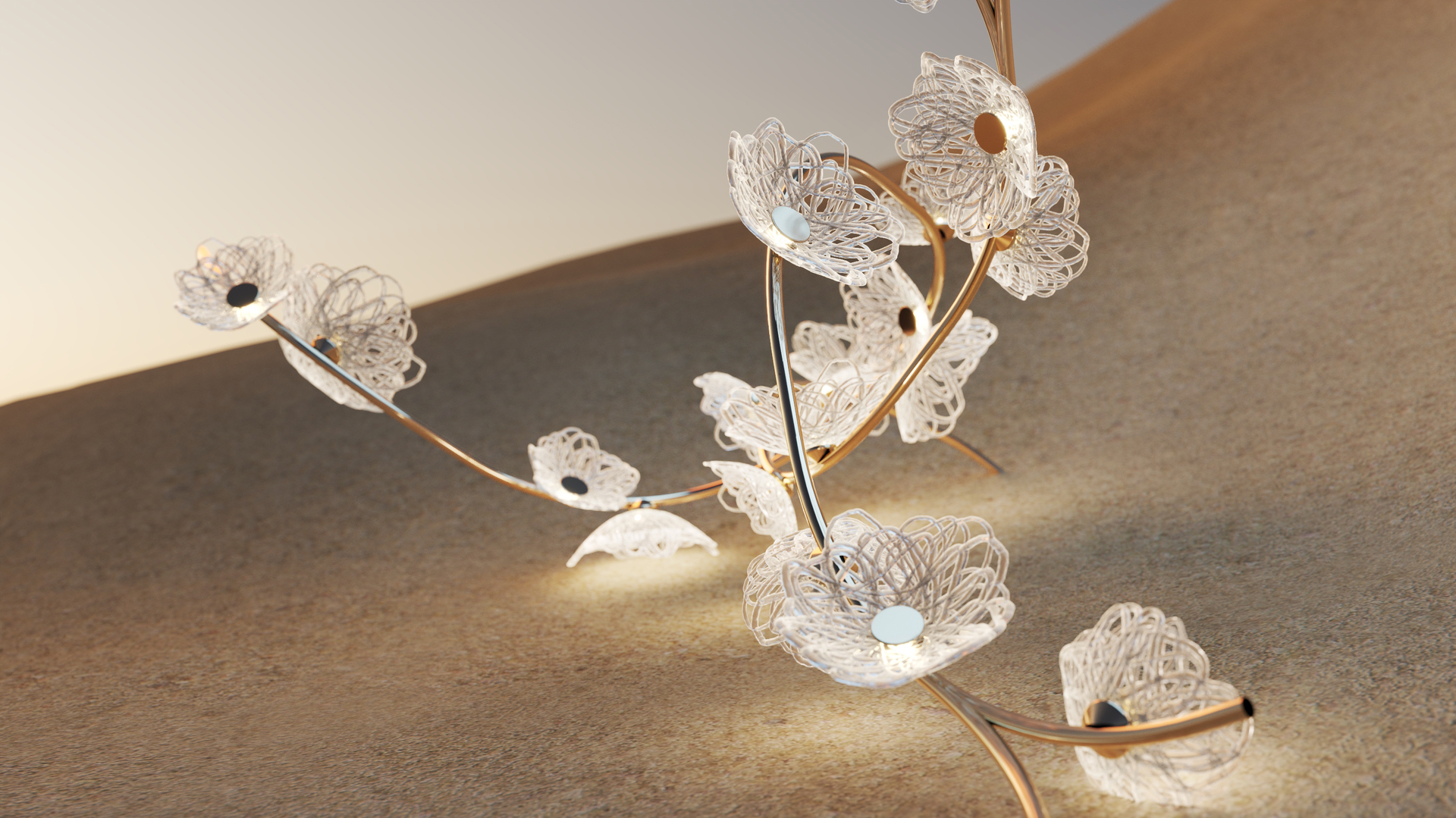
There is a quiet kind of drama in light that refuses to declare itself. Rosa lives inside that refusal. It enters a room not as an event but as a presence, like someone who speaks softly enough that you lean forward before realizing you have. The fixture stretches across air the way a sentence stretches across thought, unhurried, sure of its destination even if the viewer isn’t. Its glass blossoms are less objects than pauses. They hover like something mid-becoming, a gesture caught between intention and arrival.
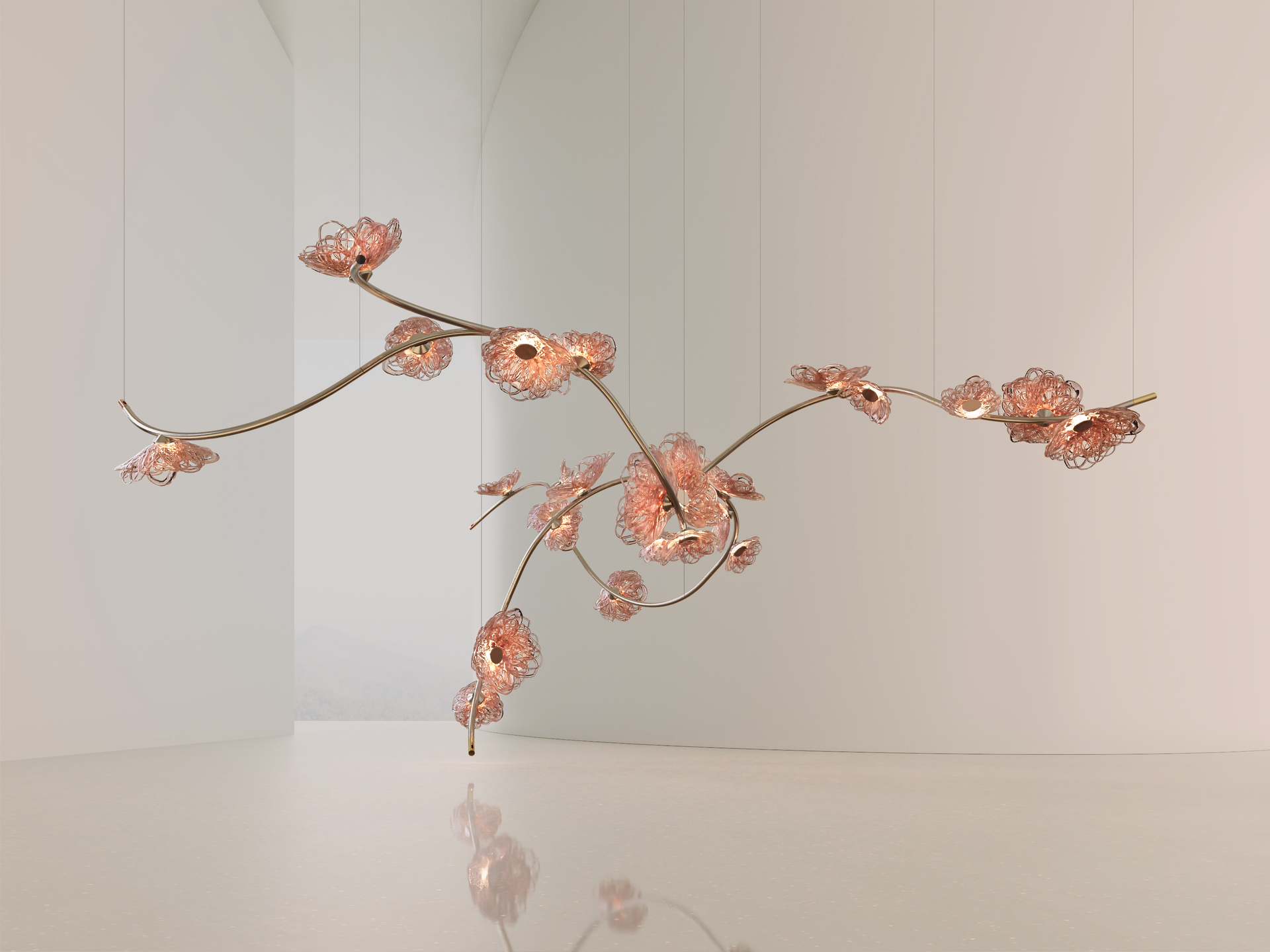
The designer says he was looking for movement too slow to see, and that ambition feels honest. Rosa doesn’t imitate nature, it remembers it. Each filament of glass trembles on the edge of fragility, the way petals tremble hours before falling. But the fixture doesn’t mourn that fragility. It puts a light inside it and lets the material decide how far it can hold it. What results is illumination that behaves almost like memory, soft around the edges, hesitant in its reach. A harder source would break the illusion. A brighter one would feel like explanation, not experience. 
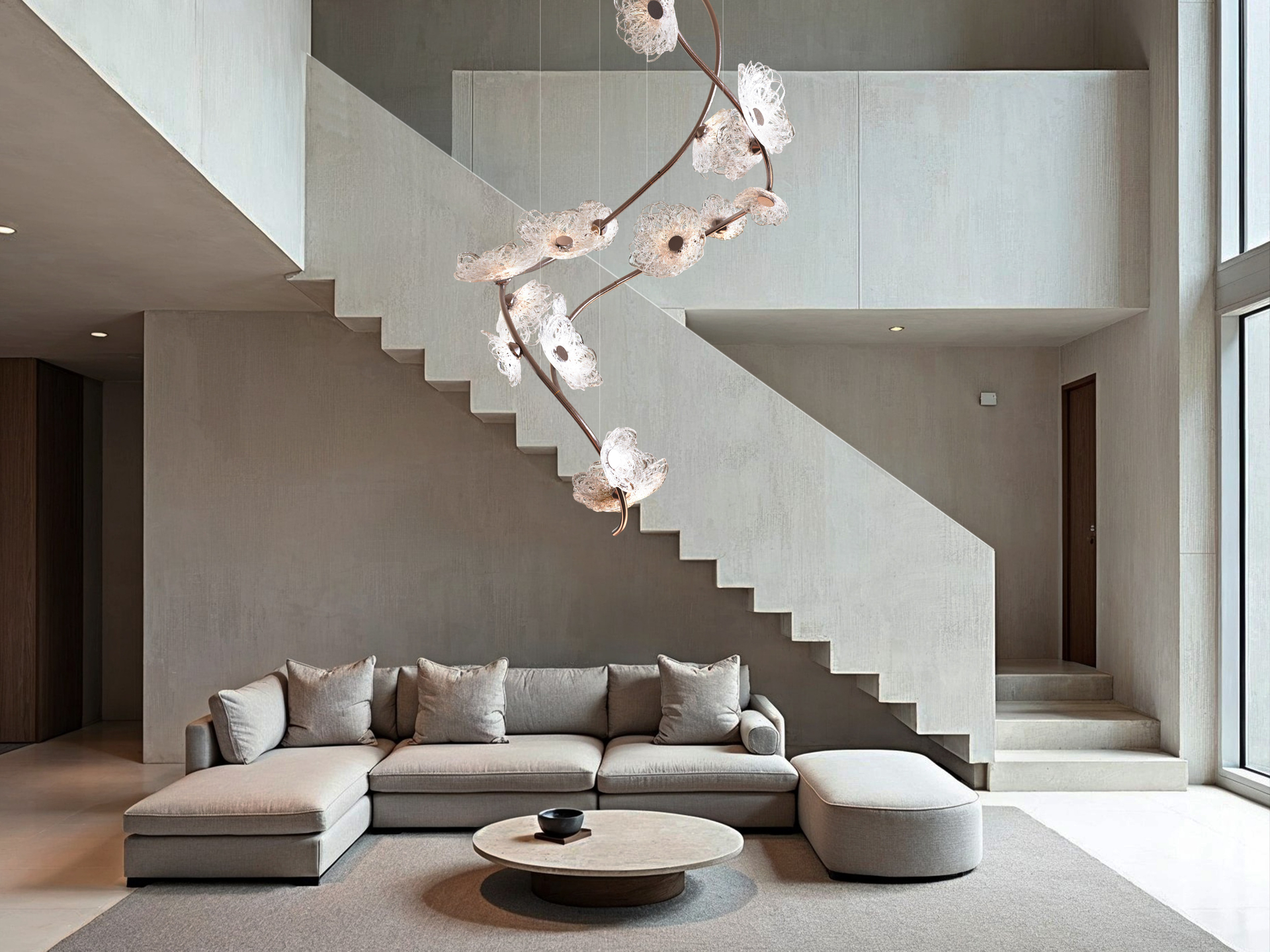
In the living room scene you don’t witness light filling a space, you witness space surrendering itself to glow. The sofas pale slightly under it. Corners dissolve. Time seems to lose definition, as though noon and dusk are sharing the frame. This is the fixture’s true talent. It doesn’t chase visibility. It asks for stillness. Many luminaires brighten a surface. Rosa hushes it. You could sit under this thing and speak more quietly without noticing you’ve done so.
But admiration has to sit beside reality. This is a system that demands care. The filigree petals catch dust the way they catch light, delicately, stubbornly. A month of neglect and the bloom loses articulation. What was lace becomes film. This isn’t a sin in design, only a truth. A piece built on breath requires lungs. Rosa doesn’t just exist in a room, it continues to become something inside that room. That ongoing becoming has a cost.
Functionally, its scope is narrow but intentional. It’s not a workspace luminaire. It won’t make text crisp or colors clinical. It exists for rooms where illumination is not the point but the tone. In a restaurant at midnight, in a home that values silence, in a gallery where shadows are allowed to think for themselves, it would make sense. Anywhere that requires full comprehension at a glance, it stands more as sculpture than service.
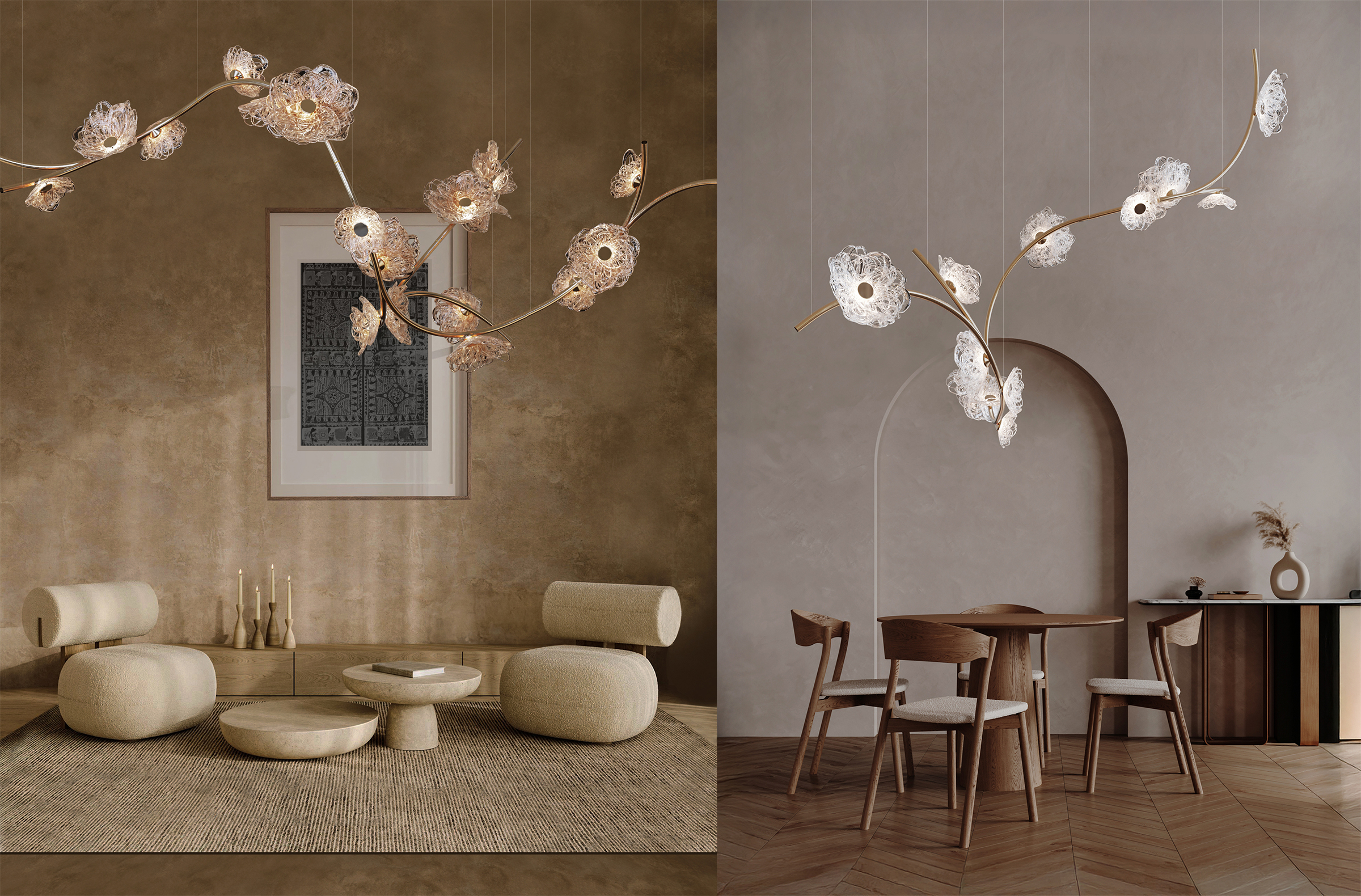
The modularity intrigues me more the longer I consider it. Not because it scales, but because scaling changes its meaning. A small arrangement feels private, almost secretive. A sprawling one feels like a weather pattern, a kind of indoor flora that doesn’t need soil to claim territory. It isn’t growth as metaphor. It’s growth as method. That’s the nuance that gives Rosa integrity. It doesn’t perform nature. It behaves like it.
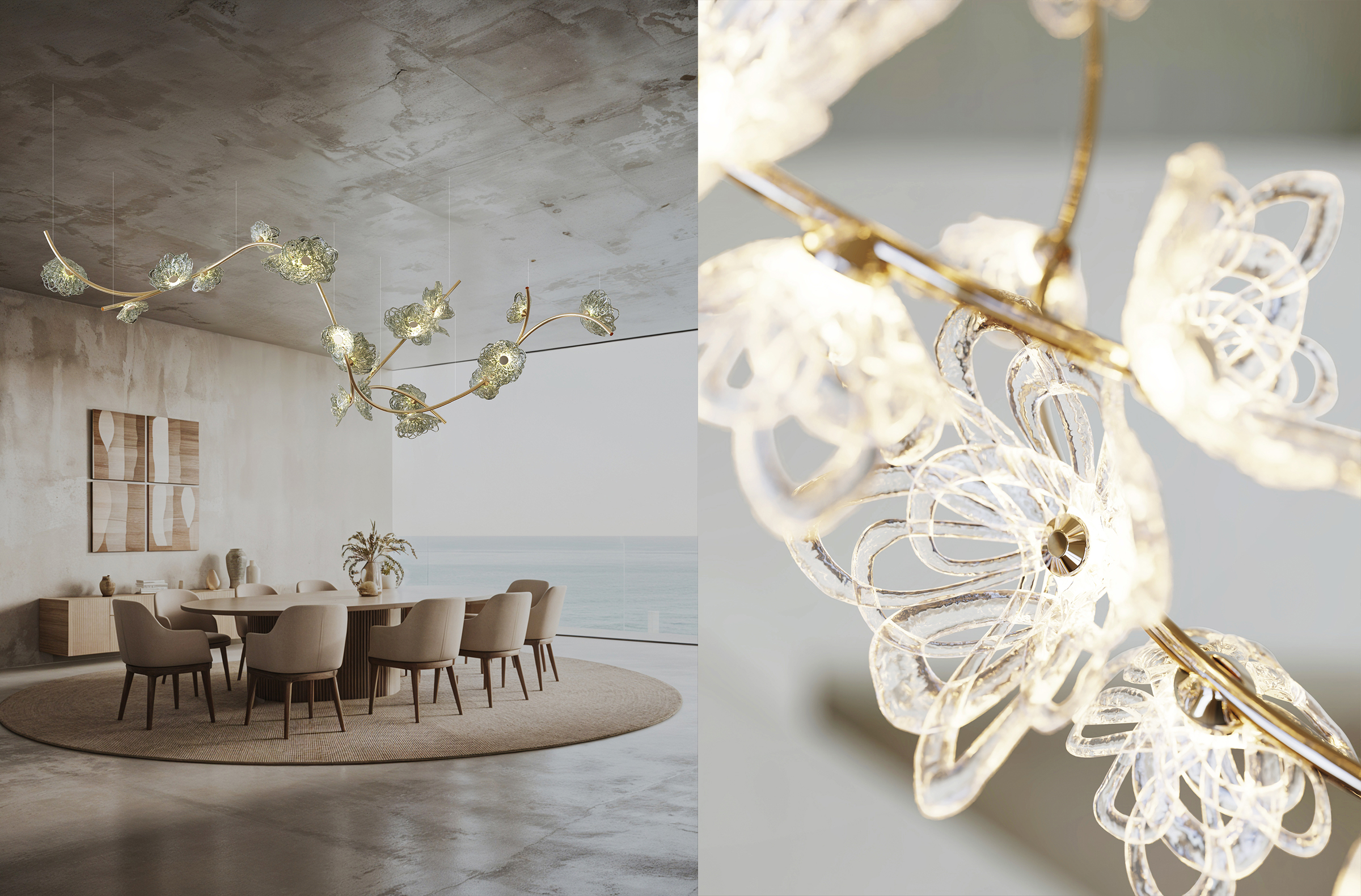
And yet the installation only succeeds when patience exists around it. In a room indifferent to nuance, it may as well be invisible. The light doesn’t insist, it waits. I think that’s the part worth sitting with. Rosa is a lighting object that believes hesitation is a form of beauty. Maybe it’s right. Maybe not. But it holds that belief with conviction, and conviction is rare in decorative luminaires.
If design can slow your pulse even half a beat, it has done something beyond furnishing a room. Rosa slows pulse. Not dramatically. Just enough that you almost miss it.
Almost.