









Where Light Finds Its Orbit
A room can hold its own identity long before illumination enters it. Surfaces establish their boundaries, materials reveal their weight, and objects occupy their positions with a quiet certainty. When light arrives, the order of perception shifts. Edges gain definition, textures rise forward, and distance acquires a different measure. The Dynamic Collection, developed in collaboration with Stephen Burks, approaches lighting through this sensitive relationship between object and environment, creating fixtures where illumination participates in the reading of form.
Designer: Stephen Burks Man Made
Brand: Puntoluce Iluminação
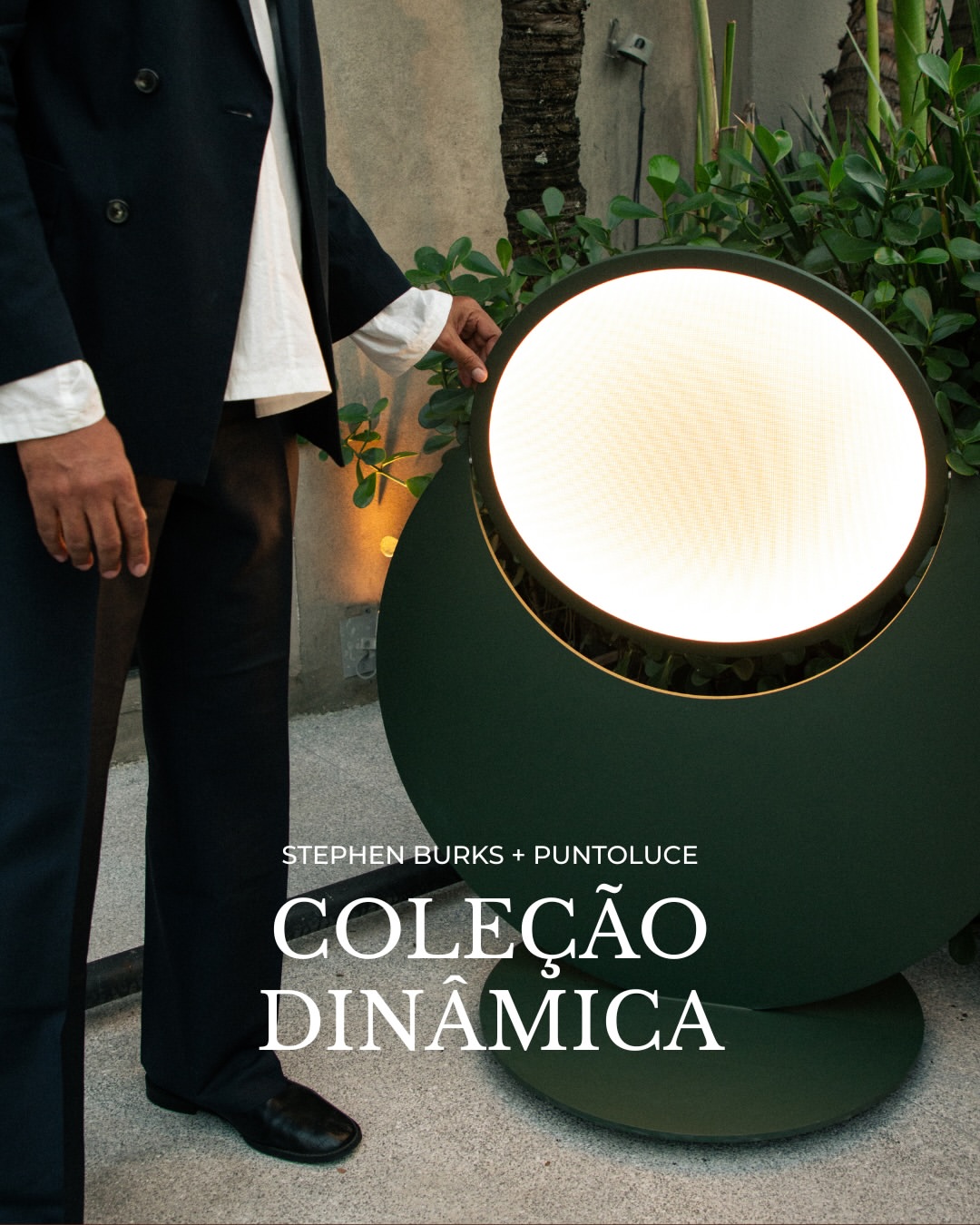
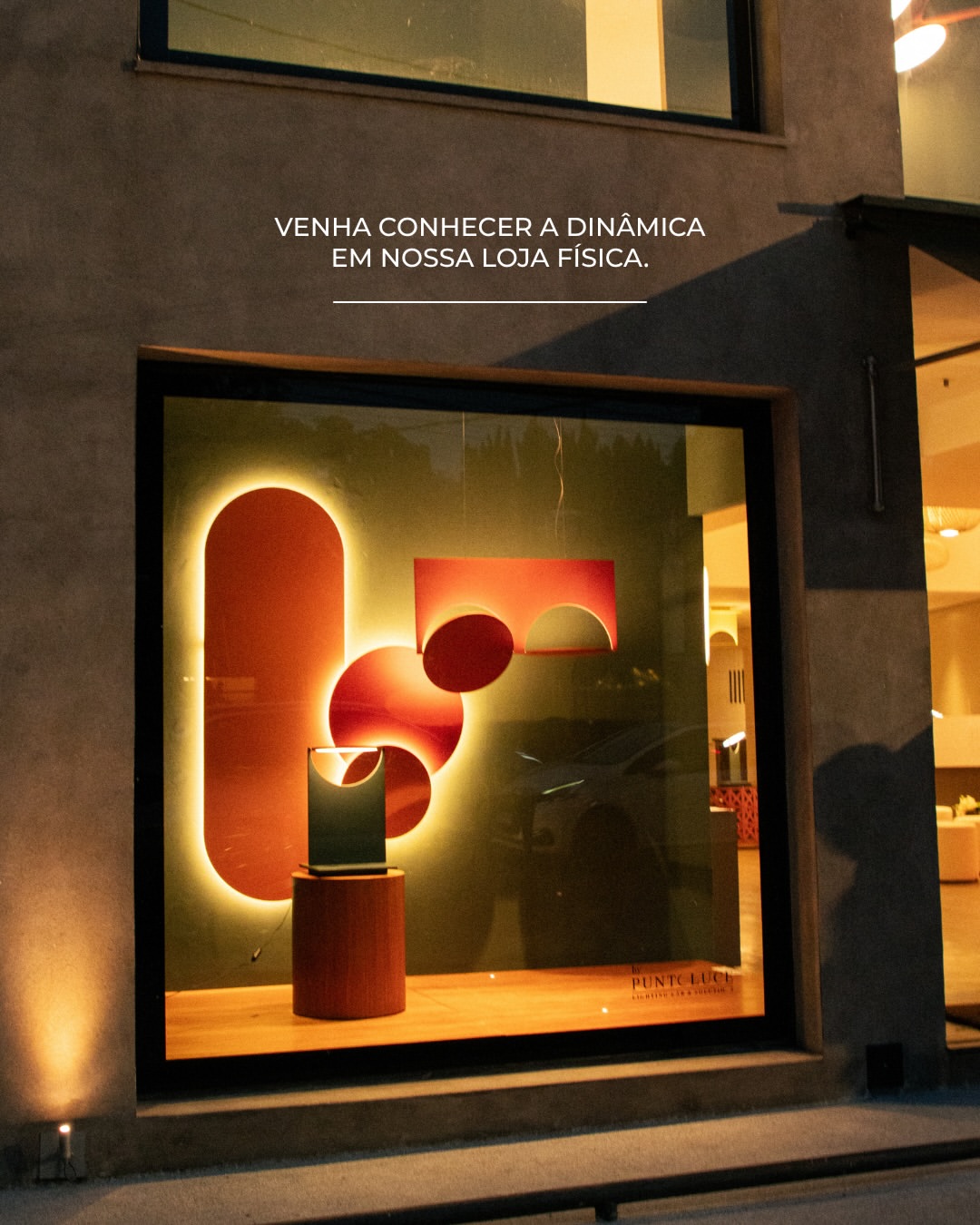
The collection presents a family of lighting objects built around circular and linear elements, with a visual language that explores movement, rotation, and changing orientation. Across the displayed pieces, the geometry remains clear: discs, openings, vertical planes, and curved surfaces interact through carefully controlled relationships. The strength of the design emerges from the way light occupies these structures. The luminous areas are contained, directed, and framed by solid material, allowing brightness to exist within a defined architectural order. 
Before illumination is considered, the objects already possess a strong presence through proportion and composition. The dark surfaces create a sense of mass, while the repeated circular forms introduce rhythm. Once illuminated, these characteristics receive a new level of visual emphasis. The light does not sit on the surface as an additional layer. It activates the relationship between volume and void, making the spaces around the fixture part of the design itself.
This approach reflects a fundamental principle of lighting design: illumination is an instrument for shaping perception. A fixture is experienced through its relationship with darkness, surrounding materials, viewing distance, and movement through space. The Dynamic Collection demonstrates an awareness of this relationship by allowing contrast to guide attention. Bright surfaces appear within carefully measured boundaries, while surrounding areas maintain enough restraint to preserve visual hierarchy.
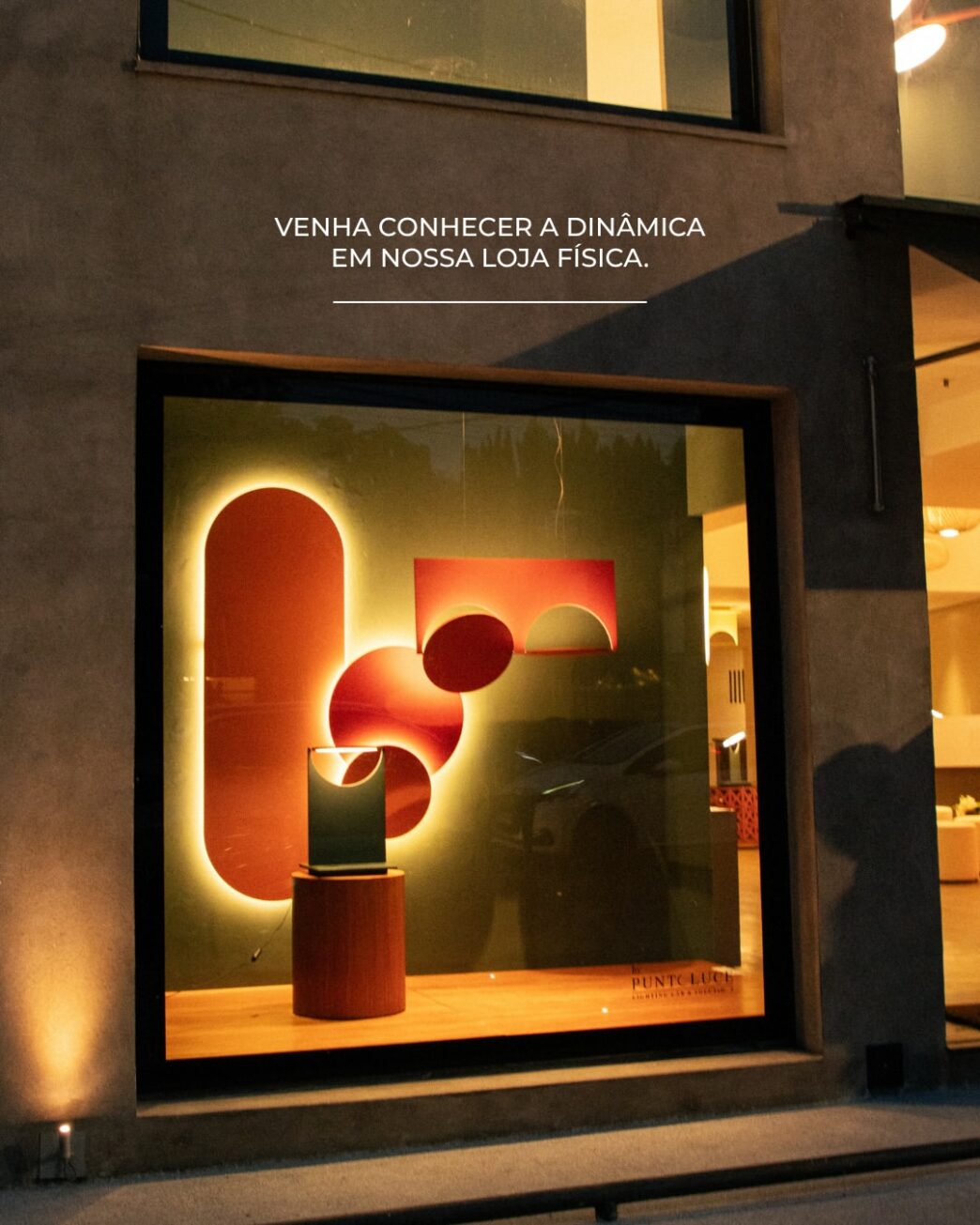
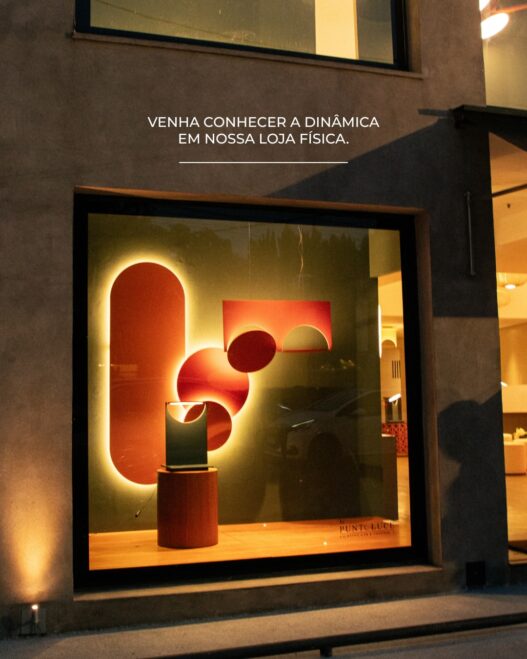
The wall-mounted compositions reveal this most clearly. Circular openings are arranged with a repeated cadence, creating a sequence that the eye follows naturally across the surface. Each illuminated circle functions as an individual source of focus while contributing to a larger composition. The spacing between elements becomes an active part of the arrangement. The empty areas surrounding the light carry visual importance because they establish breathing room and prevent the composition from becoming visually saturated.
The collection’s language relies on controlled repetition. Repeated forms often risk becoming predictable, yet here the variation of placement and orientation introduces movement. The viewer encounters a rhythm that feels measured, similar to architectural proportions where intervals between elements determine the character of a facade or interior surface. The lighting objects operate within this same logic, using distance and alignment as tools for creating visual structure.
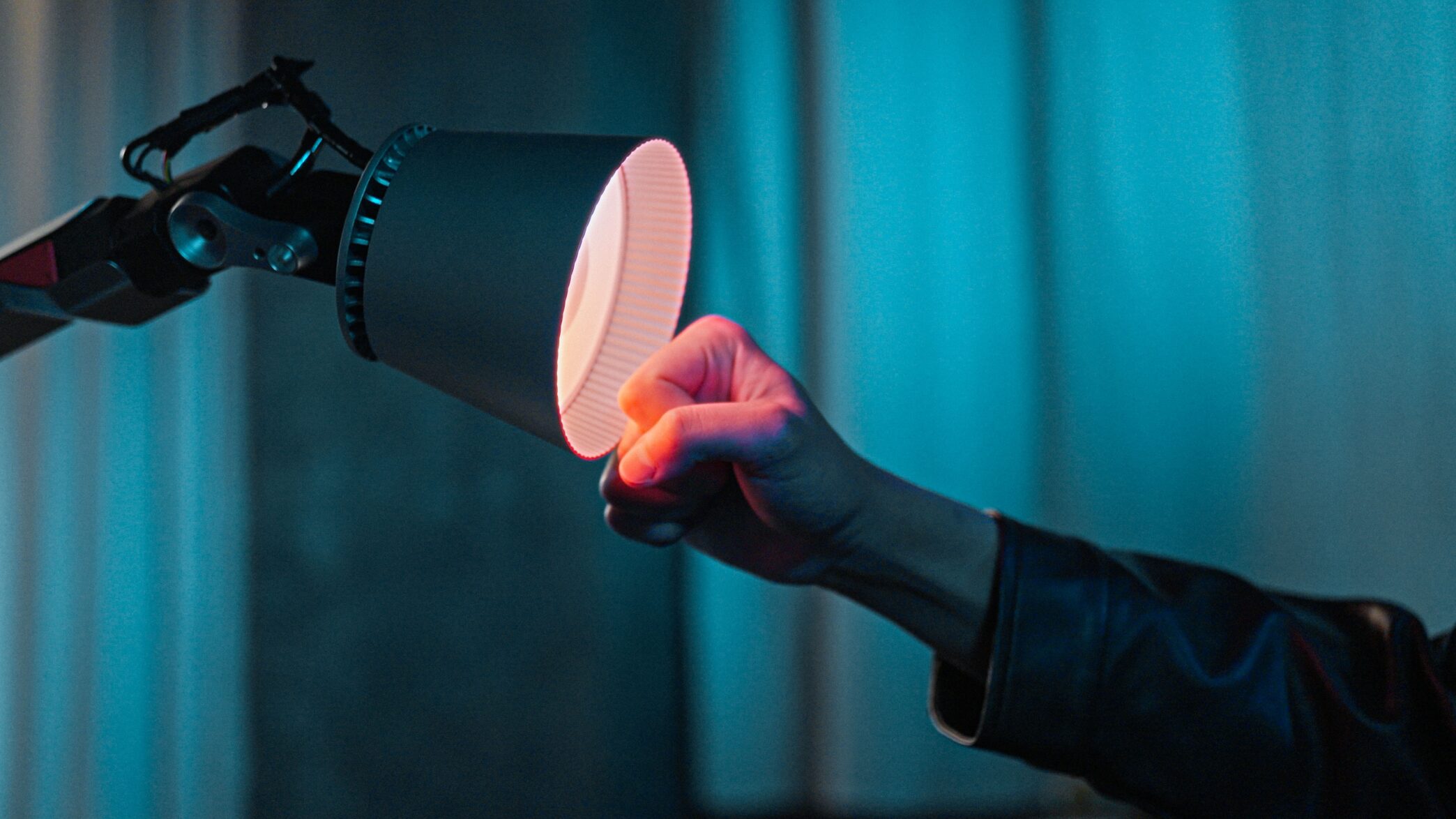
The relationship between brightness and material is carefully handled. The illuminated surfaces provide clarity and focus, while darker components preserve the physical character of the object. This balance allows the viewer to understand both the source of light and the body containing it. The fixture maintains its identity as an object with depth, thickness, and presence. Its material qualities remain visible around the luminous areas, creating a dialogue between reflection and absorption.
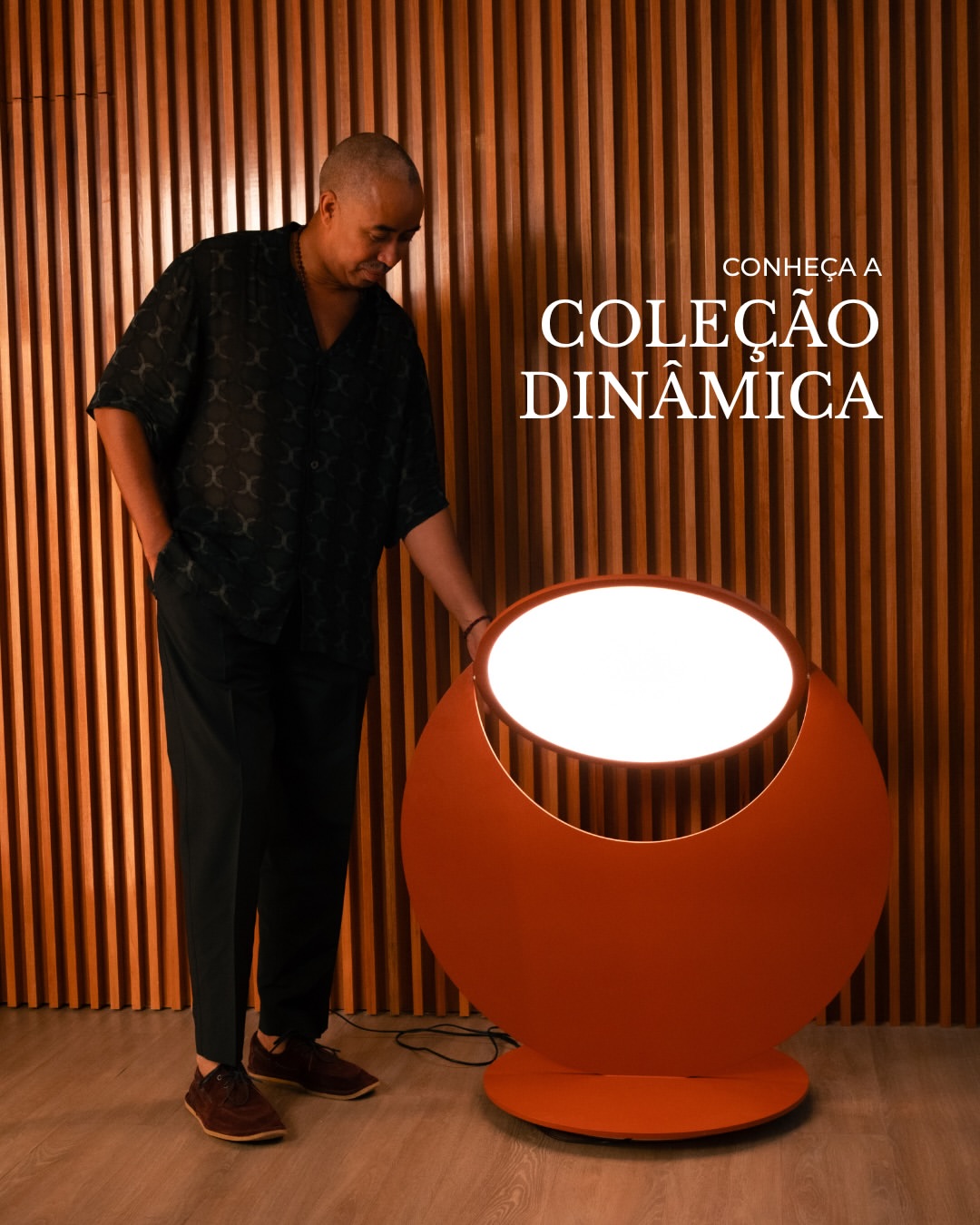
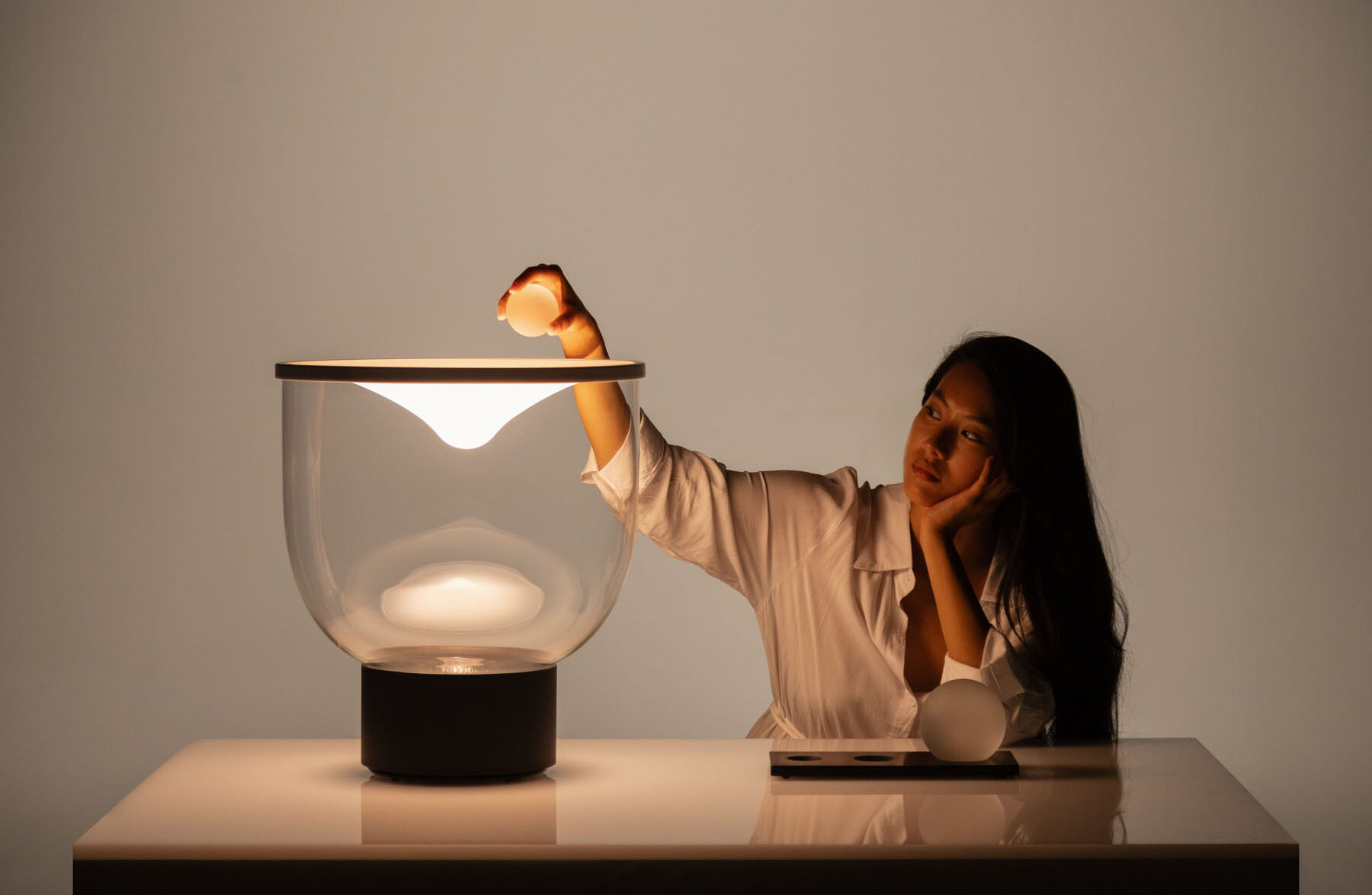
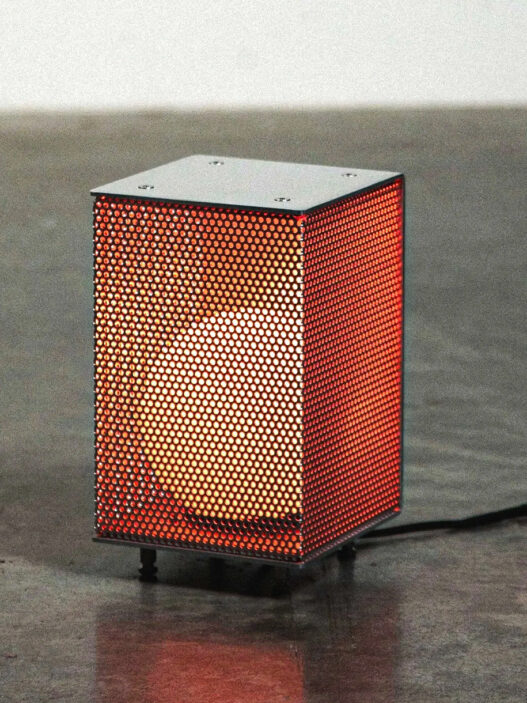
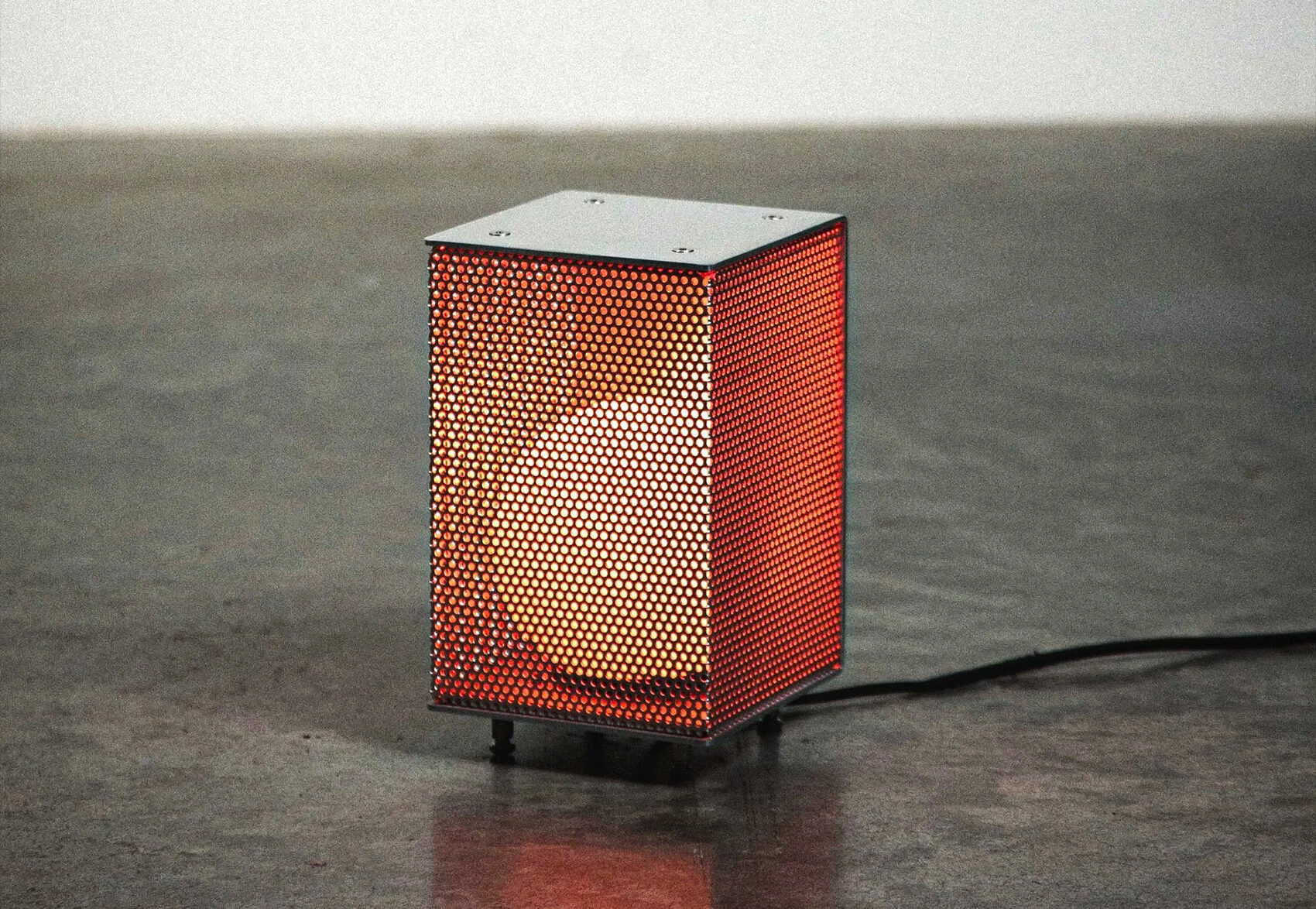
The floor and table pieces extend this investigation into a more intimate scale. Their placement closer to the human body changes the way illumination is perceived. A wall fixture establishes a relationship with architecture, while a portable or surface-based object enters personal space. The viewer observes the light source from different heights and distances, allowing the interaction between illuminated surface and surrounding environment to evolve.
The circular elements throughout the collection carry a particular visual significance. Their geometry creates stability, while their positioning introduces variation. The circle has long been associated with balance within design, though here its effect comes from its physical use: a curved boundary containing light, creating a clear separation between luminous and dark zones. The result depends on precision. A small adjustment in proportion, placement, or intensity could alter the entire visual balance.
The displayed environments also demonstrate how the collection responds to context. Against neutral walls and carefully arranged interiors, the fixtures act as points of concentration. The surrounding architecture provides a calm background where the lighting composition can be understood. The objects do not compete with their surroundings through excessive visual complexity. Their presence comes from the relationship between shape, illumination, and placement.
One of the collection’s notable qualities is its attention to the transition between direct observation and spatial experience. A viewer first recognizes the object itself, then begins to notice how the light affects nearby surfaces. Illumination extends beyond the physical boundary of the fixture through reflected brightness and softened gradients. Walls receive traces of light, shadows establish depth, and the atmosphere around the object gains structure. These secondary effects are essential parts of the design language.
Shadow plays an important role within these compositions. The darker regions surrounding illuminated areas create definition and reveal the position of each element. Without these variations, the luminous surfaces would lose their strength. Darkness provides the visual condition through which brightness can be measured. The collection demonstrates an understanding that effective illumination depends on what remains outside the beam as much as what receives it.
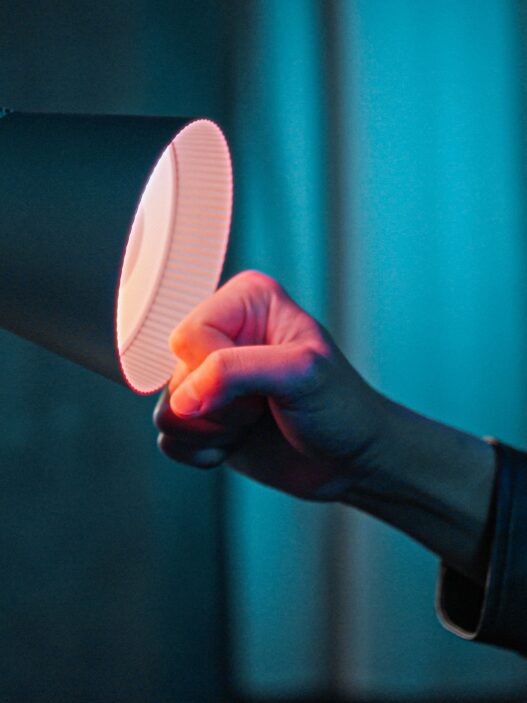
The movement suggested by the collection’s name appears through physical arrangement and visual rhythm. Several pieces explore adjustable orientations, allowing the direction of illumination to influence the relationship between object and space. The possibility of changing position introduces a sense of participation. The user encounters a lighting object that can respond to different spatial conditions, with orientation becoming part of the experience.
The technical achievement visible within the collection lies in the integration of mechanical flexibility with a restrained formal language. Adjustable elements often create visual complexity, since functional mechanisms can interrupt the purity of a design. Here, the visible components maintain a coherent relationship with the overall geometry. The mechanism supports the object’s character rather than becoming the primary visual event.
There are also areas where the collection invites further examination. The strength of the geometric language creates a highly controlled appearance, and this precision may limit the emotional variation available in certain settings. Spaces with stronger architectural character or richer material conditions could require careful placement to ensure the fixtures maintain their intended clarity. The collection’s success depends significantly on proportion, positioning, and the surrounding visual environment.
The collaboration between Stephen Burks and the designers behind the collection is evident through the balance between object design and human interaction. The fixtures possess an architectural discipline while maintaining the scale and accessibility of designed objects. Their forms encourage observation from multiple angles, revealing changes in reflection, brightness, and depth as the viewer moves around them.
The use of circular and linear compositions creates a connection between individual pieces across the collection. Each object belongs to the same visual family, though each arrangement establishes its own spatial character. This consistency gives the collection coherence. The objects communicate through shared principles of geometry and illumination, allowing the viewer to recognize a unified design approach.
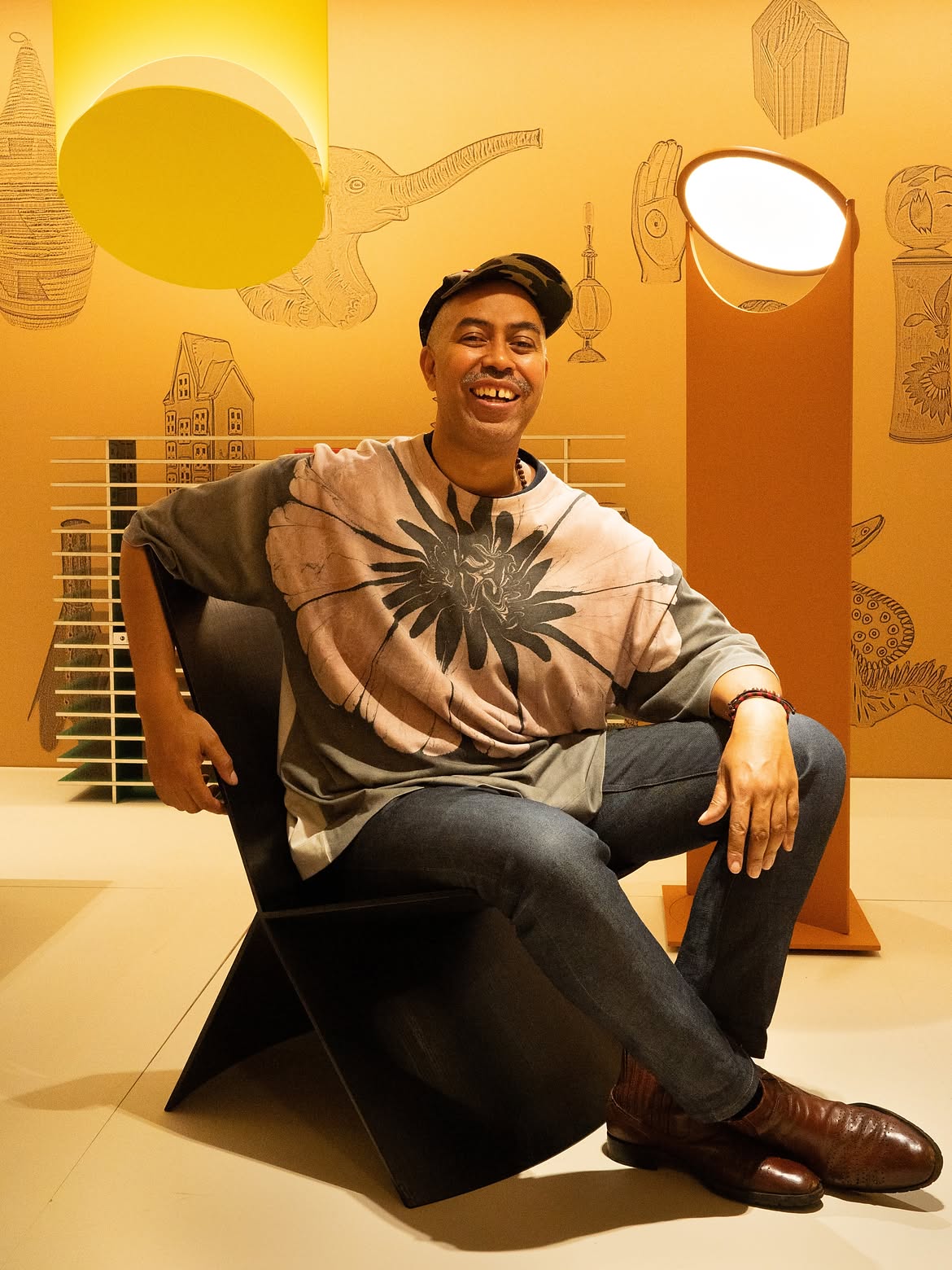
Lighting design often requires decisions about what the eye should encounter first. The Dynamic Collection demonstrates this through selective emphasis. The brightest areas attract attention immediately, while secondary details emerge gradually through closer observation. Material transitions, edges, and surrounding shadows become visible after the initial encounter. This sequence of perception creates depth without requiring visual excess.
The collection also raises an important consideration within contemporary lighting: the relationship between object and source. Many lighting products are judged through their appearance when switched off, while others depend heavily on their luminous performance. These pieces maintain a connection between both conditions. Their physical forms remain significant in ambient conditions, and illumination reveals another layer of their construction.
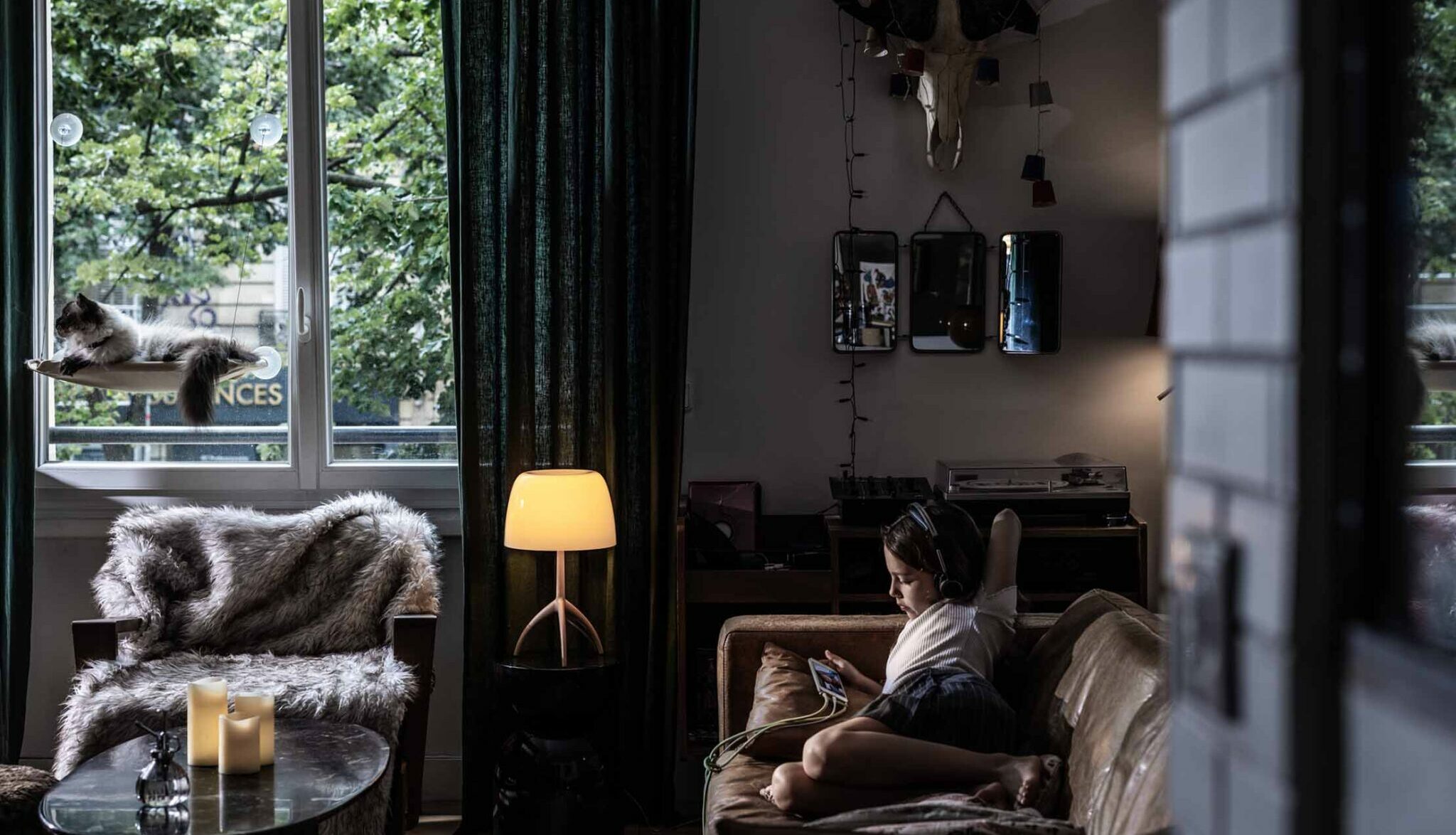
The interiors shown with the collection provide a controlled setting where the fixtures can be appreciated as elements of spatial composition. Furniture, walls, and decorative surfaces create a framework for understanding scale and atmosphere. The lighting objects occupy these spaces with a measured confidence, establishing focal points while preserving the overall balance of the environment.
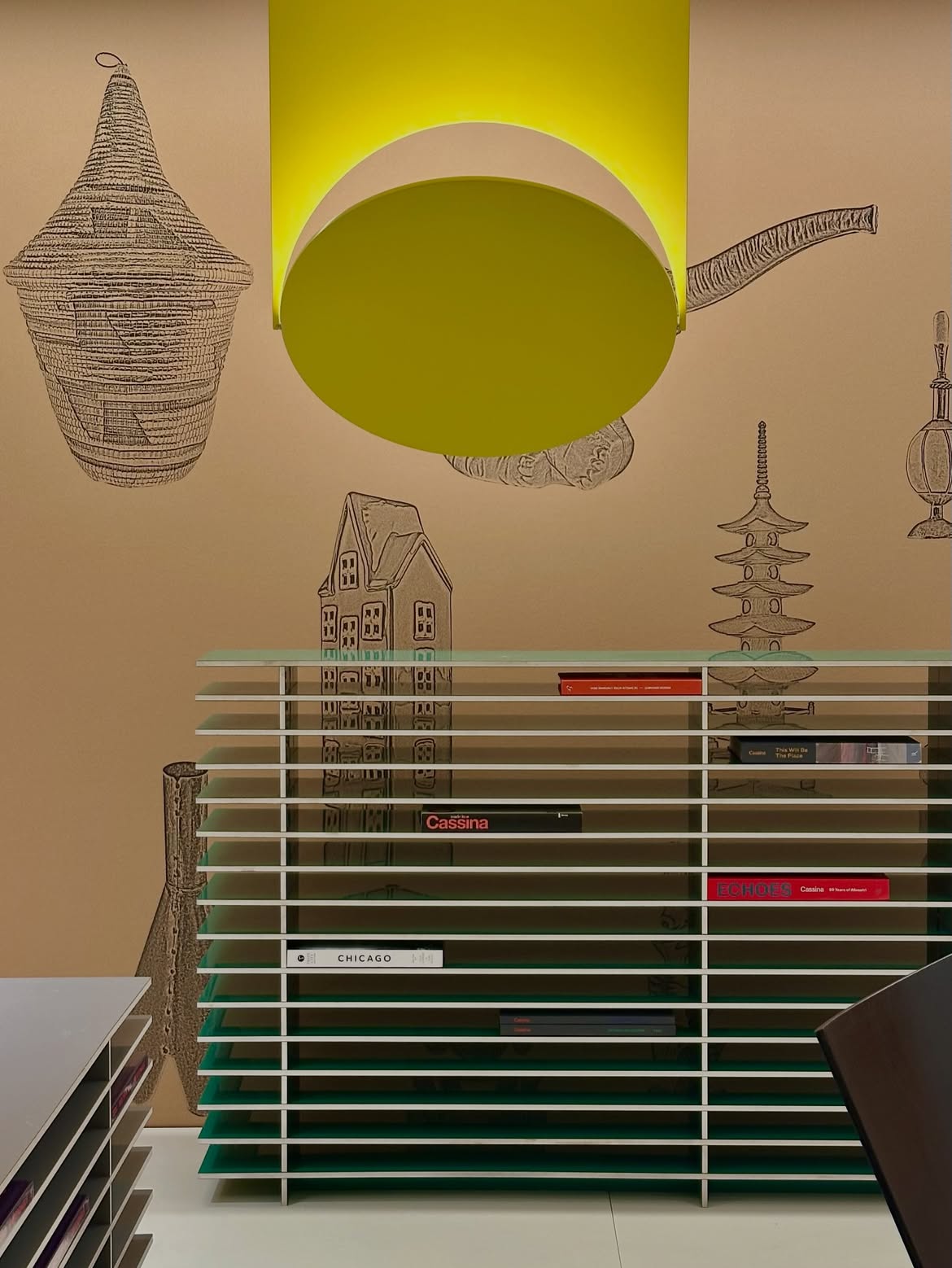
The strongest moments within the collection occur where the relationship between light and structure feels inseparable. The circular openings, the controlled reflections, and the carefully positioned surfaces demonstrate how illumination can define an object’s character. The work gains its identity through the connection between material decisions and luminous behavior.
The Dynamic Collection presents lighting as a discipline of editing. Every illuminated surface removes visual uncertainty and directs attention toward selected elements. Every dark area preserves contrast and allows form to remain legible. Through this careful arrangement, the fixtures create environments where perception develops gradually, with each detail contributing to the overall spatial reading.
The collection leaves the viewer with an awareness of the space surrounding the objects. Light reaches the walls, the surfaces, and the moments between objects, creating a relationship that extends beyond the fixture itself. The final impression comes from observing how carefully controlled illumination can define form, establish rhythm, and shape the way a room is understood.